
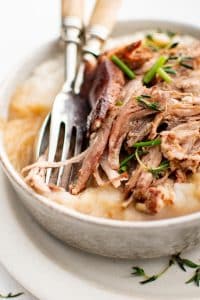
Braised Pork Shoulder (Beer and Apple Cider)
This braised pork shoulder is seasoned with brown sugar and spices, seared until browned, then slow-cooked in a Dutch oven with beer, apple cider, onions, garlic, and fresh herbs. The pork becomes fall-apart tender and is served with a rich, savory-sweet braising sauce and buttery-soft onions. Perfect for Sunday dinners, holidays, or cozy family meals.
Servings: 8 servings
Calories: 376kcal
Ingredients
- 4-5 pounds pork shoulder (pork butt) - bone-in or boneless
- 1 tablespoon brown sugar
- 1 teaspoon smoked paprika - optional
- 1 teaspoon garlic powder
- 1 teaspoon onion powder
- 2 teaspoons salt
- 1 teaspoon black pepper
- 2 tablespoons olive oil
- 1 large red onion - sliced
- 4 cloves garlic - minced
- 12 fluid ounces (1½ cups) beer - preferably brown or amber ale
- 12 fluid ounces (1½ cups) nonalcoholic apple cider -
- 2 sprigs fresh thyme
- 2 sprigs fresh rosemary
Instructions
- Combine the dry rub: In a small mixing bowl, stir together the brown sugar, smoked paprika (if using), garlic powder, onion powder, salt, and black pepper until evenly combined. Set aside.1 tablespoon brown sugar, 1 teaspoon smoked paprika, 1 teaspoon garlic powder, 1 teaspoon onion powder, 2 teaspoons salt, 1 teaspoon black pepper
- Prepare and season the pork. Trim away any thick, excessive layers of fat from the pork shoulder, leaving some fat for flavor and moisture. Pat the meat dry with paper towels. Sprinkle the prepared seasoning mixture over the entire roast, rubbing it into the surface and crevices.4-5 pounds pork shoulder (pork butt)
- Rest the pork shoulder. Allow the seasoned pork to stand for 30 minutes before searing. Preheat the oven to 325°F (163°C) toward the end of the resting time.
- Brown the pork shoulder. Place a large Dutch oven over medium-high heat and add the olive oil. Once the oil is hot, carefully lower the pork shoulder into the pot. Sear for approximately 3–4 minutes per side, turning as needed to brown the exposed surfaces. Watch closely to prevent the brown sugar in the seasoning from burning. Transfer the browned pork to a clean plate, leaving the cooking juices and browned bits in the pot.2 tablespoons olive oil
- Prepare the braising liquid. Reduce the heat to medium and add the sliced red onion to the Dutch oven. Cook for approximately 4–5 minutes, stirring occasionally, until the onion begins to soften. Stir in the minced garlic and cook for another 30–60 seconds, just until fragrant. Slowly add the beer and apple cider, scraping the bottom of the pot with a wooden spoon to release the browned bits. Bring the liquid to a gentle simmer.1 large red onion, 4 cloves garlic, 12 fluid ounces (1½ cups) beer, 12 fluid ounces (1½ cups) nonalcoholic apple cider
- Return the pork to the Dutch oven. Place the seared pork shoulder back into the Dutch oven, along with any juices that accumulated on the plate. Arrange the fresh thyme and rosemary sprigs around the meat, tucking them into the braising liquid. The liquid should reach partway up the sides of the pork without completely submerging it.2 sprigs fresh thyme, 2 sprigs fresh rosemary
- Cover and braise. Cover the Dutch oven with a tight-fitting lid and transfer it to the preheated oven. Cook for approximately 3½–4 hours, spooning some of the braising liquid over the exposed pork once or twice during cooking. Keep the Dutch oven covered between bastings. Begin checking for tenderness near the end of the cooking time. The pork should pull apart easily with two forks. If it remains firm or resistant, cover and continue cooking, checking every 20–30 minutes until tender.
- Rest the pork. Carefully transfer the cooked pork shoulder to a cutting board or large platter. Allow it to rest for 10–15 minutes while you prepare the sauce.
- Strain the cooking liquid. While the pork rests, remove the herb stems from the Dutch oven. Pour the remaining cooking liquid and onions through a fine-mesh strainer set over a saucepan. Set the softened onions aside to add back to the sauce. Discard the herb stems and any unwanted solids.
- Reduce and season the sauce. Skim off excess fat from the strained cooking liquid, if necessary. Place the saucepan over medium heat and bring the liquid to a gentle simmer. Cook uncovered until the sauce has reduced to your preferred concentration, stirring occasionally. Return the reserved softened onions to the saucepan and stir to combine. Taste and adjust the seasoning as needed.
- Shred and serve. Use two forks to pull the rested pork into large pieces, discarding any bones, cartilage, and excess fat. Arrange on a serving platter or individual plates and spoon the warm braising sauce and softened onions generously over the meat. Serve immediately.
Notes
- Yield & Servings: This recipe will make an estimated 6-8 cups of shredded pork (depending on bone and fat content), enough to feed 6-8 people.
- Cooking Time and Doneness: A 4–5-pound pork shoulder typically takes 3½–4 hours to braise at 325°F. The meat is ready when it pulls apart easily with two forks, often at an internal temperature of approximately 190–205°F. If it's still tough, continue braising until tender.
- Dutch Oven and Liquid: A 7-quart Dutch oven is recommended. The 3 cups of braising liquid should come partway up the sides of the pork without completely covering it. Add a splash of broth or water if the pot begins to dry out.
- Beer and Cider: Brown or amber ale works best. Avoid very hoppy IPAs, which may turn bitter when reduced. For a beer-free version, replace the beer with an equal amount of beef or chicken broth. Use regular, nonalcoholic apple cider, not apple cider vinegar.
- Extra Onions: Love buttery-soft, jammy onions? Double the red onion. Reserve the softened onions when straining the braising liquid, then return them to the reduced sauce.
- Storage and Reheating: Refrigerate leftover pork with its sauce in airtight containers for up to 3–4 days or freeze for up to 3 months for best quality. Thaw frozen pork overnight in the refrigerator. Reheat gently with the sauce until the meat reaches 165°F.
Nutrition
Calories: 376kcal | Carbohydrates: 11g | Protein: 52g | Fat: 11g | Saturated Fat: 3g | Polyunsaturated Fat: 2g | Monounsaturated Fat: 6g | Trans Fat: 0.03g | Cholesterol: 136mg | Sodium: 709mg | Potassium: 960mg | Fiber: 1g | Sugar: 6g | Vitamin A: 138IU | Vitamin C: 2mg | Calcium: 33mg | Iron: 2mg
Did you make this recipe?Tag @theforkedspoon and hashtag it #theforkedspoon and please leave your star rating in the comment section on this post.
Copyright © 2026 The Forked Spoon
