
This post may contain affiliate links. See my disclosure policy.

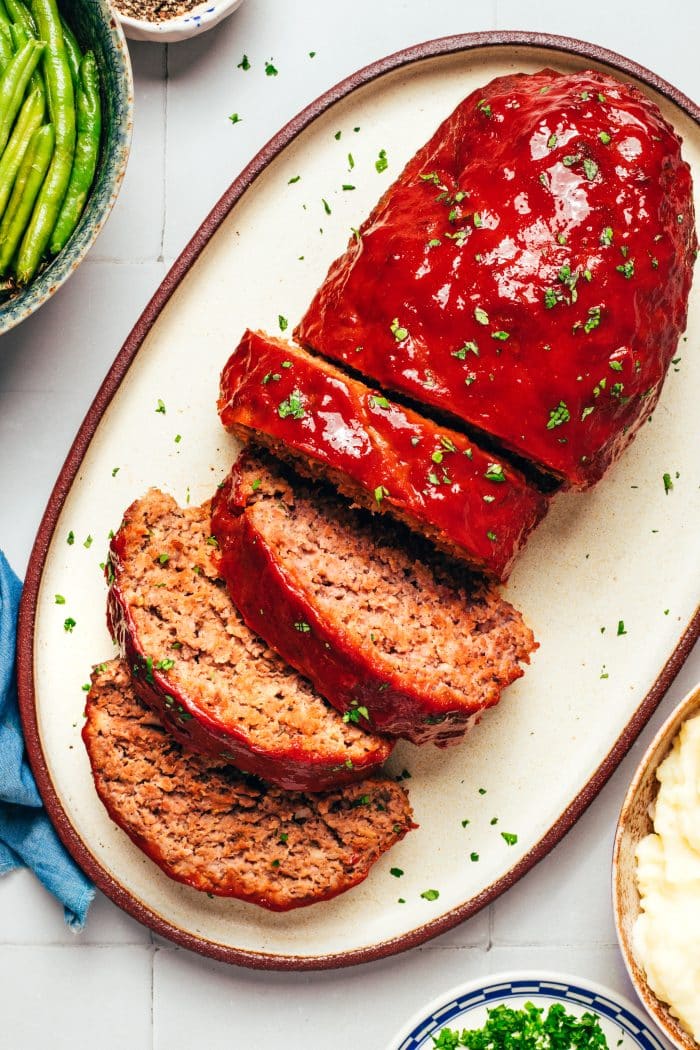
This classic meatloaf recipe is tender, juicy, and packed with savory beef flavor. Made with 85/15 ground beef, grated onion, and panko breadcrumbs, it’s finished with an irresistible sweet and tangy ketchup glaze.
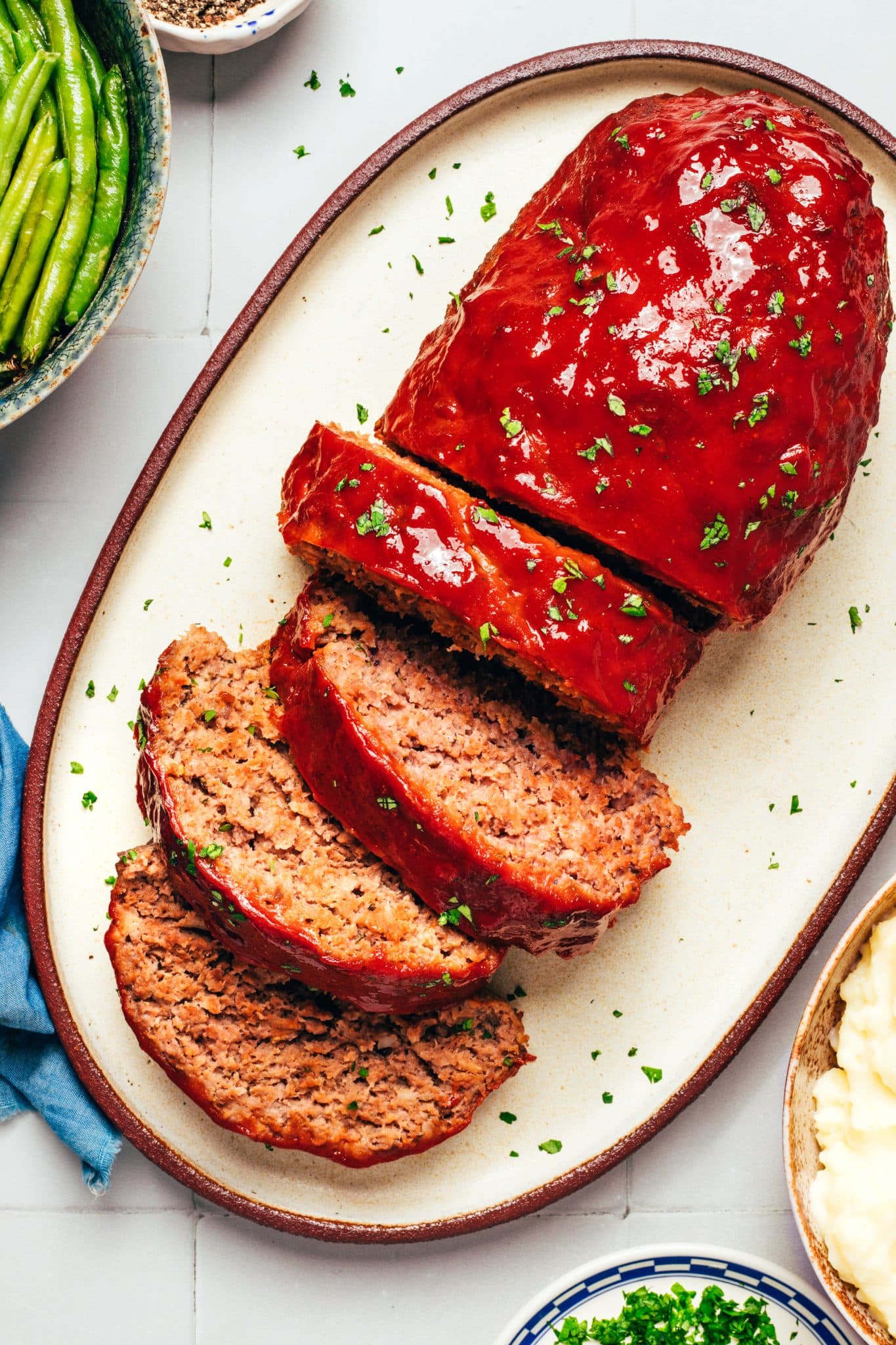
My son has a clear list of favorite dinners, and this meatloaf recipe is one of them. He may have turned his nose up at it the first time I made it (more than a decade ago!), but now it’s a clear winner every time. Tender and juicy (without being greasy), it packs plenty of savory, beefy flavor into every delicious bite. But the best part is the sweet and tangy glaze baked right on top. I’m a total sucker for sweet and savory flavor combos, and this meatloaf nails it.
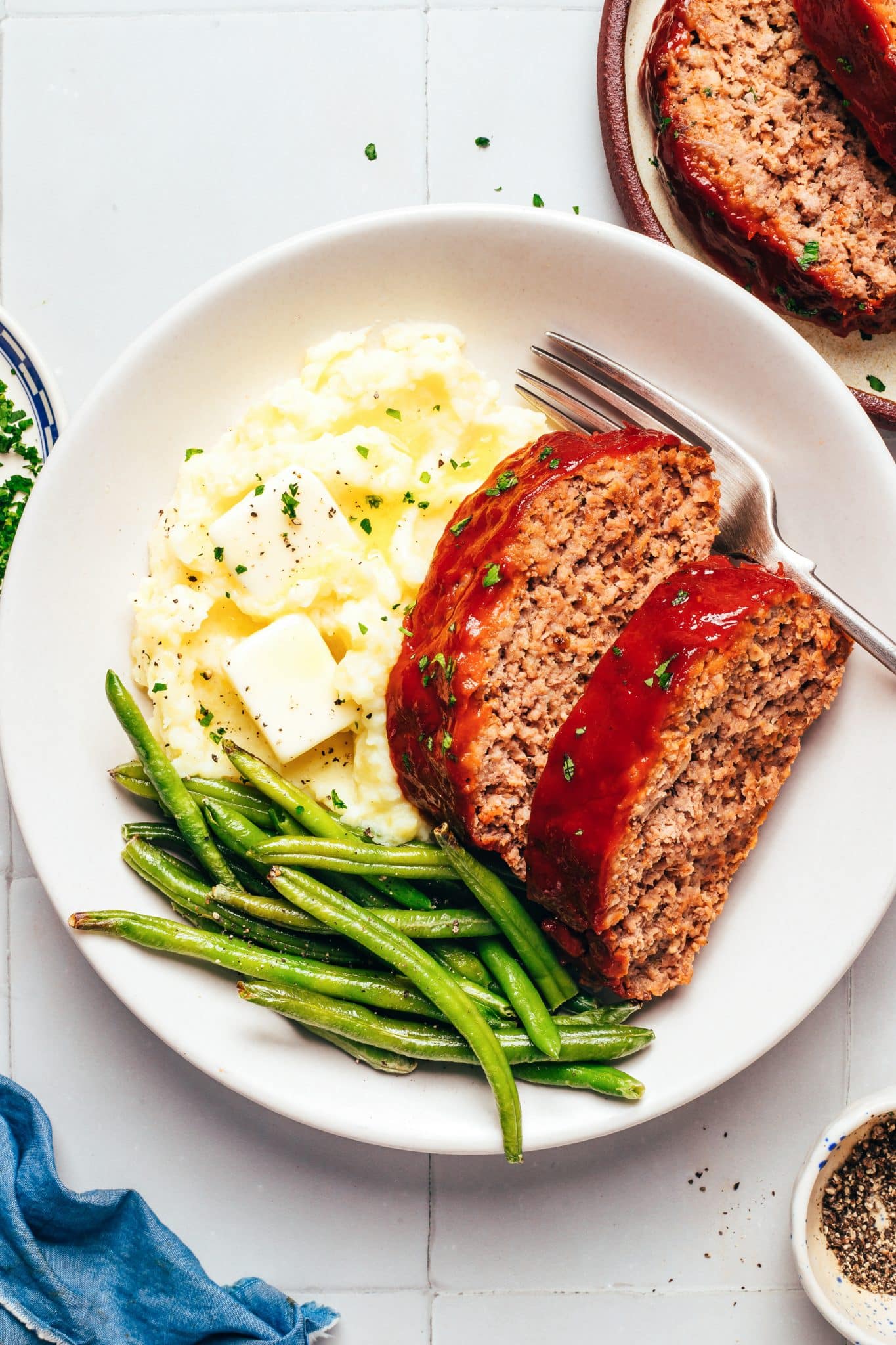
I like to serve it with creamy mashed potatoes and easy oven-roasted green beans, then save the leftovers for warm meatloaf sandwiches with melted cheese and caramelized onions.
Table of Contents
Ingredients and Substitutions
You don’t need anything fancy to make a really great meatloaf. Most of the ingredients are pantry staples, but a few, especially the ground beef, breadcrumbs, and seasonings, do a lot of the heavy lifting when it comes to flavor. You’ll find the full measurements in the recipe card below.
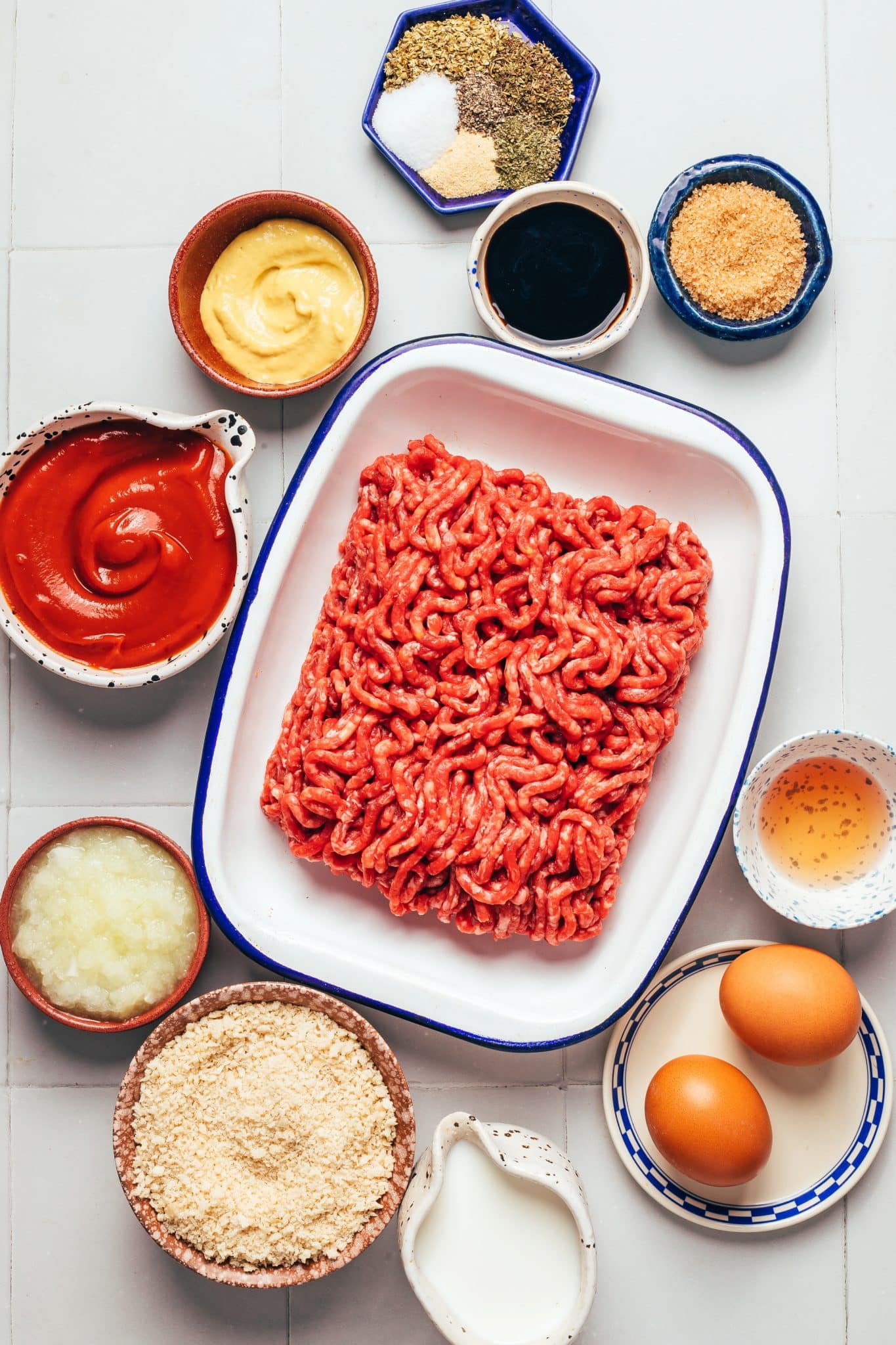
- Ground beef: I like to make my meatloaf with 85/15 ground beef for the best balance of flavor and moisture. You can use 80/20, but expect a little more grease. Leaner ground beef, like 90/10, will most likely produce a drier, less flavorful meatloaf. If you’d rather use ground turkey, try my turkey meatloaf recipe, which was developed specifically for turkey and includes sautéed mushrooms and sweet apples.
- Yellow onion: Grated onion is small enough to soften as the meatloaf bakes, so there’s no need to sauté it first. Remember to include as much of the juices as possible; they add extra moisture and distribute the onion flavor throughout the meatloaf. You’ll need about 1 cup of grated onion, juices and all.
- Plain panko breadcrumbs and milk: Unlike regular breadcrumbs, which are finely ground and tend to pack together more tightly, panko breadcrumbs have larger, lighter, and airier flakes. This helps give the meatloaf a softer, less dense texture. When mixed with milk, the panko softens and absorbs moisture, helping keep the meatloaf tender and juicy as it cooks. Regular breadcrumbs can produce a more compact texture and absorb liquid differently, so I don’t recommend swapping them cup for cup without adjusting the recipe.
- Eggs: Two large eggs help bind everything together so the meatloaf holds its shape when sliced.
- Seasonings: Worcestershire sauce, Dijon mustard, ketchup, garlic powder, and a combination of dried parsley, oregano, and thyme add plenty of savory flavor. The Dijon adds a little tang, but not so much that it distracts from the natural beefy flavor of the ground meat.
- For the glaze: Made with ketchup, brown sugar, Dijon mustard, and red wine vinegar, this sweet and tangy meatloaf glaze is brushed on twice (once before baking and again after removing the foil) for plenty of flavor and a beautiful glossy finish. You can easily adjust it to suit your taste. Prefer a sweeter glaze? Add a little more brown sugar or a drizzle of honey. Like it extra tangy? Add another splash of red wine vinegar.
How to Make the Meatloaf
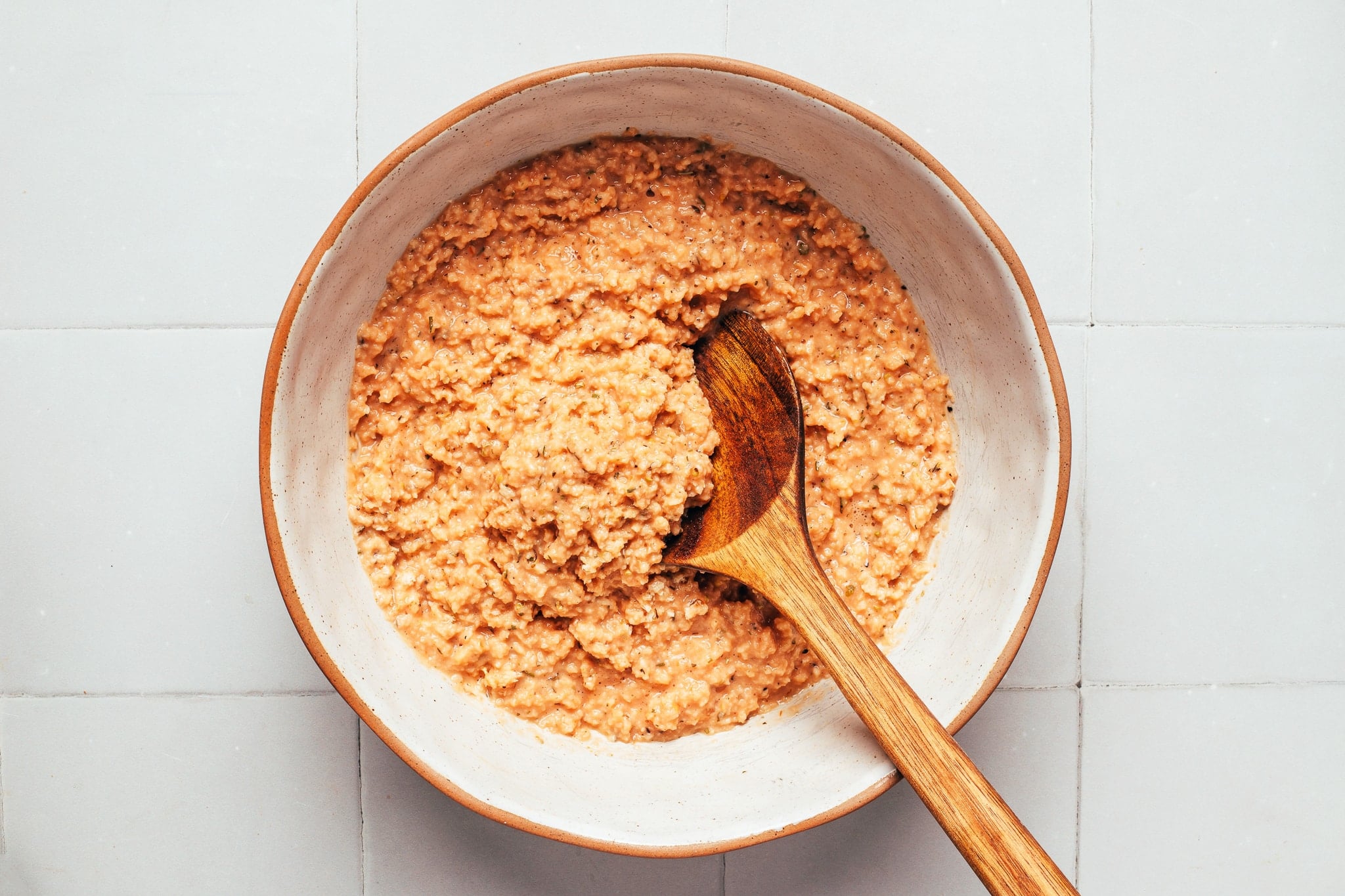
- Preheat the oven and prepare the breadcrumb mixture. Preheat your oven to 350°F and line a large, rimmed baking sheet with parchment paper or aluminum foil. Set aside. In a large mixing bowl, whisk together the milk, eggs, ketchup, Worcestershire sauce, and Dijon mustard until combined. Stir in the grated onion (juices and all!), panko breadcrumbs, dried parsley, oregano, garlic powder, thyme, salt, and black pepper. Mixing these ingredients first helps distribute the seasonings evenly without having to overwork the ground beef.
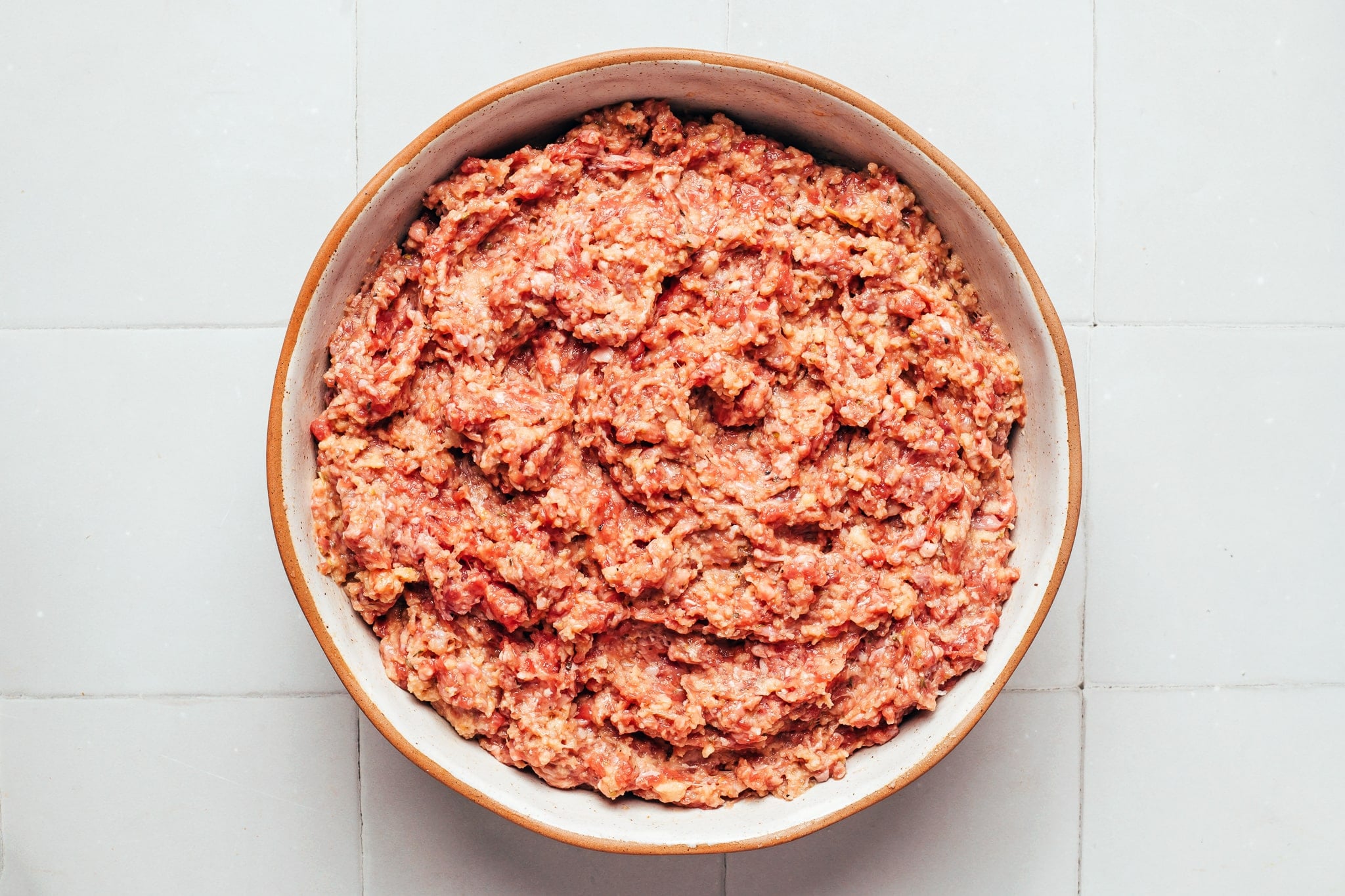
- Add the ground beef. Add the ground beef to the bowl. Using clean hands, gently mix everything together just until the ingredients are evenly distributed. Do not overmix! Working the meat too much can make the finished meatloaf dense and tough.
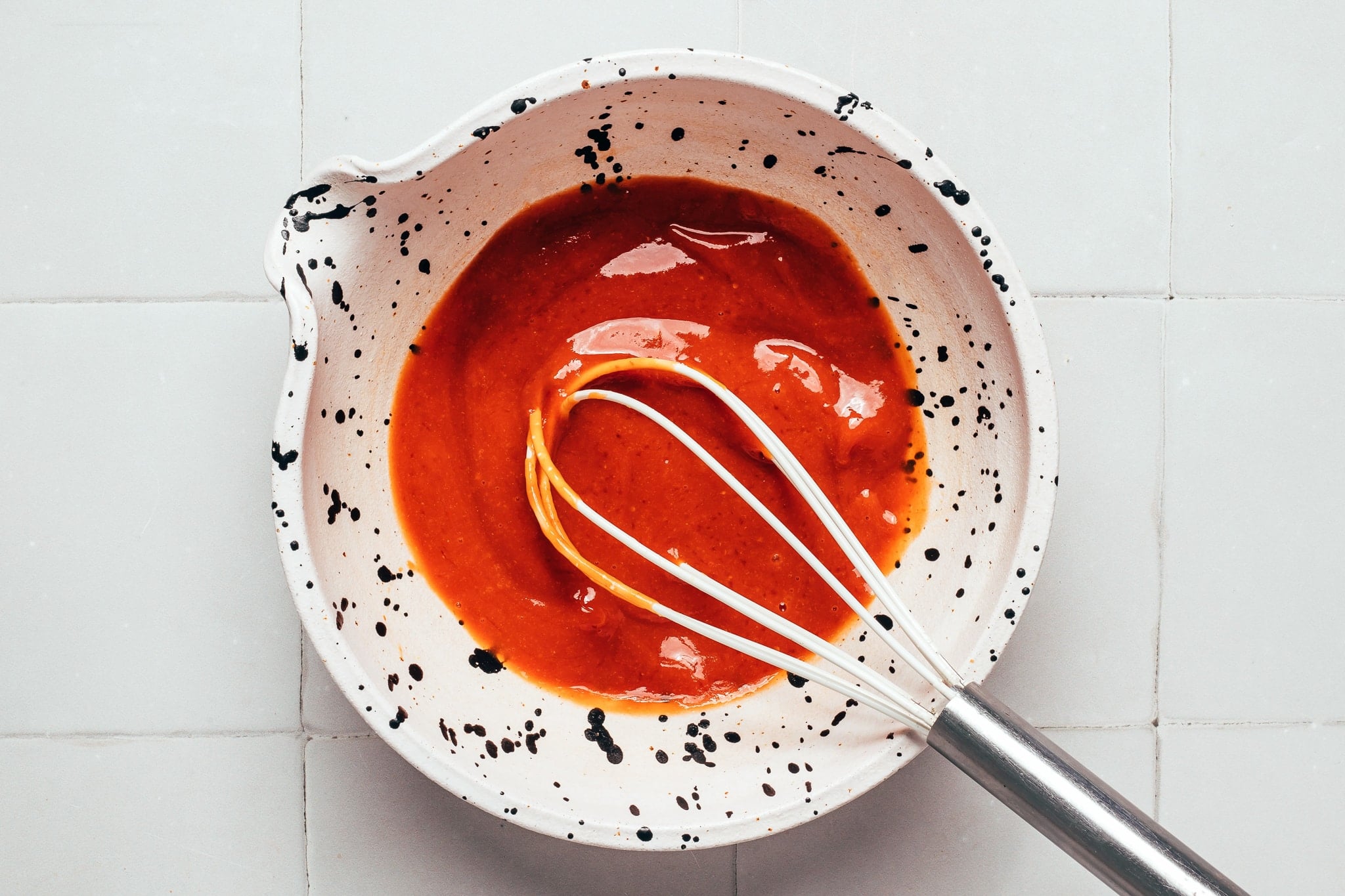
- Make the glaze. In a separate small bowl, whisk together the ketchup, brown sugar, Dijon mustard, and red wine vinegar until smooth. Give it a taste and adjust the sweetness or tanginess to your liking. Set aside for now.
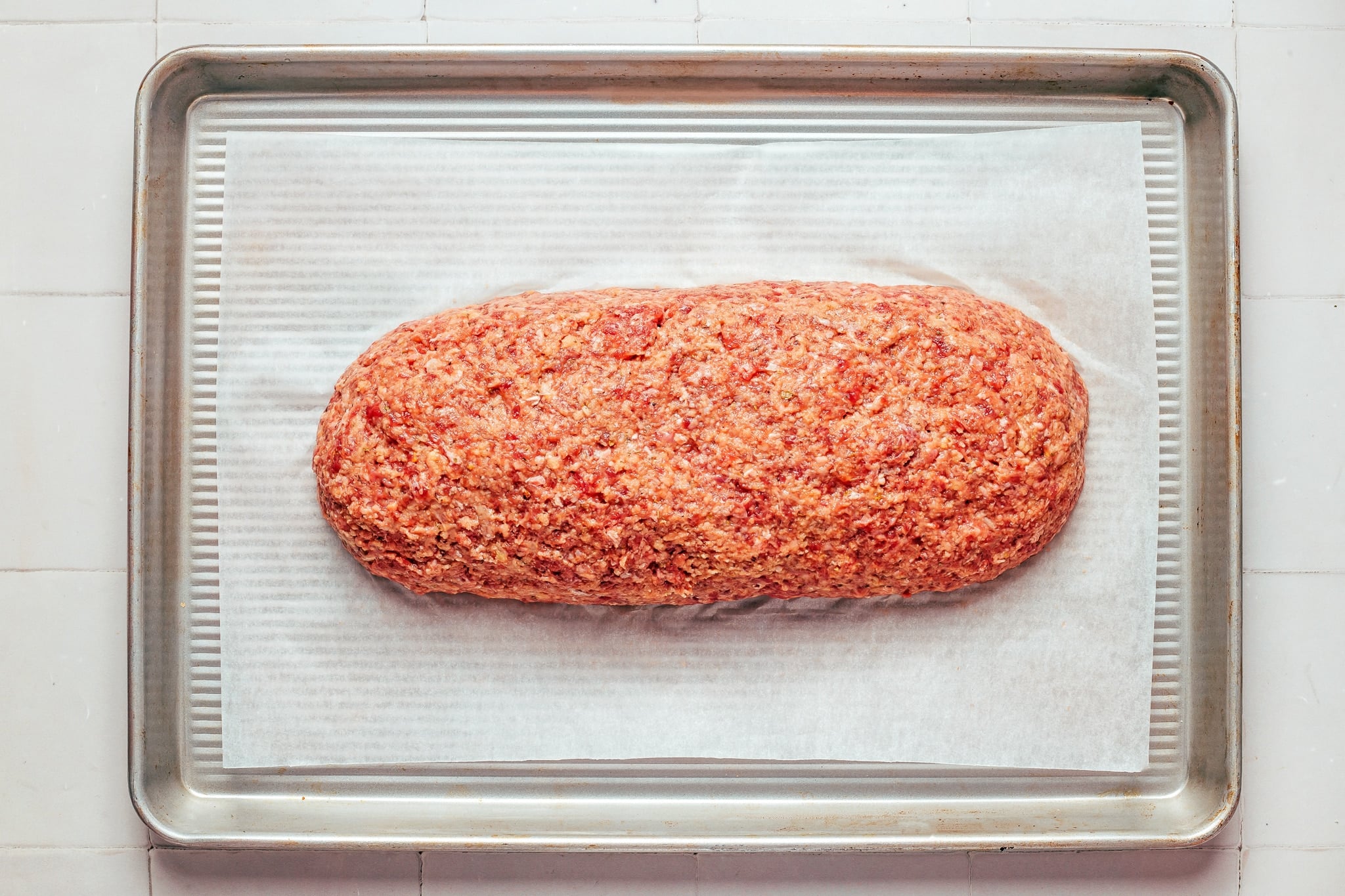
- Shape the meatloaf. Transfer the meat mixture to your prepared baking sheet. Just like shaping meatballs, use your hands to gently shape the meat into one large, free-form loaf, keeping the thickness as even as possible. I like to round the top slightly and smooth out any large cracks with my hands. Avoid packing the mixture too tightly, which can result in a denser meatloaf. You can also divide the mixture into two smaller loaves if you prefer a shorter cooking time.
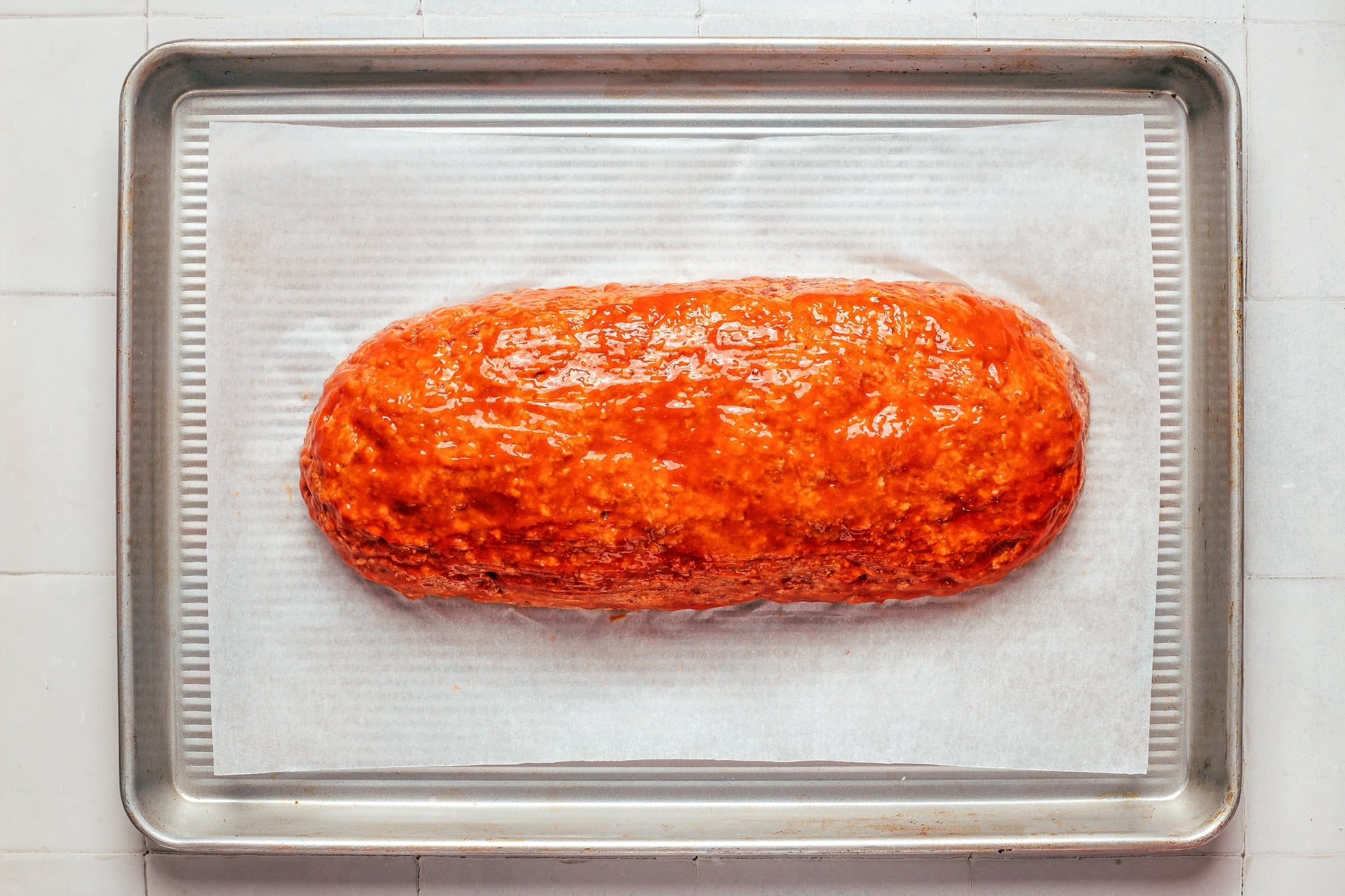
- Add the first layer of glaze. Brush approximately half of the prepared glaze over the top and sides of the meatloaf, reserving the rest for later.
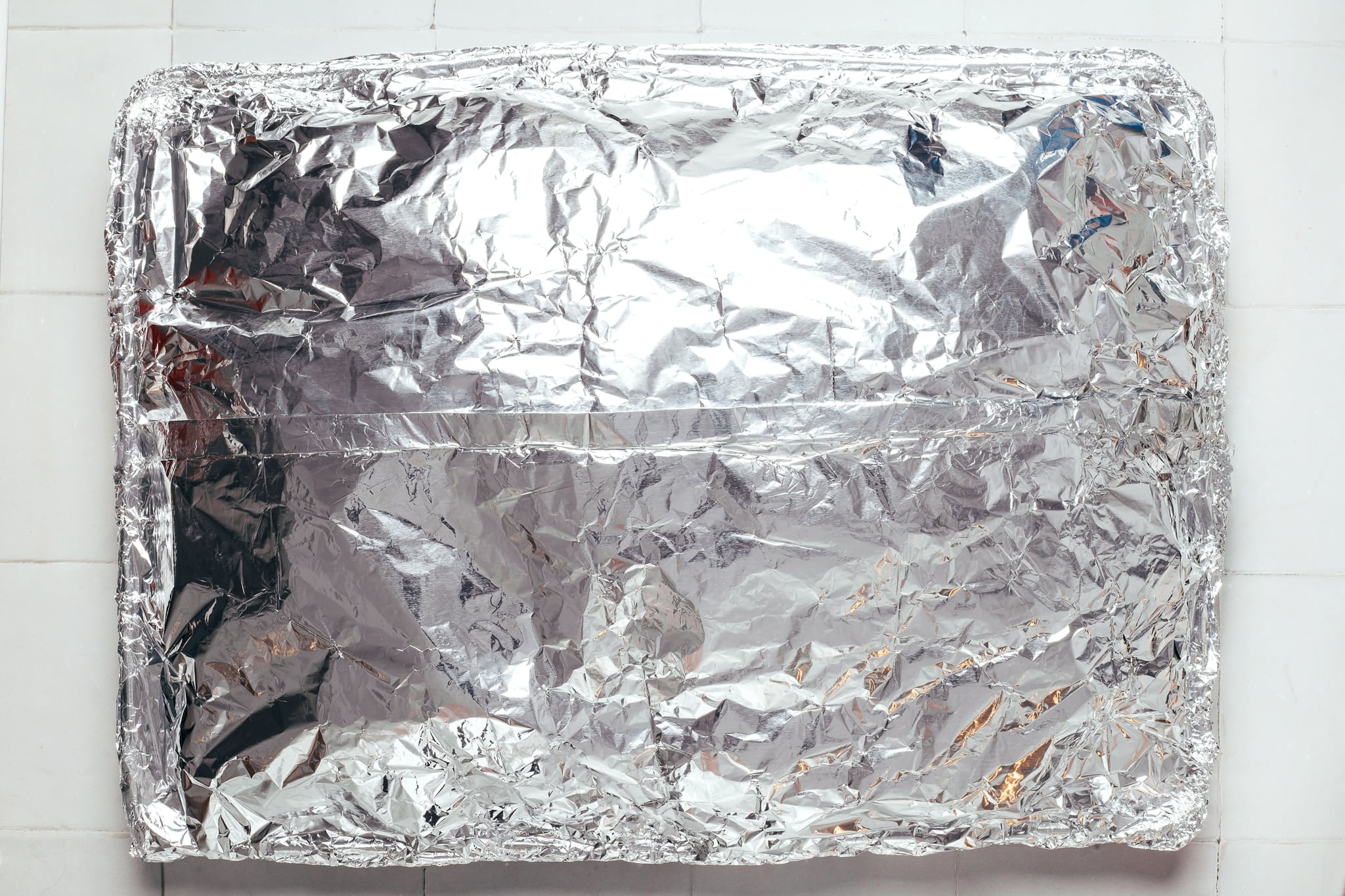
- Cover and bake. Loosely tent the meatloaf with aluminum foil, leaving enough space between the foil and the glaze so they don’t touch. This helps retain moisture during the initial baking period while preventing the foil from sticking to the glaze. Transfer the covered meatloaf to the preheated oven and bake at 350°F for approximately 45-60 minutes.
- Uncover and glaze again. Carefully remove the aluminum foil and increase the oven temperature to 400°F. Brush the top and sides of the meatloaf with the remaining glaze, making sure to coat the loaf evenly.
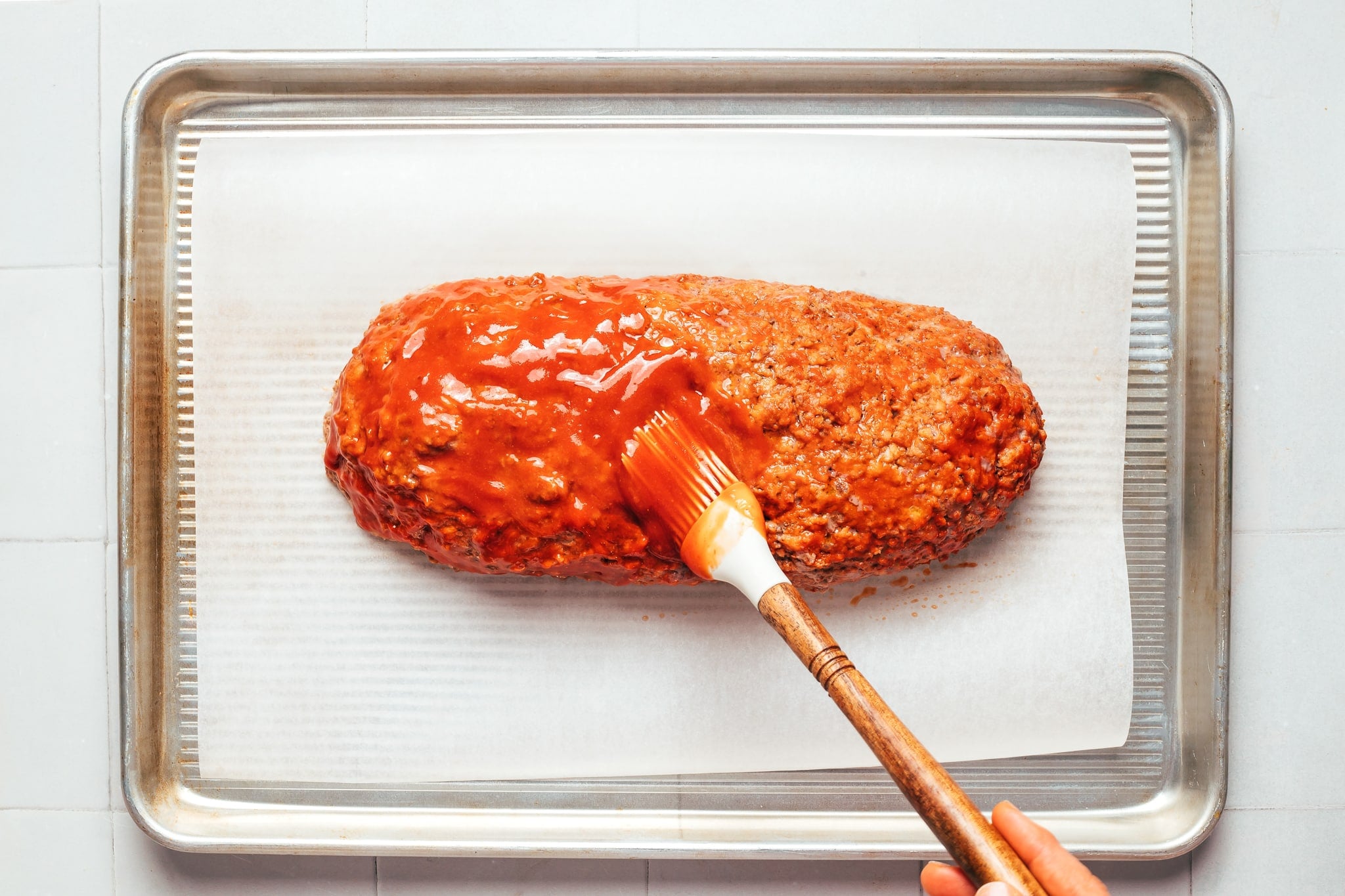
- Finish baking. Return the meatloaf to the oven, uncovered, and continue baking for approximately 15 minutes, or until an instant-read thermometer inserted into the thickest part of the center registers 160°F (71°C). Cooking times will vary depending on the size and thickness of your loaf, so start checking the internal temperature as it approaches the recommended cooking time.
Making two smaller loaves? Bake them covered at 350°F for approximately 30-35 minutes, then uncover, apply the remaining glaze, and finish at 400°F for approximately 10-15 minutes, or until both loaves reach 160°F internally.
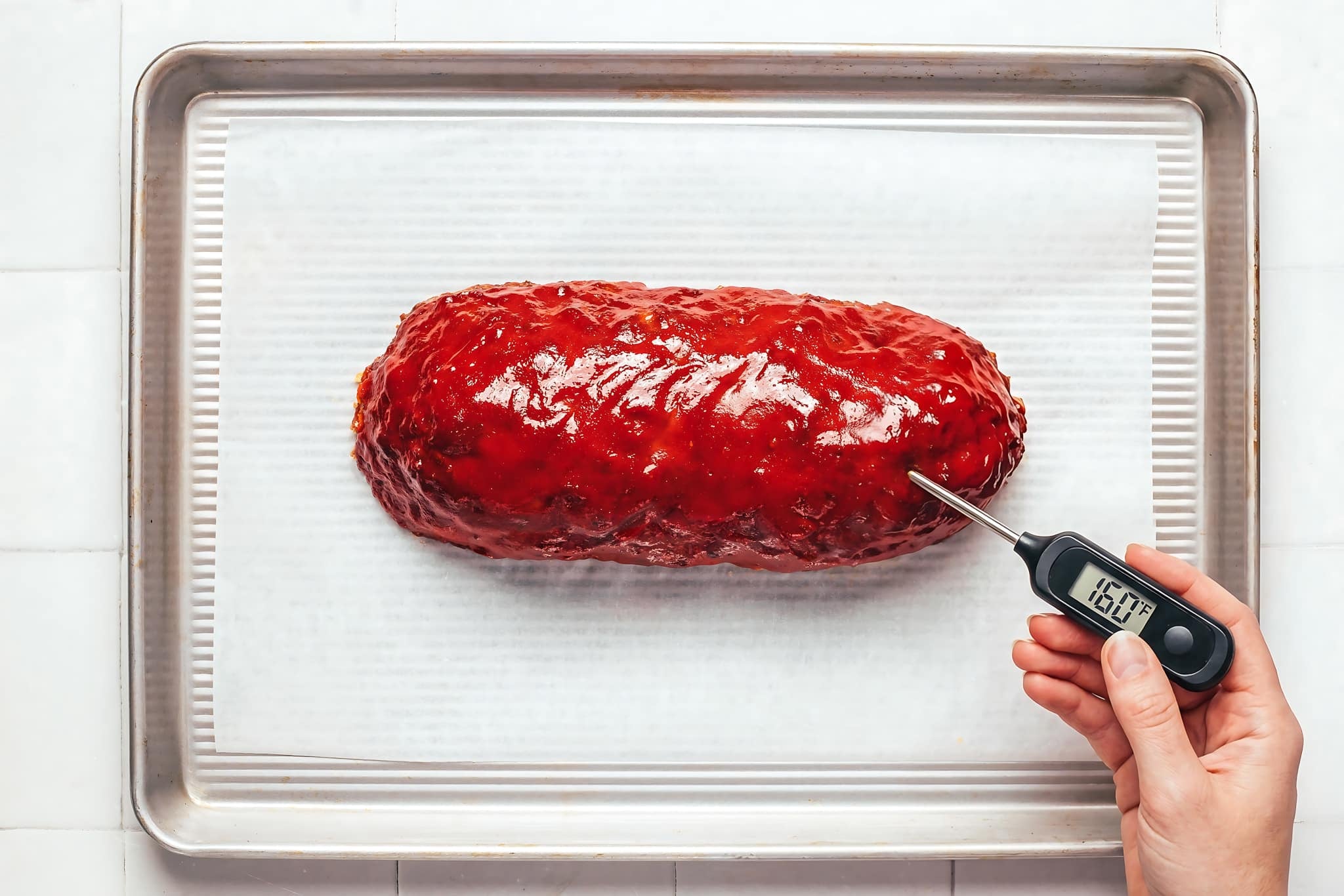
- Rest, slice, and serve. Remove the meatloaf from the oven and let it rest for at least 10 minutes before slicing. Yes, you guys, it’s important to let your meatloaf rest before slicing so that the juices settle, making it easier to cut into thick, even slices (without falling apart). Serve warm with your favorite sides like creamy baked mac and cheese, roasted asparagus, or easy sautéed zucchini. You can even try serving it with homemade gravy.
What’s the Secret to Making a Good Meatloaf?
The secret to a good meatloaf won’t be found in a single key tip or best ingredient. Instead, it’s all about getting the right balance of moisture, flavor, and texture, plus a few handling tips.
- Don’t use extra-lean beef. For the best balance of flavor and moisture, stick with 85/15 ground beef. It has just enough fat to keep the meatloaf juicy without being greasy. If you do use 80/20, expect a little more grease. Anything leaner than 90/10 is more likely to produce a dry, less flavorful loaf, so you may need to dial back your expectations a bit.
- Moisten the breadcrumbs first. Mixing the panko breadcrumbs with milk, grated onion (juices and all!), eggs, and seasonings before adding the beef helps soften the breadcrumbs and distribute everything evenly. This also means less mixing once the ground beef is added, which brings us to the next tip…
- Don’t overmix! This is a big one, you guys. Use your hands to gently combine the ground beef with the other ingredients just until everything is incorporated. Overworking the meat can result in a dense, tough meatloaf rather than one that’s tender and juicy.
- Don’t pack it too tightly. Ditch the loaf pan and use your hands to gently shape the meatloaf on a rimmed baking sheet; it should take shape and hold together without being compressed into a solid brick. Meatloaf that’s baked in a loaf pan stews in its own grease, but shaping it free-form on a rimmed baking sheet allows excess grease to collect around the loaf instead of against its sides.
- Add the glaze in stages. Brush half over the loaf before baking, then add the remaining glaze during the final uncovered bake. This gives the meatloaf plenty of sweet and tangy flavor and a beautiful glossy, caramelized finish.
- Use a thermometer and let it rest. Cooking times are helpful estimates, but the only reliable way to know when meatloaf is done is to check the internal temperature with an instant-read thermometer. Once the thickest part reaches 160°F, remove from the oven and let it rest for at least 10 minutes before slicing.
How Long Does Meatloaf Take to Cook?
The amount of time it takes to cook meatloaf depends on the size and thickness of your loaf. This recipe uses 2 pounds of ground beef and can be baked as one large loaf or divided into two smaller loaves for a shorter cooking time.
- One large meatloaf: Approximately 60-75 minutes.
- Two smaller meatloaves: Approximately 40-50 minutes.
How do you know when meatloaf is done? The most reliable way is to use an instant-read meat thermometer. Insert it into the thickest part of the center and check for an internal temperature of 160°F (71°C).
Make-Ahead, Storage, and Freezing
Meatloaf is a great make-ahead dinner, and both cooked and uncooked meatloaf can be frozen for later. Here’s how:
- Make ahead: Prepare the meatloaf mixture up to one day in advance, cover tightly, and refrigerate until ready to bake. You can also shape the loaf ahead of time. Just leave the glaze off until you’re ready to cook. Keep in mind that raw ground beef should be cooked or frozen within 1-2 days of purchase.
- Freeze before baking: Shape the uncooked meatloaf on a foil-lined baking sheet, but don’t add the glaze. Freeze for approximately 1-2 hours, or until firm enough to wrap. Wrap tightly in foil and transfer to a freezer-safe bag or container. Freeze for up to 1-2 months for the best quality. When ready to cook, thaw completely in the refrigerator (a large loaf may take 24-48 hours). When ready to bake, prepare the glaze and bake as directed, checking for an internal temperature of 160°F.
- Refrigerate leftovers: Store cooked meatloaf in an airtight container in the refrigerator for up to 3-4 days. I like to slice the leftovers before storing them so they’re ready for quick lunches or meatloaf sandwiches the next day.
- Freeze cooked meatloaf: Once cooled and promptly refrigerated, wrap individual slices or larger portions tightly in plastic wrap or aluminum foil, then transfer to a freezer-safe bag or airtight container. Freeze for up to 2-3 months for the best quality.
- Reheat: For the best results, thaw frozen meatloaf in the refrigerator before reheating. Place the slices in a baking dish with a splash of water or broth, cover with foil, and reheat in a 325°F oven until the center reaches 165°F. You can also microwave individual slices, covered, until heated through to 165°F.
More Comforting Dinner Recipes


Recipe updated November 2026 with new step-by-step photographs, retested ingredients, and clarified baking instructions.
If you try this meatloaf recipe, I’d love to hear what you think! Did you make one large loaf or two smaller ones? Leave me a comment below, and don’t forget to give the recipe a star rating if you enjoyed it. Your feedback is always appreciated! Thank you so much! 💛
Best Meatloaf Recipe

Ingredients
For the Meatloaf
- 1 cup whole milk
- 2 large eggs
- 5 tablespoons ketchup
- 2 tablespoons Worcestershire sauce
- 2 teaspoons Dijon mustard
- 1 large yellow onion, finely grated with its juices (about 1 cup)
- 2 cups plain panko breadcrumbs
- 2 teaspoons dried parsley
- 2 teaspoons dried oregano
- 1 teaspoon garlic powder
- 1 teaspoon dried thyme
- 1½ teaspoons fine sea salt
- 1 teaspoon ground black pepper
- 2 pounds ground beef, (85% lean)
For the Meatloaf Glaze
- ½ cup ketchup
- 2 tablespoons brown sugar
- 1 tablespoon red wine vinegar
- 2 teaspoons Dijon mustard
Instructions
- Preheat the oven. Preheat your oven to 350°F (175°C). Line a large, rimmed baking sheet with parchment paper or aluminum foil and set aside.
- Prepare the breadcrumb mixture. In a large mixing bowl, whisk together the milk, eggs, ketchup, Worcestershire sauce, and Dijon mustard until well combined. Add the grated onion (including its juices), panko breadcrumbs, dried parsley, oregano, garlic powder, thyme, salt, and black pepper. Stir until the breadcrumbs are evenly moistened and the seasonings are thoroughly incorporated.
- Add the ground beef. Add the ground beef to the bowl and, using clean hands, gently combine it with the breadcrumb mixture. Mix only until the ingredients are evenly distributed, being careful not to overwork the meat, which can result in a dense, tough meatloaf.
- Prepare the glaze. In a separate small bowl, whisk together the ketchup, brown sugar, red wine vinegar and Dijon mustard until smooth. Set aside.
- Shape the meatloaf. Transfer the meat mixture to the prepared baking sheet. Using your hands, gently form it into one large, free-form loaf with an even thickness and slightly rounded top. Smooth any large cracks without packing the mixture too tightly.
- Add the first layer of glaze. Brush half of the prepared ketchup glaze evenly over the top and sides of the meatloaf. Reserve the remaining glaze for later.
- Cover and bake. Loosely tent the meatloaf with aluminum foil, leaving enough space so the foil doesn't touch the glazed surface. Transfer to the preheated oven and bake at 350°F for approximately 45-60 minutes.
- Uncover, glaze, and finish baking. Carefully remove the foil and increase the oven temperature to 400°F (204°C). Brush the meatloaf with the remaining glaze, coating the top and sides. Return to the oven, uncovered, and bake for approximately 15 minutes longer, or until an instant-read thermometer inserted into the thickest part of the center registers 160°F (71°C). Continue baking and checking the temperature as needed.
- Rest and serve. Remove the meatloaf from the oven and allow it to rest for at least 10 minutes before slicing. Cut into 8 generous slices and serve warm with your favorite sides.
Notes
- Adjust the glaze to taste. Ketchup is already fairly sweet, so feel free to adjust the brown sugar to suit your preference. For a less sweet glaze, reduce the brown sugar or try a reduced-sugar ketchup. Prefer something sweeter? Add a little more brown sugar or a drizzle of honey. For extra tang, add another splash of red wine vinegar or a little more Dijon mustard. Just be sure to taste the glaze before brushing it onto the raw meatloaf.
- Don’t overmix the ground beef! For the best texture, combine the breadcrumbs, milk, eggs, onion, and seasonings before adding the beef. Gently mix everything together just until combined, and avoid packing the loaf too tightly when shaping. Overworking the meat can leave you with a dense, tough meatloaf rather than one that’s juicy and tender.
- One large loaf or two smaller loaves. Divide the mixture evenly to make two smaller meatloaves and reduce the cooking time. Bake covered at 350°F for approximately 30-35 minutes, then uncover, increase the temperature to 400°F, and apply the remaining glaze. Continue baking for another 10-15 minutes, or until both loaves reach 160°F internally.
- Make it ahead. Prepare and shape the uncooked meatloaf up to one day in advance, cover tightly, and refrigerate until ready to bake. Hold off on adding the glaze until baking day. Remember that fresh ground beef should generally be cooked or frozen within 1-2 days of purchase.
- Storage and freezing. Leftover meatloaf will keep in an airtight container in the refrigerator for 3-4 days. For longer storage, freeze individual cooked slices for 2-3 months. You can also freeze the uncooked, unglazed loaf for 1-2 months. Thaw completely in the refrigerator before cooking or reheating. Reheat cooked leftovers to 165°F.
Explore More with AI
Nutrition
Nutrition information is automatically calculated, so should only be used as an approximation.









OMG….how delish! the flavors were spot on. The meat was SOOOO tender, as I have a slight problem digesting ground beef. Reminded me of my Gram’s meat loaf which I loved as a kid. The family LOVED it. We’ll definitely make again!!!! Thank you for this wonderful recipe!!!
Thank you so much, Cheryl! I qm so happy you and your family loved it, and that it brought back such sweet memories of your Gram’s meatloaf. It means a lot that you took the time to share this. 🙂
I cut the recipe in half…thought I cut the cook time in half too but it was over done. Any suggestions? I really like the flavors alot. Thank you!
Thank you so much – I’m glad you enjoyed the flavors! When it comes to cook time, cutting the recipe in half doesn’t always mean the baking time will be cut in half too. A smaller meatloaf will cook a little faster, but not by as much as you might expect. The best way to tell if it’s done is to use a meat thermometer – once the center reaches 160°F, it’s ready. If you try a smaller portion next time, I’d start checking around the 20 – 25 minute mark, depending on the size and thickness, and adjust as needed.
This is the best meatloaf recipe. Today I forgot to add the milk and didn’t realize it until it was in the oven. I’m hoping it will still taste good.
Thank you so much for your kind words! I hope it still turned out well—even without the milk, it should still be tasty, just a little less moist. Let me know how it came out!
I just realized that I forgot the milk too and I literally just sat down after putting it in the oven 😩
Don’t worry—you’re not alone, it happens to the best of us! 🙈 The milk helps keep the meatloaf moist, but it should still turn out tasty. If it seems a bit drier after baking, a little extra sauce or gravy on top can help. Let me know how it turns out!
This is by far the best meatloaf I have ever made! Delicious.
I’m thrilled to hear that—thank you so much! Glad you enjoyed the meatloaf and found it delicious. Thanks for taking the time to share your feedback!
This is the best meatloaf recipe!!! Makes a great meatloaf sandwiches with the leftovers.
Divide the mixture and make two meatloaves side by side on the pan. It cooks quicker. I used a broiler pan and the fat drains off below.
Arrggh! I’m making this recipe for the first time and it’s taken an extra hour to bake to get the internal temperature of the loaf to barely 90 degrees. I’ve had to crank the oven up to 450 degrees to try to finish baking before bedtime. I think all meatloaf recipes suffer from recommended temperatures that are entirely too low, especially ones that call for two pounds of meat. After the first hour of baking at 350 degrees, the temperature was barely 60 degrees. I think the heat needs to be set to 400 degrees to start; otherwise, you’ll end up like me waiting for 2.5 to 3 hours for dinner to be served. I hope it’s at least delicious when ready as I searched a lot of recipes and was really excited to make this one.
Mine was at 140 after an hour. You’re probably right about the temperature needing to be a bit higher at the first 45 minutes.
Finally, a truly good meatloaf recipe. This is from someone who, until now, has not been a big meatloaf fan. Most meatloafs are lacking in flavor, are too dry. or both. This one is juicy and flavorful. Furthermore, it is very tender, unlike some grainy and rubbery versions I’ve made. Since there are only two of us, I halved the recipe. There’s still enough left over for two meals. I love leftovers that I can just pull out of the freezer at a later date.
Thank you for the very good feedback and rating Bernadette 🙂
This is the first meatloaf recipe I made and everyone is crazy about it. I’ve done it for many different people, even from different countries, and I always hear it’s the best meatloaf they’ve ever eaten. Thank you, Jessica! 🙂
My toddler and I really enjoyed this recipe.