
This post may contain affiliate links. See my disclosure policy.

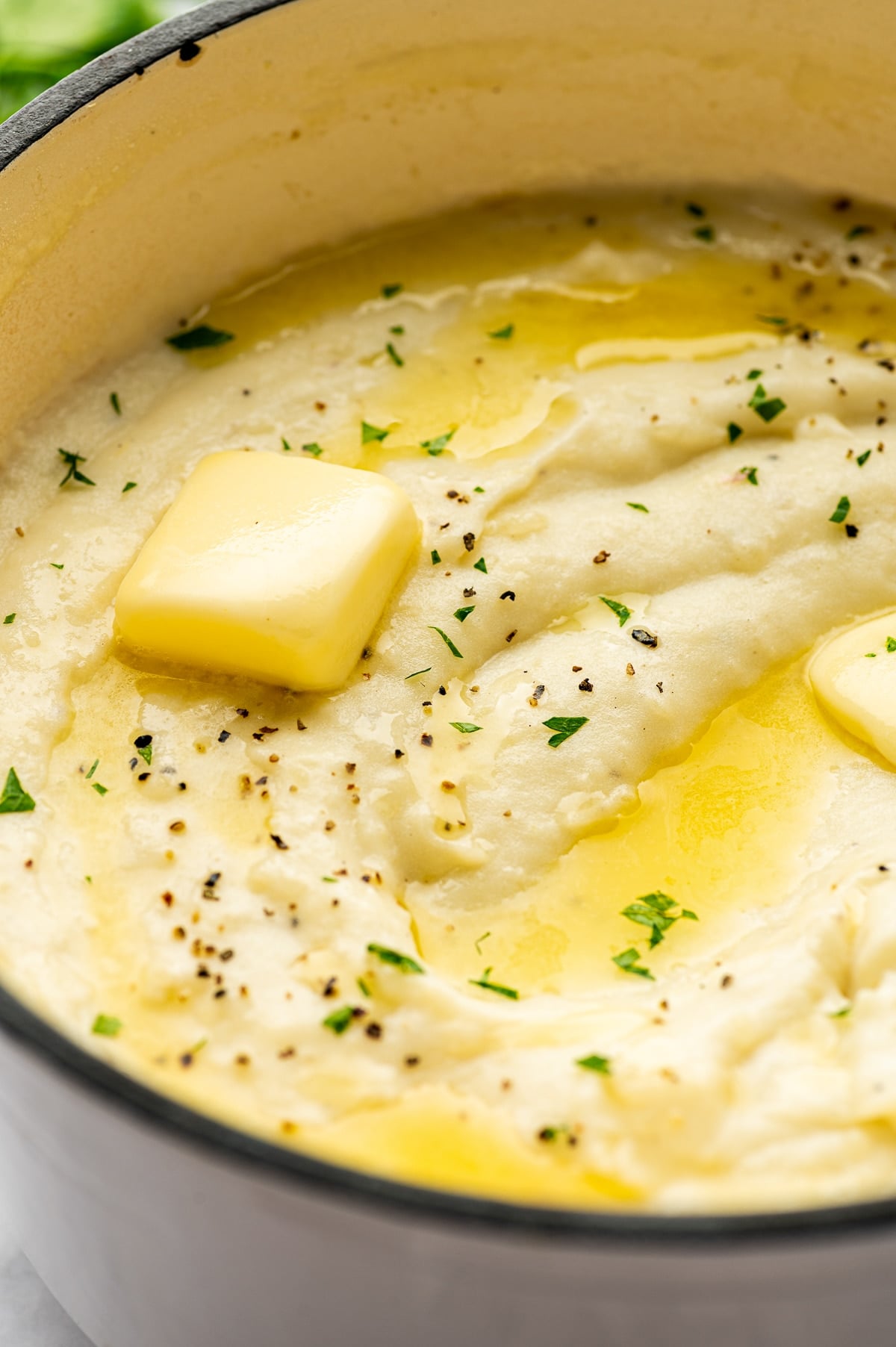
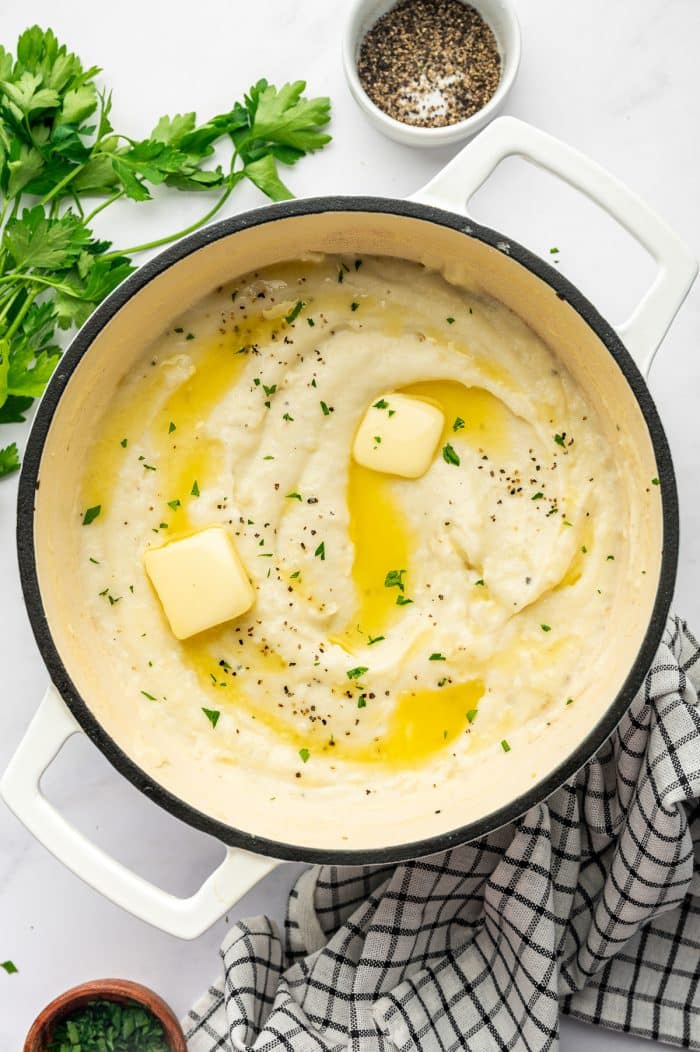
If you’re looking for an easy mashed potatoes recipe that’s creamy, buttery, and fluffy, this one is my favorite. Made with Russet potatoes, sour cream, whole milk, and butter, it uses a few simple techniques that make all the difference in creating soft, creamy potatoes without turning them gluey.
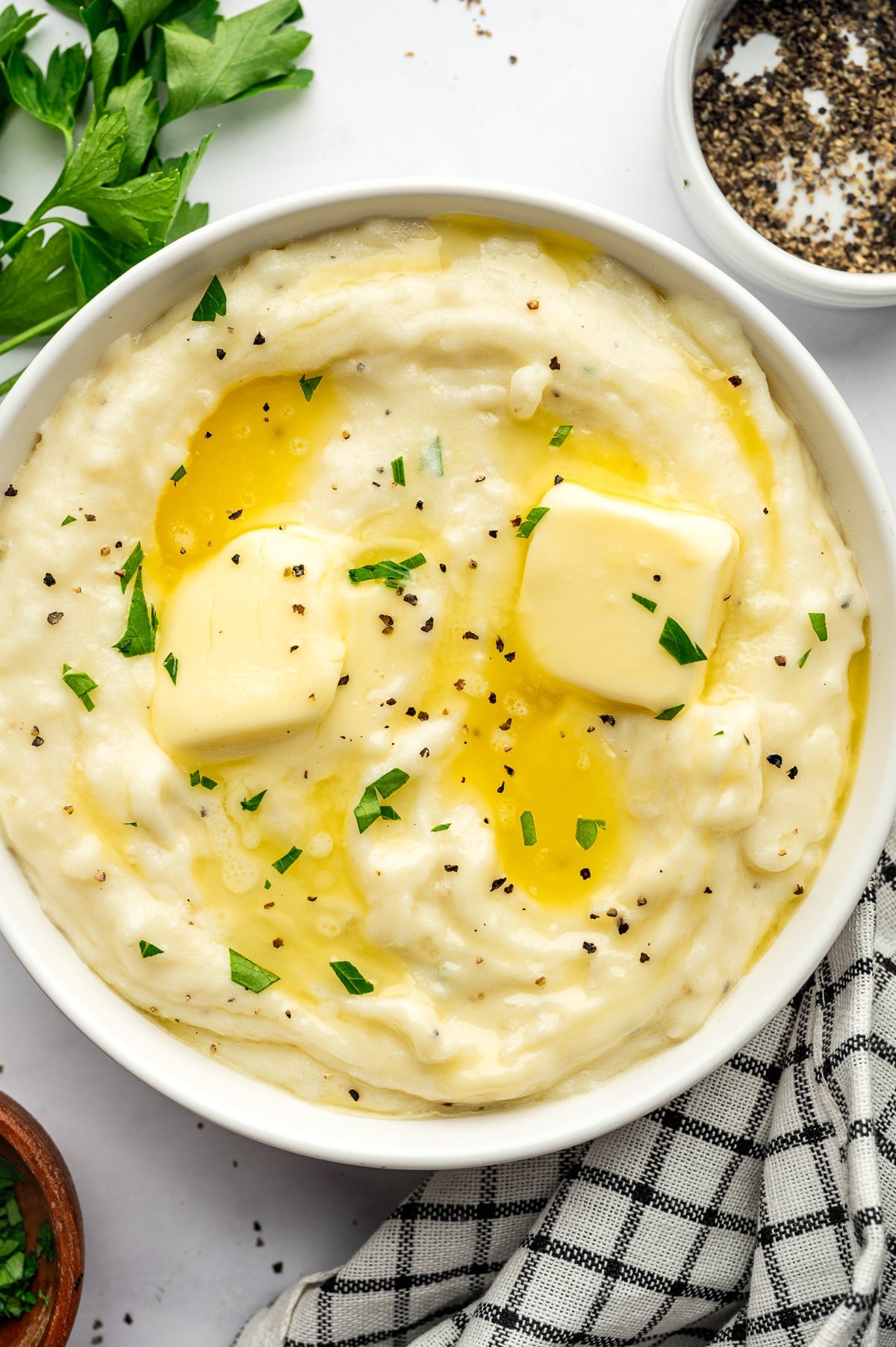
Quick Look: My Favorite Creamy Mashed Potatoes
- Made with Russet potatoes for a light, fluffy texture
- Sour cream adds richness, creaminess, and a slight tang
- Made with only 6 ingredients: potatoes, butter, whole milk, sour cream, salt, and pepper
- Steam-dry the potatoes after boiling to remove excess moisture
- Warm the dairy before adding it to the potatoes
- Mix just until creamy to prevent gluey mashed potatoes
- Serves about 8 people, using roughly 1/2 pound of potatoes per person
- Great with oven-roasted turkey breast, tender baked pork chops, or classic meatloaf
- Make ahead and reheat, or keep warm for holiday dinners and entertaining
I can’t imagine mashed potatoes without thinking about my dad. He made the best mashed potatoes, but never really followed a recipe, tasting as he went and adding more milk, salt, or sour cream as needed. He also always used a handheld electric mixer, a technique I don’t necessarily recommend, but a memory I will never forget.
This mashed potatoes recipe isn’t all that different from his, minus the mixer. The amounts are a reliable starting point, but you’ll want to adjust the milk, butter, sour cream, and salt to taste. I always use Russet potatoes and never skip the sour cream, which gives them their rich, creamy texture and slight tang. From there, it comes down to a few simple techniques: steam-drying the potatoes, warming the dairy, and mixing just until everything comes together.
Table of Contents
- Quick Look: My Favorite Creamy Mashed Potatoes
- Ingredients and Substitutions
- How to Make Creamy Mashed Potatoes
- Tips for the Best Creamy Mashed Potatoes
- How Much Mashed Potatoes Per Person?
- How to Keep Mashed Potatoes Warm
- Make-Ahead, Storage, and Reheating
- FAQs About Mashing Potatoes
- More Ways to Make Mashed Potatoes
- Creamy Mashed Potatoes Recipe
Ingredients and Substitutions
The ingredient amounts in the recipe card are a reliable starting point – not a rigid formula. Depending on the consistency you prefer, you may want to add a little more milk, butter, sour cream, or salt before serving.
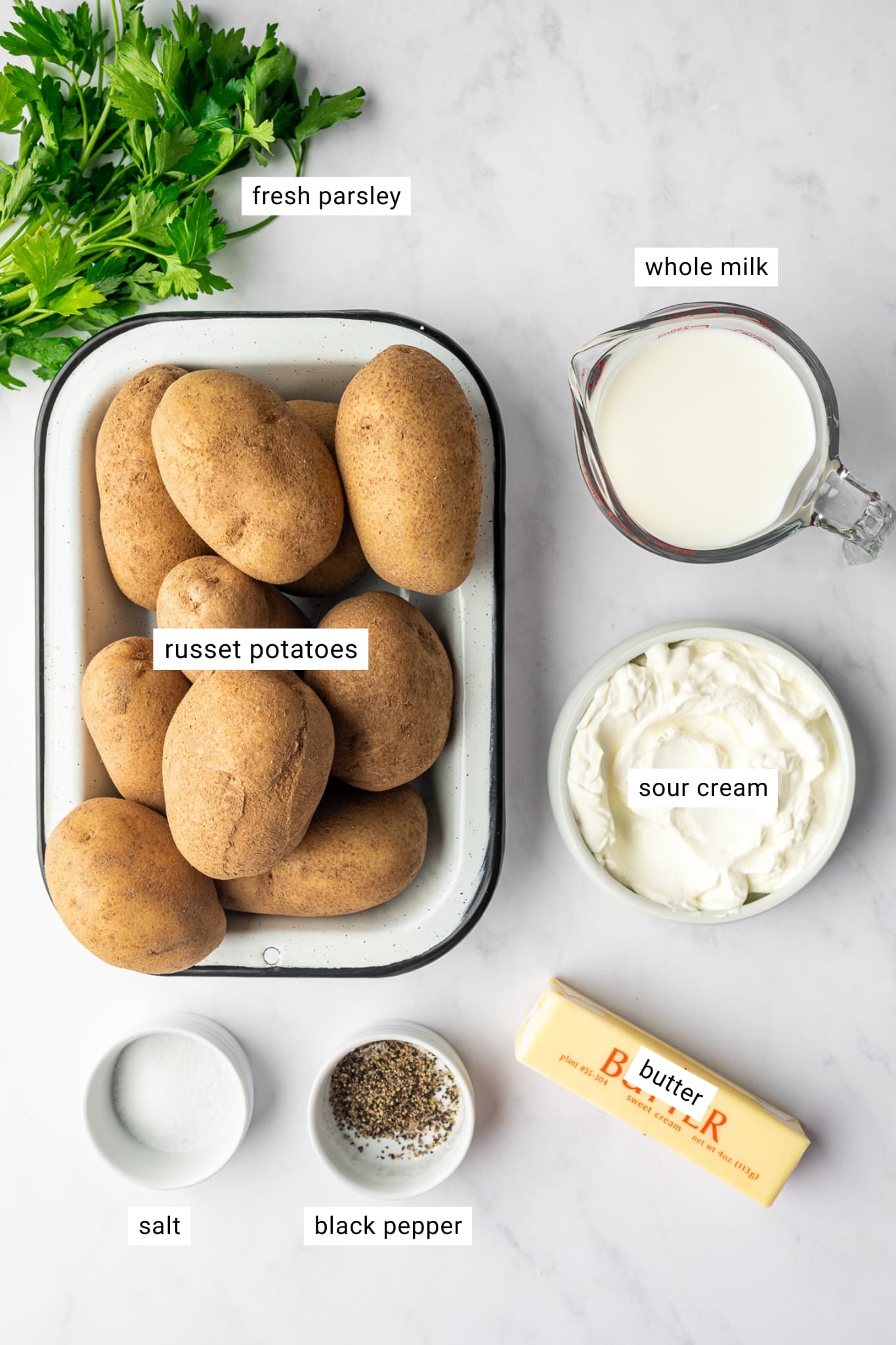
- Russet potatoes: Russets are my first choice for this recipe. They make a lighter, fluffier mash than Yukon Golds, but the finished potatoes are still very creamy thanks to the butter, whole milk, and sour cream. In my experience, Yukon Golds make a denser, somewhat stickier mash and usually need more butter and dairy to reach the same soft, creamy consistency. If you’re curious about why different varieties behave differently, see my guide to waxy vs. starchy potatoes.
- Butter: It’s mashed potatoes, so butter is non-negotiable. I always use salted butter because I love the extra flavor it adds, then adjust the salt at the end as needed. Unsalted butter works too, but I usually find the potatoes need a little more seasoning.
- Whole milk: My dad always made mashed potatoes with whatever we had in the refrigerator, which usually meant 2% milk. I prefer whole milk because it makes the potatoes a little richer and creamier without making them feel heavy. Half-and-half also works if you want an even richer result.
- Sour cream: I can’t imagine mashed potatoes of any kind without sour cream. I mean, imagine eating a baked potato with just butter. It’s that little bit of tang that makes everything taste better. I recommend full-fat sour cream for the best flavor and creamiest texture. Plain full-fat Greek yogurt can be substituted, but it will taste a little tangier and may make the potatoes slightly less rich.
- Salt: Potatoes need plenty of salt, but the exact amount is a matter of personal preference. Salt the cooking water, then taste again after the butter, milk, and sour cream have been added. Add more salt a little at a time until the potatoes taste right to you.
- Black pepper: Freshly ground black pepper adds a little warmth and contrast. Add as much or as little as you like.
How to Make Creamy Mashed Potatoes
When it comes to making mashed potatoes, the basic process couldn’t be easier. However, the order does matter. For the best texture, mash the potatoes before adding the warm dairy, then mix only until everything comes together.
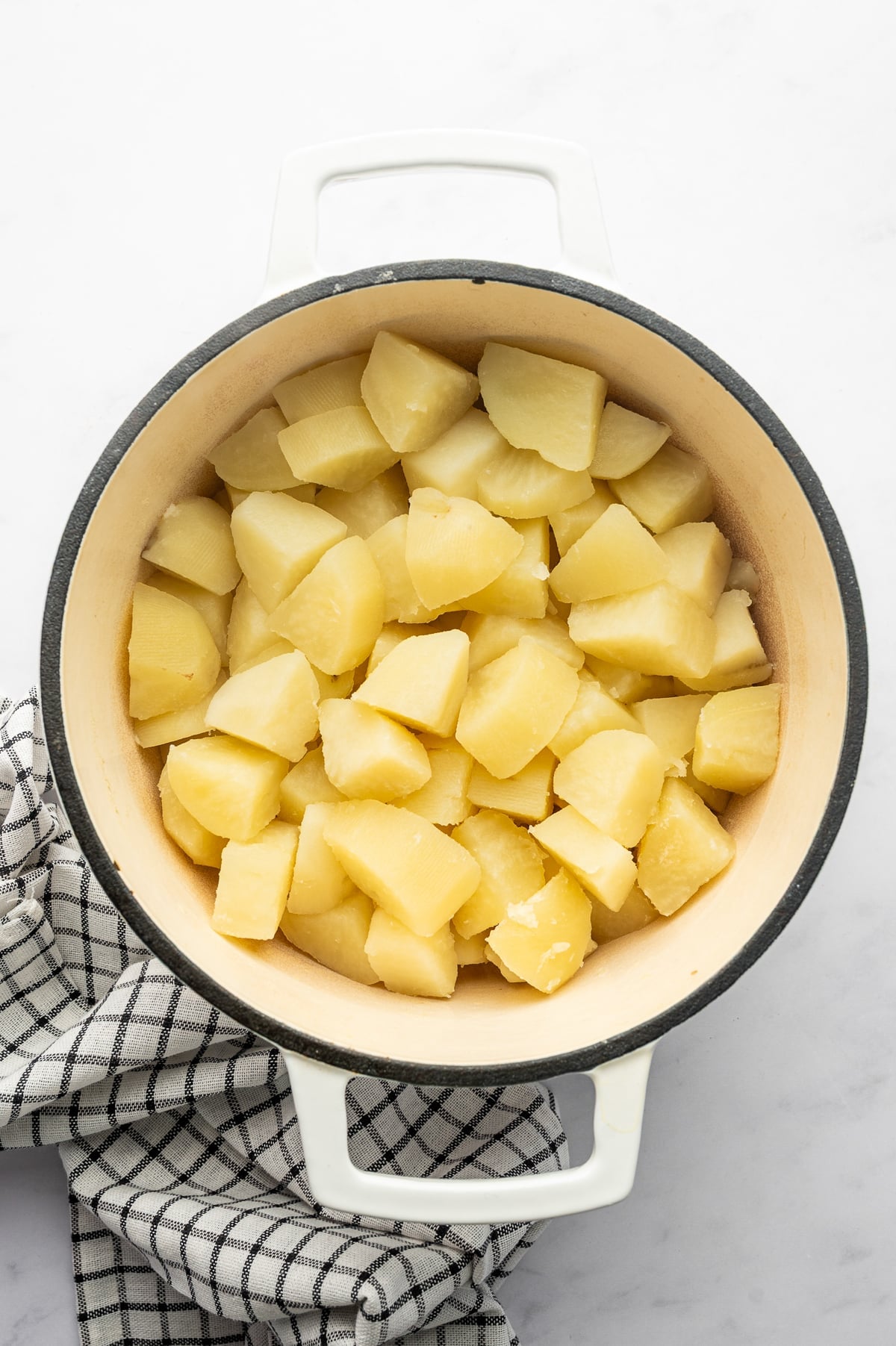
- Cook and steam-dry the potatoes: Peel the Russet potatoes and cut them into evenly sized chunks, about 1 1/2 to 2 inches. Place them in a large pot, cover with cold salted water, and bring to a boil. Reduce to a gentle simmer and cook until fork-tender. Drain well, return the potatoes to the warm pot, and let them steam-dry for 1 to 2 minutes.
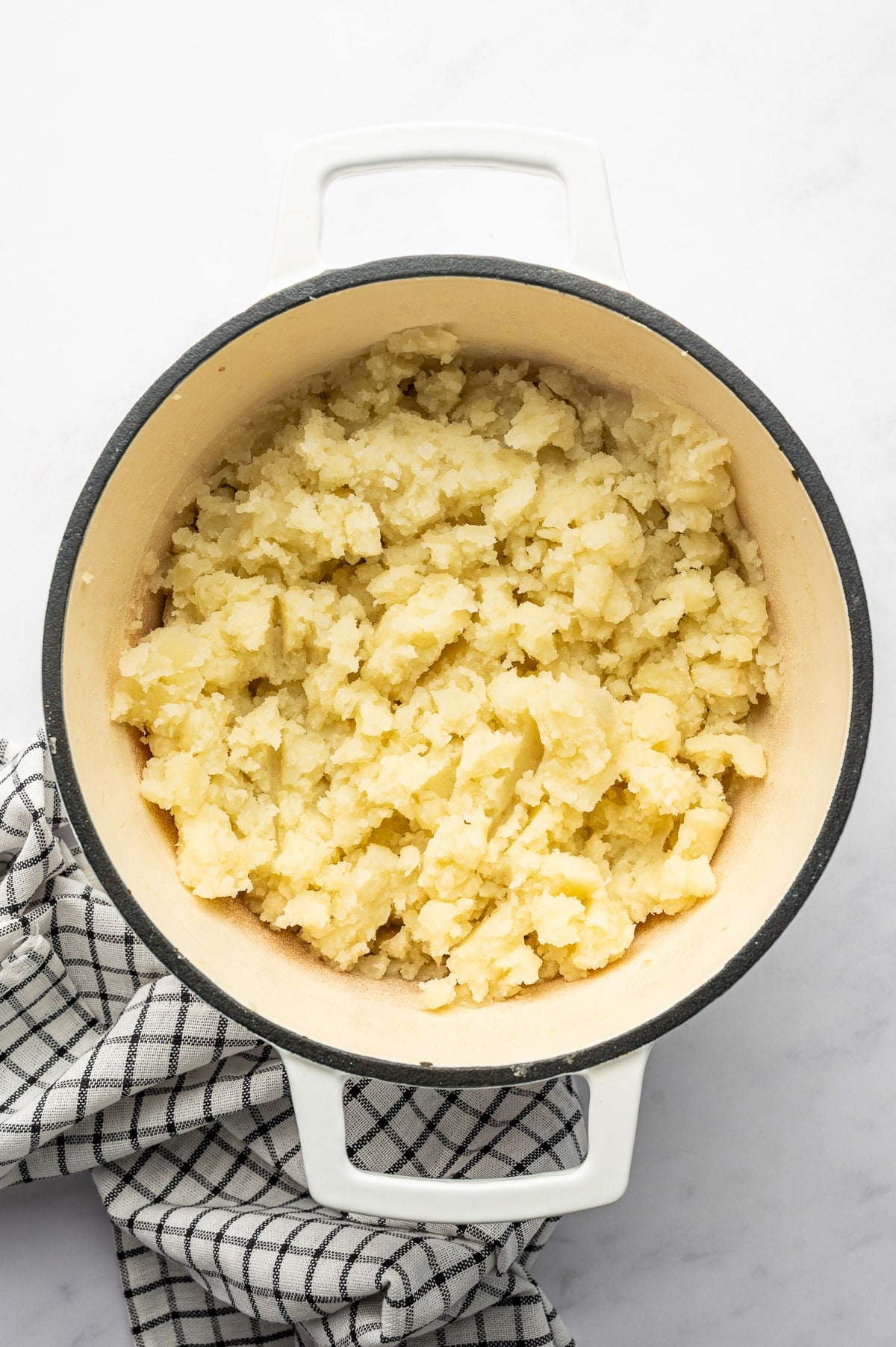
- Mash the potatoes: Use a potato masher to mash the warm potatoes until most of the larger pieces are gone. I like to leave just a little texture at this point rather than working them completely smooth.
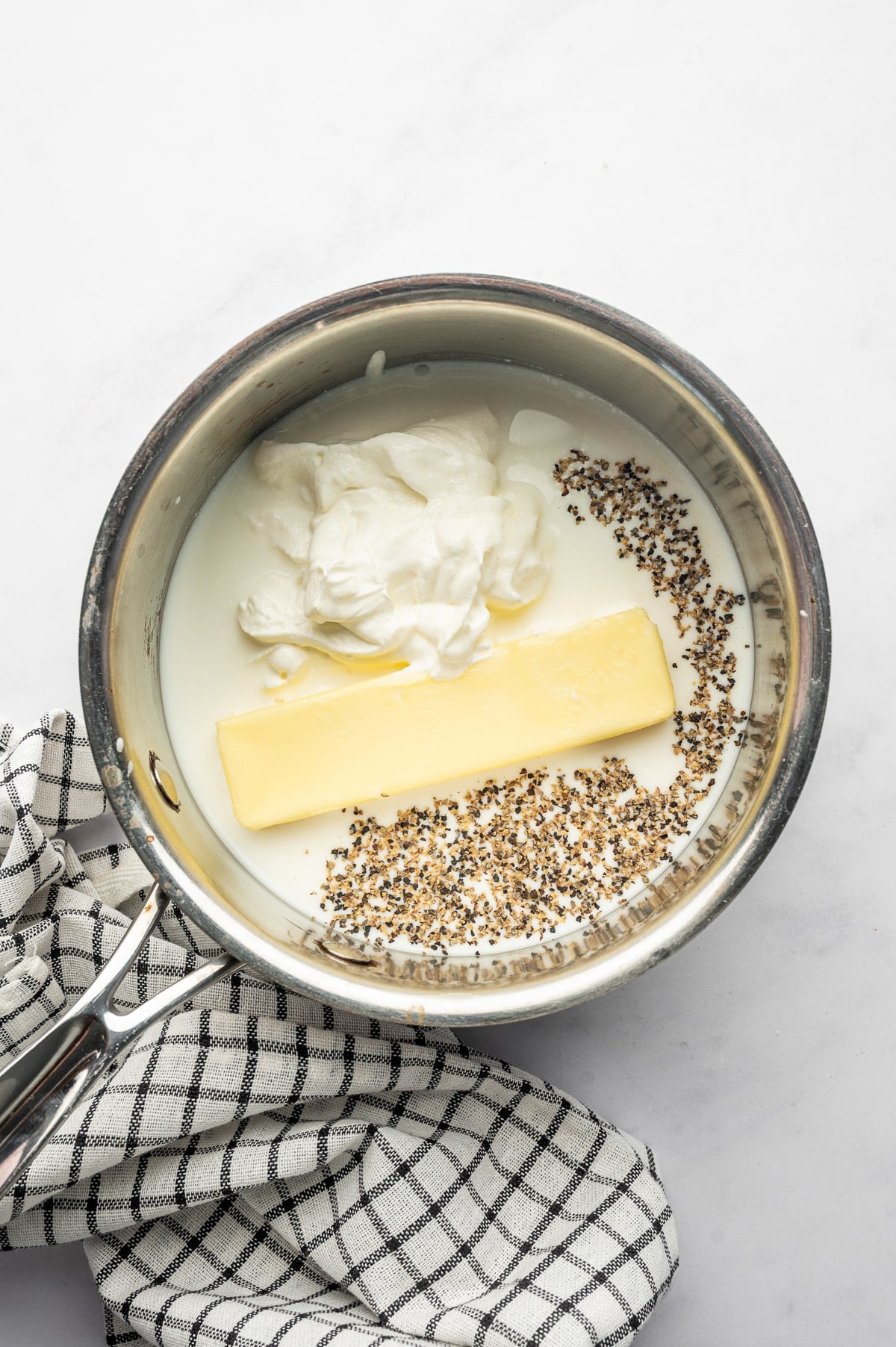
- Warm the butter, milk, and sour cream: While the potatoes are cooking, combine the butter, whole milk, sour cream, and black pepper in a small saucepan. Warm gently over low to medium-low heat until the butter is melted and the mixture is warm. Do not let it boil.
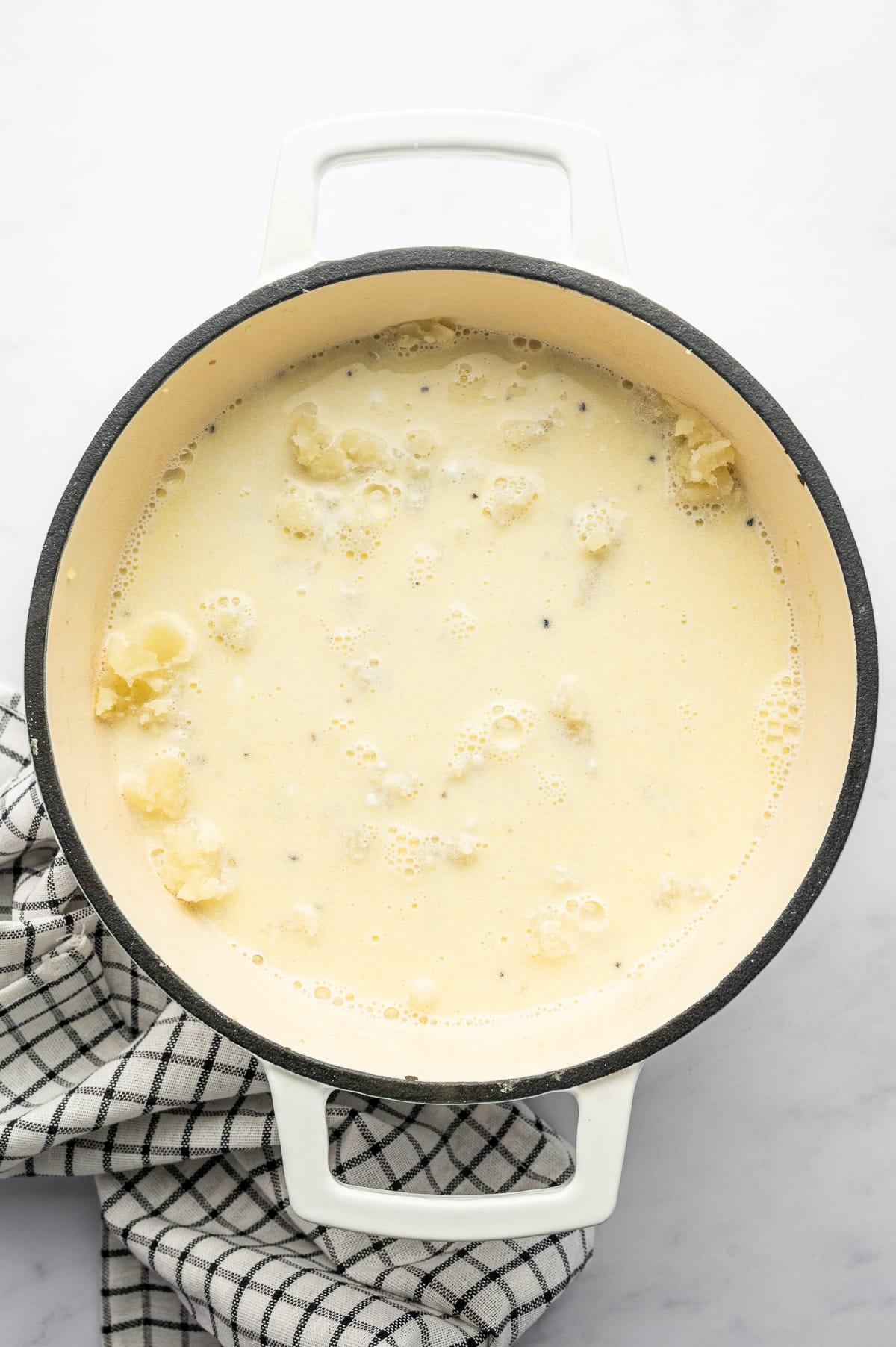
- Add the warm dairy: Pour the warm butter, milk, and sour cream mixture over the mashed potatoes. Adding the dairy while it’s warm helps it incorporate more easily without cooling down the potatoes.
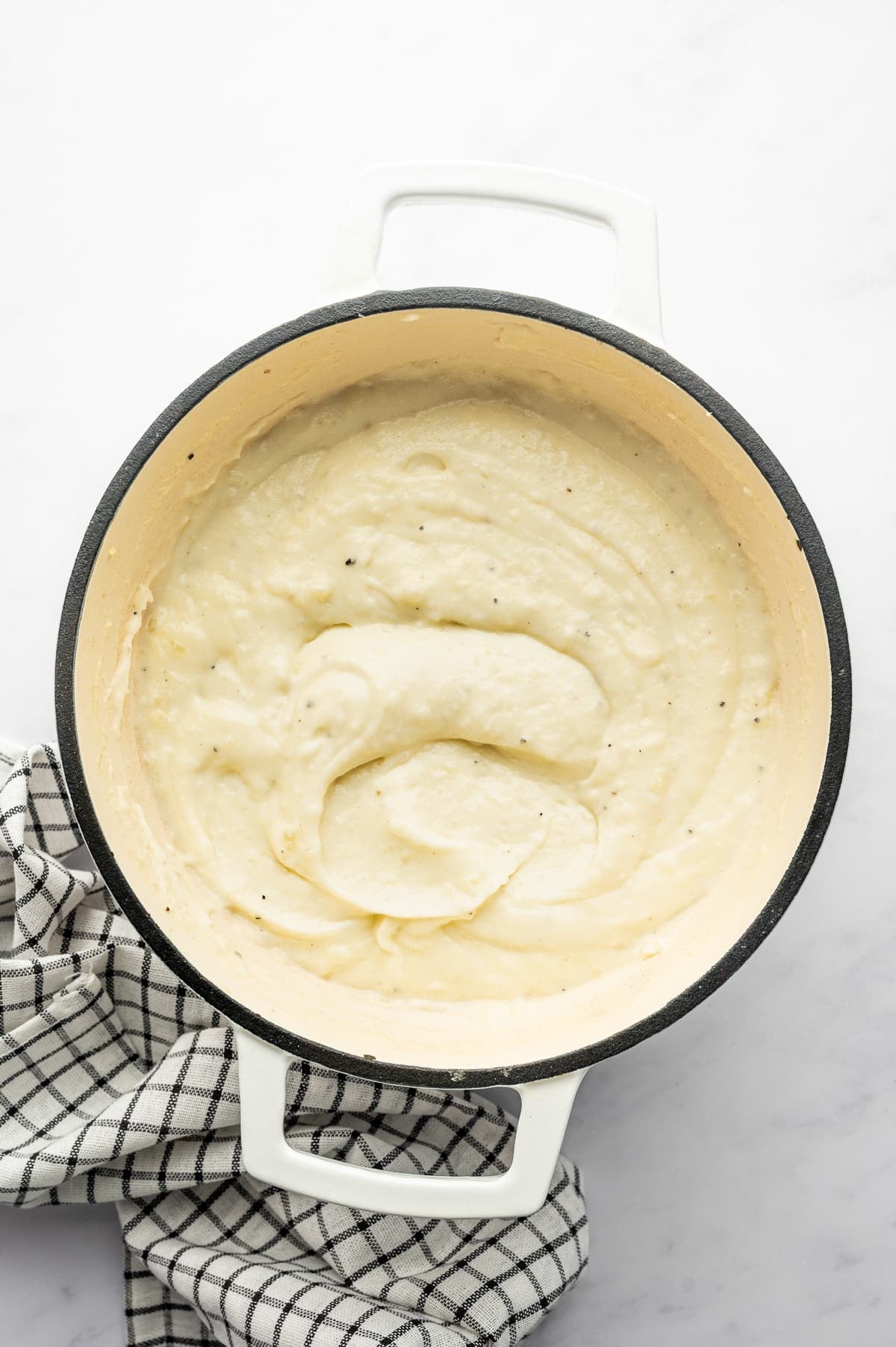
- Mix until creamy and season to taste: Gently stir or fold until the dairy is incorporated and the potatoes are creamy. Avoid overmixing. Taste and add more warm milk, butter, sour cream, or salt as needed until the texture and flavor are exactly how you like them.
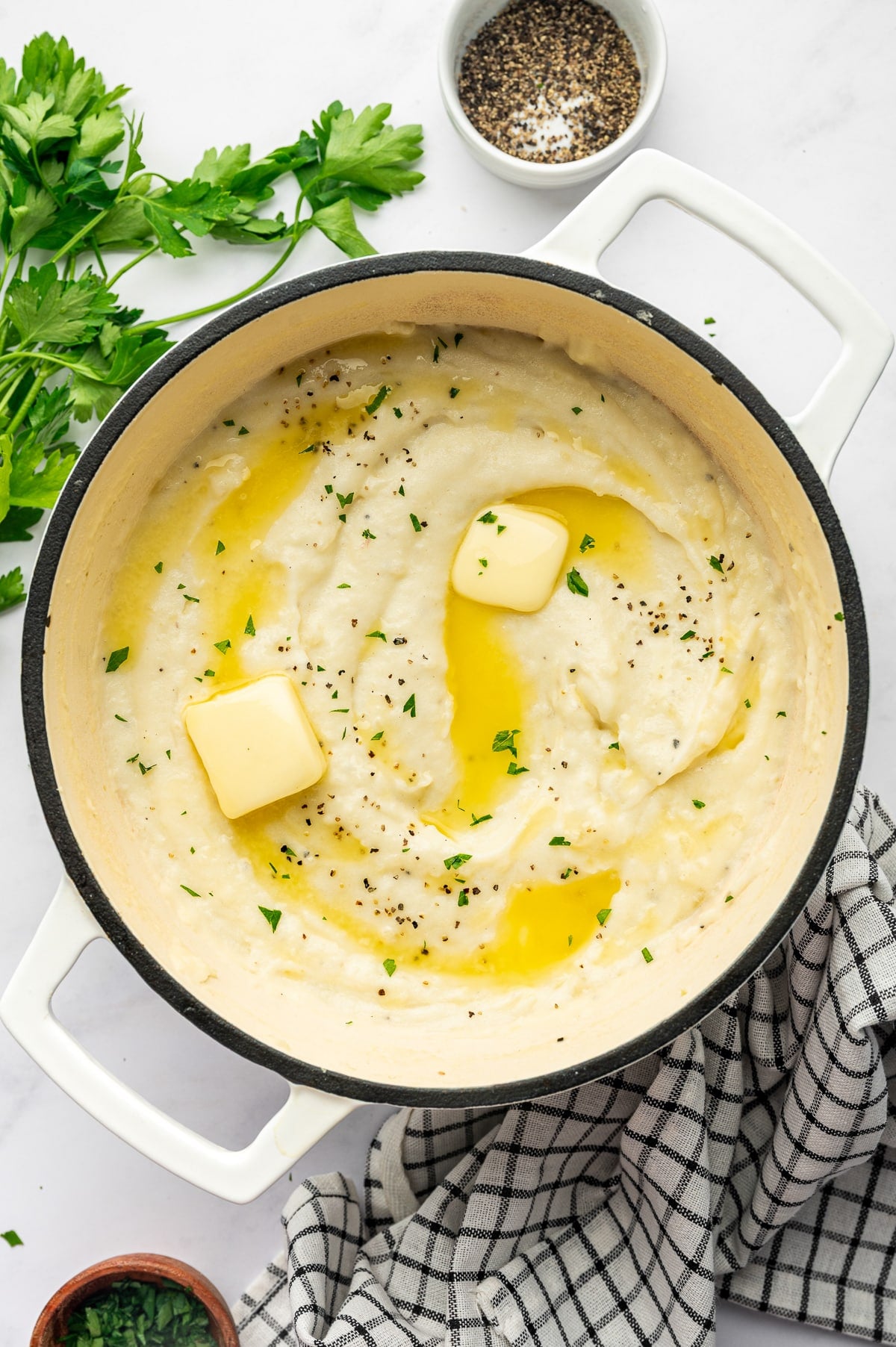
- Garnish and serve: Transfer the mashed potatoes to a serving dish, or serve them straight from the pot. Top with extra butter, freshly cracked black pepper, and chopped parsley, if desired. Serve warm.
Tips for the Best Creamy Mashed Potatoes
- Start the potatoes in cold, salted water: This helps the potatoes cook evenly from the inside out. Starting them in boiling water can leave the outsides overcooked before the centers are tender.
- Don’t overcook the potatoes: Cook just until they’re fork-tender. Potatoes that are falling apart in the water can absorb too much moisture and make the finished mash watery.
- Let them steam-dry after draining: Return the drained potatoes to the warm pot for a minute or two so excess moisture can evaporate. This gives the butter, milk, and sour cream more room to soak in.
- Warm the dairy before adding it: Cold milk and sour cream cool the potatoes quickly and don’t incorporate as smoothly. Warm the butter, milk, and sour cream together before mixing them in.
- Taste and adjust before serving: The recipe amounts are a starting point. Add a little more milk, butter, sour cream, or salt until the potatoes have the texture and flavor you like.
Potato Masher vs. Potato Ricer
I always use a potato masher because it’s faster, easier, and gives me more control over the final texture. A potato ricer is great if you want completely smooth, uniform mashed potatoes, but for me, it isn’t worth the extra effort of working in batches and repeatedly loading the potatoes into the ricer.
And despite my dad’s fabulous mashed potatoes, I generally don’t recommend a handheld electric mixer or stand mixer because it’s much easier to accidentally overwork the potatoes and turn them gluey. If you do use one, keep the speed low and stop as soon as the potatoes are creamy. I would avoid a blender or food processor altogether.
How Much Mashed Potatoes Per Person?
There will be some variation here, but in general, I plan on 1/2 pound of raw potatoes per person. This recipe uses 4 pounds of Russet potatoes and serves about 8 people.
- 2 pounds = 4 people
- 3 pounds = 6 people
- 4 pounds = 8 people
- 5 pounds = 10 people
- 6 pounds = 12 people
For holiday meals where there will be lots of other side dishes, you can usually get away with a little less. However, if mashed potatoes are one of the main sides, I would stick with the full 1/2 pound per person. Besides, leftover mashed potatoes are great with leftover homemade gravy, as a topping for shepherd’s pie, or fried up with eggs for breakfast. Leftover mashed potatoes can also be repurposed into a mashed potato casserole.
How to Keep Mashed Potatoes Warm
Mashed potatoes are best right after they’re made, but that’s not always realistic when you’re juggling the rest of dinner. Thankfully, they hold pretty well as long as you keep them warm and give them a little attention.
- Slow cooker: This is usually what I do when I’m feeding a crowd. Transfer the finished mashed potatoes to a lightly buttered slow cooker and keep them on the warm setting. Stir occasionally, and add a splash of warm milk or a little butter if they start to thicken. If you’d rather make the potatoes entirely in the crock pot, try my slow cooker mashed potatoes recipe.
- Double boiler: This is a really gentle way to keep mashed potatoes warm without drying them out. Place them in a heat-safe bowl over gently simmering water, cover, and stir occasionally.
- Low oven: Place the potatoes in a covered oven-safe dish and keep them warm in an oven set to 200°F (93°C). If they begin to dry out, stir in a little warm milk, butter, or sour cream before serving.
Make-Ahead, Storage, and Reheating
- Make-Ahead: You can make mashed potatoes ahead of time and refrigerate them until you’re ready to reheat. Since they thicken as they cool, plan to stir in a little extra warm milk, butter, or sour cream while reheating to bring back their creamy texture.
- Refrigerator: Store leftover mashed potatoes in an airtight container in the refrigerator for up to 4 days.
- Freezer: You can freeze mashed potatoes, although the texture will be slightly different after thawing given all the dairy we’re adding to them. Store them in an airtight freezer-safe container, then thaw overnight in the refrigerator before reheating.
- Reheating: Reheat them covered in a 350°F oven until hot. Stir once or twice if needed, and add a little warm milk, butter, or sour cream to bring back that soft, creamy texture. The microwave also works if you’re reheating smaller portions.
FAQs About Mashing Potatoes
For this recipe, the biggest secrets are removing excess moisture and not overworking the potatoes. After boiling, drain the Russets well and let them steam-dry in the warm pot for a minute or two. Then mash them before adding the warm butter, milk, and sour cream, and mix only until everything comes together. That gives you creamy mashed potatoes that are still light and fluffy rather than watery or gluey.
The biggest mistake is overworking the potatoes. Russets release starch as they’re mashed and mixed, and too much mixing can turn them gluey. I prefer a potato masher because it gives me more control over the texture. A handheld or stand mixer can work, but it’s much easier to overmix the potatoes, so use a low speed and stop as soon as they’re creamy. I recommend avoiding a blender or food processor altogether.
Other common mistakes are starting the potatoes in hot water instead of cold, overcooking them, failing to steam-dry them after draining, and adding cold dairy.
For this recipe, I prefer Russet potatoes. Their high starch content gives the potatoes a light, fluffy texture while still allowing them to absorb plenty of butter, milk, and sour cream. Yukon Golds can also be used, but they make a denser, somewhat creamier mash and, in my experience, can become stickier if overworked. For a broader look at how different varieties compare, see my guide to the types of potatoes
Once the water comes to a boil, reduce it to a gentle simmer and cook the potatoes for about 15 to 20 minutes, or until they’re easily pierced with a fork. The exact time will depend on the size of your potato chunks, so go by tenderness rather than the clock.
Add enough cold water to cover the potatoes by about 1 inch. The water should also be well salted so the potatoes are seasoned as they cook. I recommend starting with about 1 tablespoon of salt for a large pot of water, but this doesn’t need to be exact. You’ll taste and adjust the seasoning again after adding the butter, milk, and sour cream.
More Ways to Make Mashed Potatoes
If you love mashed potatoes but want to change up the method or flavor, try one of these next:
- Crockpot Mashed Potatoes – Best when you want a more hands-off method or need to free up stovetop space for a holiday meal.
- Instant Pot Mashed Potatoes – A faster pressure-cooker version that makes cooking the potatoes especially easy.
- Roasted Garlic Mashed Potatoes – A great choice if you want classic mashed potatoes with a deeper, sweeter garlic flavor.
- Boursin Mashed Potatoes – Extra rich and creamy with garlic-and-herb Boursin cheese.
I’ll always think of my dad when I make these mashed potatoes, and I hope this recipe becomes a favorite in your own kitchen, too. If you make it, I’d love to hear how it turned out. Please leave a comment and rating below and tell me what little adjustments you made to make them your own. Thank you so much! 💛
Creamy Mashed Potatoes Recipe

Ingredients
- 4 pounds Russet potatoes, peeled and cut into 1 1/2 to 2-inch chunks
- 8 tablespoons salted butter, plus more for serving
- 1 cup whole milk
- 1 cup full-fat sour cream
- Salt, to taste
- Freshly ground black pepper, to taste
- Chopped fresh parsley, for serving, optional
Instructions
- Peel, chop, and soak the potatoes. Peel the Russet potatoes and cut them into evenly sized 1 1/2 to 2-inch chunks. As you work, place the cut potatoes in a large bowl or pot of cold water. This helps prevent discoloration and rinses away some excess surface starch while you finish peeling and chopping the remaining potatoes.
- Cook and steam-dry the potatoes. Drain the soaking water, then transfer the potatoes to a large stockpot and cover with fresh cold water by about 1 inch. Season the water generously with salt (about 1 tablespoon) and bring to a boil over high heat. Reduce to a gentle simmer and cook until the potatoes are fork-tender, about 15 to 20 minutes, depending on the size of the pieces. Drain well, then return the potatoes to the warm pot for 1 to 2 minutes to allow excess moisture to steam away.
- Mash the potatoes. Using a potato masher, mash the warm potatoes until most of the larger pieces are gone. Do not overwork them.
- Warm the dairy. Meanwhile, combine the salted butter, whole milk, sour cream, and black pepper in a small saucepan over low to medium-low heat. Warm gently, stirring occasionally, until the butter has melted and the mixture is warm. Do not boil.
- Add the dairy and mix. Pour the warm dairy mixture over the mashed potatoes. Gently stir or fold just until everything is combined and creamy. Avoid overmixing.
- Taste, adjust, and serve. Taste and add more warm milk, butter, sour cream, salt, or black pepper as needed. Transfer to a serving bowl and top with additional butter, chopped parsley, and freshly ground black pepper, if desired.
Notes
- This recipe was tested with Russet potatoes, and they are my preferred choice for a light, fluffy mash. Yukon Golds may be substituted, but they produce a denser texture and may require additional milk, butter, or sour cream.
- The ingredient amounts are a starting point. Depending on your preferred taste and consistency, you may need to add more warm milk, butter, sour cream, or salt before serving.
- I recommend full-fat sour cream for the richest flavor and creamiest texture. Plain full-fat Greek yogurt may be substituted, but the flavor will be tangier and slightly less rich.
- Half-and-half may be substituted 1:1 for the whole milk for richer tasting potatoes.
- A potato masher is my preferred mashing tool because it’s fast, easy, and gives you more control over the final texture. A potato ricer also works well for a smoother, more uniform mash. I generally don’t recommend a handheld electric mixer or stand mixer because it’s easy to overwork the potatoes, but if you use one, mix on low speed and stop as soon as the potatoes are creamy. Avoid using a blender or food processor.
Explore More with AI
Nutrition
Nutrition information is automatically calculated, so should only be used as an approximation.












Very good and very easy to make. Me and my wife loved it.
Thank you, Chris! I am so happy you and your wife loved it 🙂
This is a great recipe, all of the essential elements of great mashed spuds! Although it’s a bit more work, using a potato river or food mill guarantees potatoes that haven’t been overworked and maximizes their fluffiness. Just using a whisk with your warmed milk, etc makes for the lightest spuds!