
This post may contain affiliate links. See my disclosure policy.

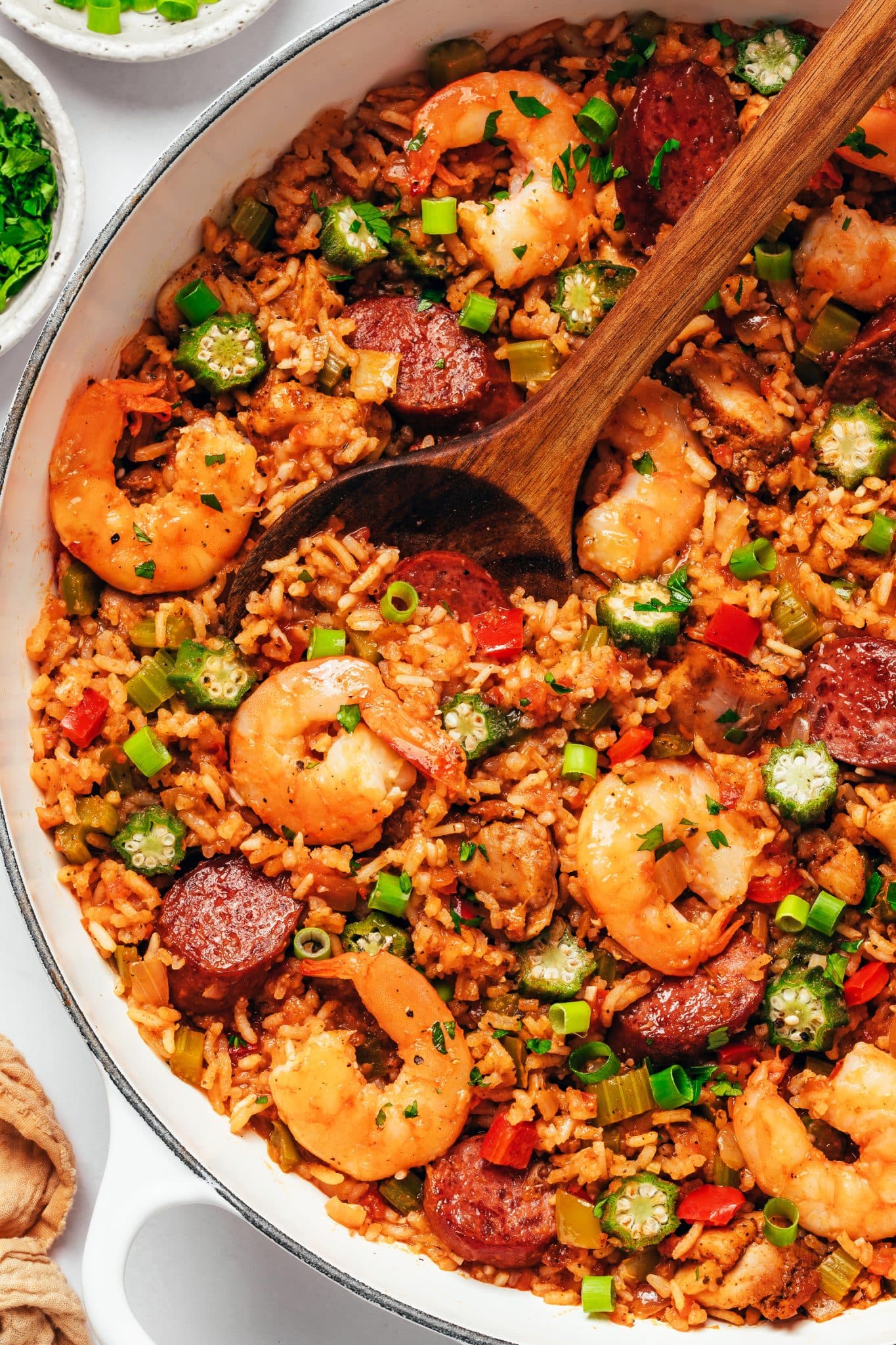
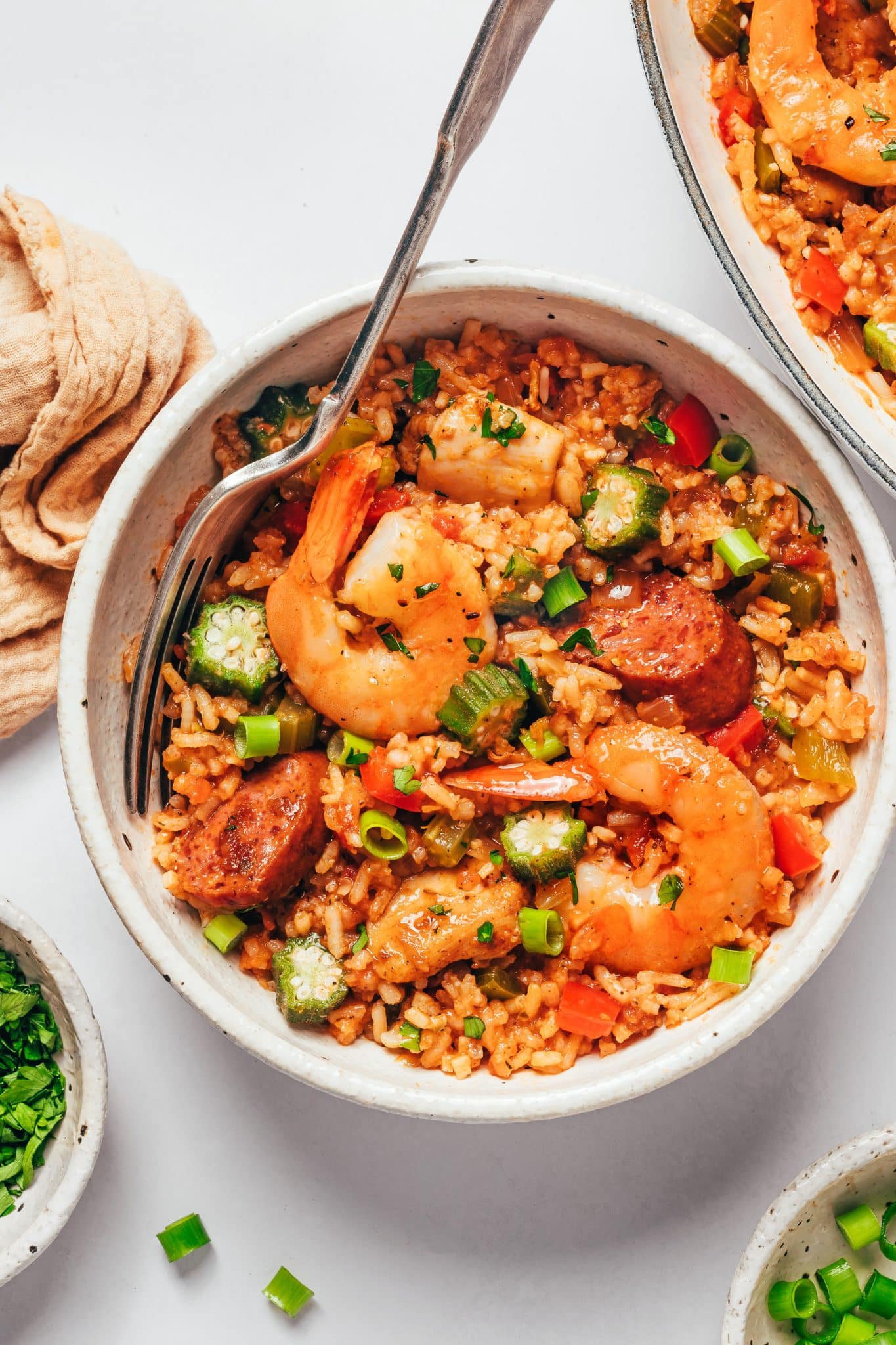
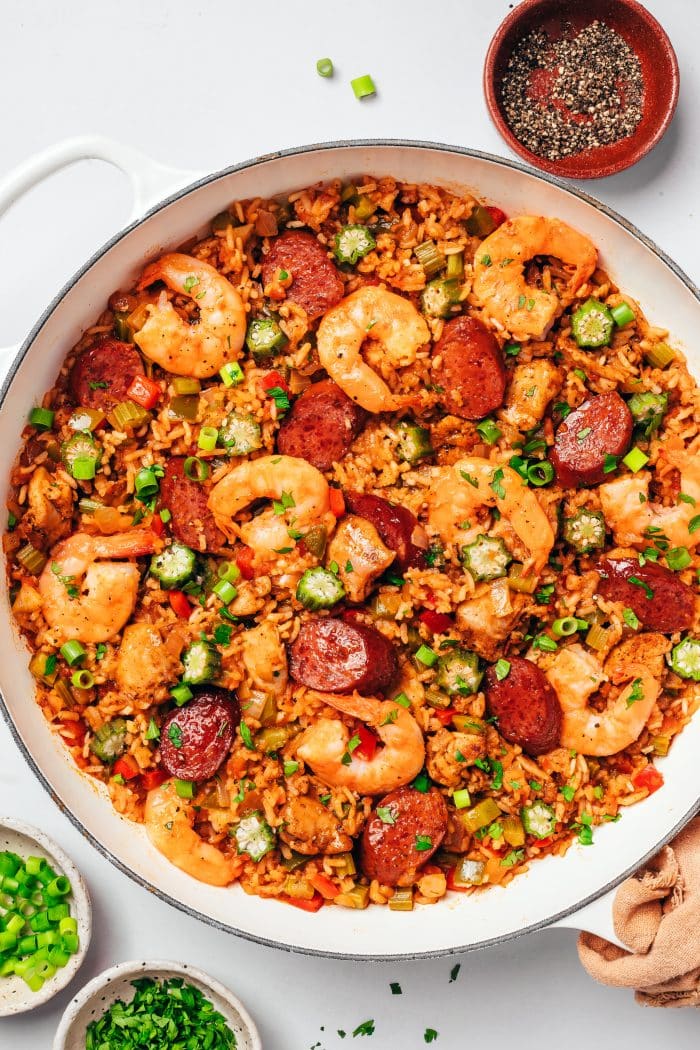
This Jambalaya Recipe is loaded with tender chicken, smoky andouille sausage, juicy shrimp, and long-grain white rice cooked in a boldly seasoned tomato broth. It’s a hearty, spicy, Creole-style one-pot meal, and hands-down the BEST jambalaya recipe you’ll ever make. I’ve included instructions for cooking the rice on the stovetop or in the oven.
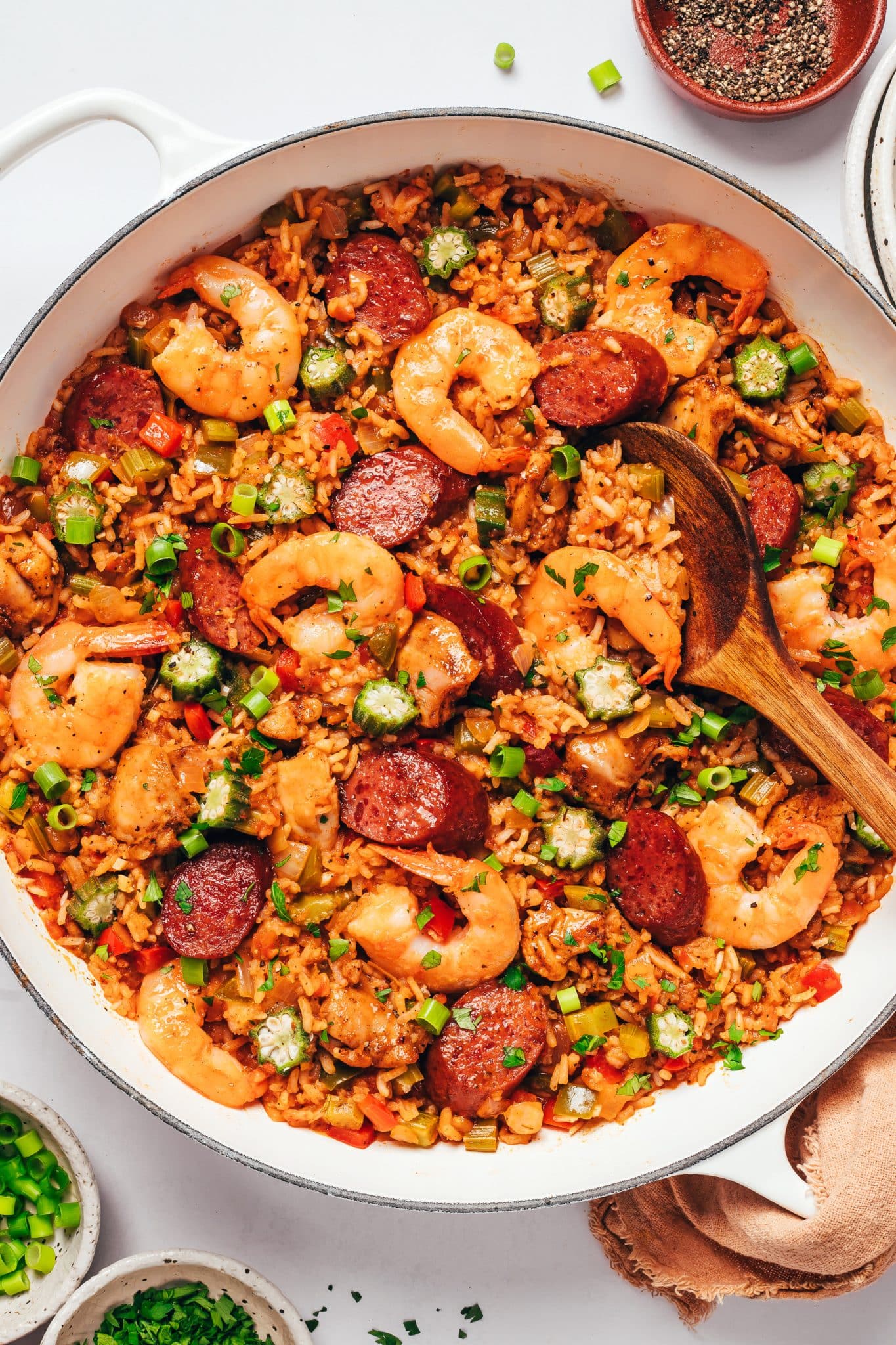
Spicy, smoky, and intensely satisfying, jambalaya is a classic Louisiana feel-good food that’s perfect for feeding a crowd. My version combines the Cajun holy trinity of onion, celery, and bell peppers with juicy chicken, shrimp, andouille sausage, and rice that soaks up all that flavorful Cajun-spiced tomato broth.
If you’ve never made jambalaya before, it may seem intimidating at first, but I promise it’s easier than it looks. Plus, you can customize it to make it your own – switch up the meat or seafood, add more or fewer vegetables, or adjust the heat to your taste. Check out the Ingredients and Substitutions section below for more ideas.
Quick Look: Jambalaya
- Method: Brown the sausage and chicken, then sauté the vegetables with garlic and seasonings. Add the tomatoes, Worcestershire sauce, rice, and broth, and cook on the stovetop or in the oven until the rice is nearly tender. Finish by adding the cooked meats, raw shrimp, and optional okra.
- Difficulty: Easy to moderate. Nothing too complicated, but there’s quite a bit of chopping and a few stages of cooking, so give yourself plenty of time if this is your first time making it.
- Heat: Moderately spicy to very spicy, depending on your tolerance to spicy foods and the type of Cajun seasoning used. Omit the cayenne and red pepper flakes for a milder version.
- Total Time: 1 hour 45 minutes.
- Servings: 8 generous servings.
- #1 Tip: Use the right type of rice. I recommend Mahatma Extra-Long-Grain White Rice (do not rinse) or long-grain jasmine rice (rinse and drain thoroughly) for its aromatic flavor. Avoid excessive stirring while the rice cooks.
Table of Contents
With an average rating of 4.86 out of 5 stars from nearly 1,000 reader ratings, this jambalaya has become one of the most popular recipes on The Forked Spoon.
Featured Reader Comments
“As somebody who makes paella and risotto regularly I wanted a recipe that built the jambalaya right. I felt like this recipe does a nice job of building up the complex flavors.” – Tom
“My dad (who is a very tough critic) said this was THE BEST jambalaya he’s ever had. Believe the title of the recipe!” – Melanie
What is Jambalaya?
Jambalaya is a traditional Louisiana rice dish made with a combination of meat, seafood, vegetables, and seasonings. Everything cooks together in one pot, allowing the rice to absorb the flavorful broth and spices as it becomes tender.
There are two main styles of jambalaya:
- Creole Jambalaya (“Red Jambalaya”): Creole Jambalaya includes tomatoes, which give it its reddish color and slightly sweet, tangy taste. Popular proteins include Andouille sausage, chicken, shrimp, or crawfish, which are typically cooked with the Cajun holy trinity (onion, bell pepper, and celery). This style is commonly associated with New Orleans.
- Cajun Jambalaya (“Brown Jambalaya”): This version is traditionally made without tomatoes. Instead, its deeper brown color and rich, savory flavor come from thoroughly browning the meat and vegetables before adding the rice and broth.
My recipe is closer to Creole-style jambalaya because it includes tomatoes, but you’ll find plenty of variations throughout Louisiana, with different combinations of meat, seafood, vegetables, and seasonings.
Ingredients and Substitutions
Below are notes and possible substitutions for the ingredients in this Jambalaya Recipe. You can find the printable recipe with measurements in the recipe card at the bottom of this page.
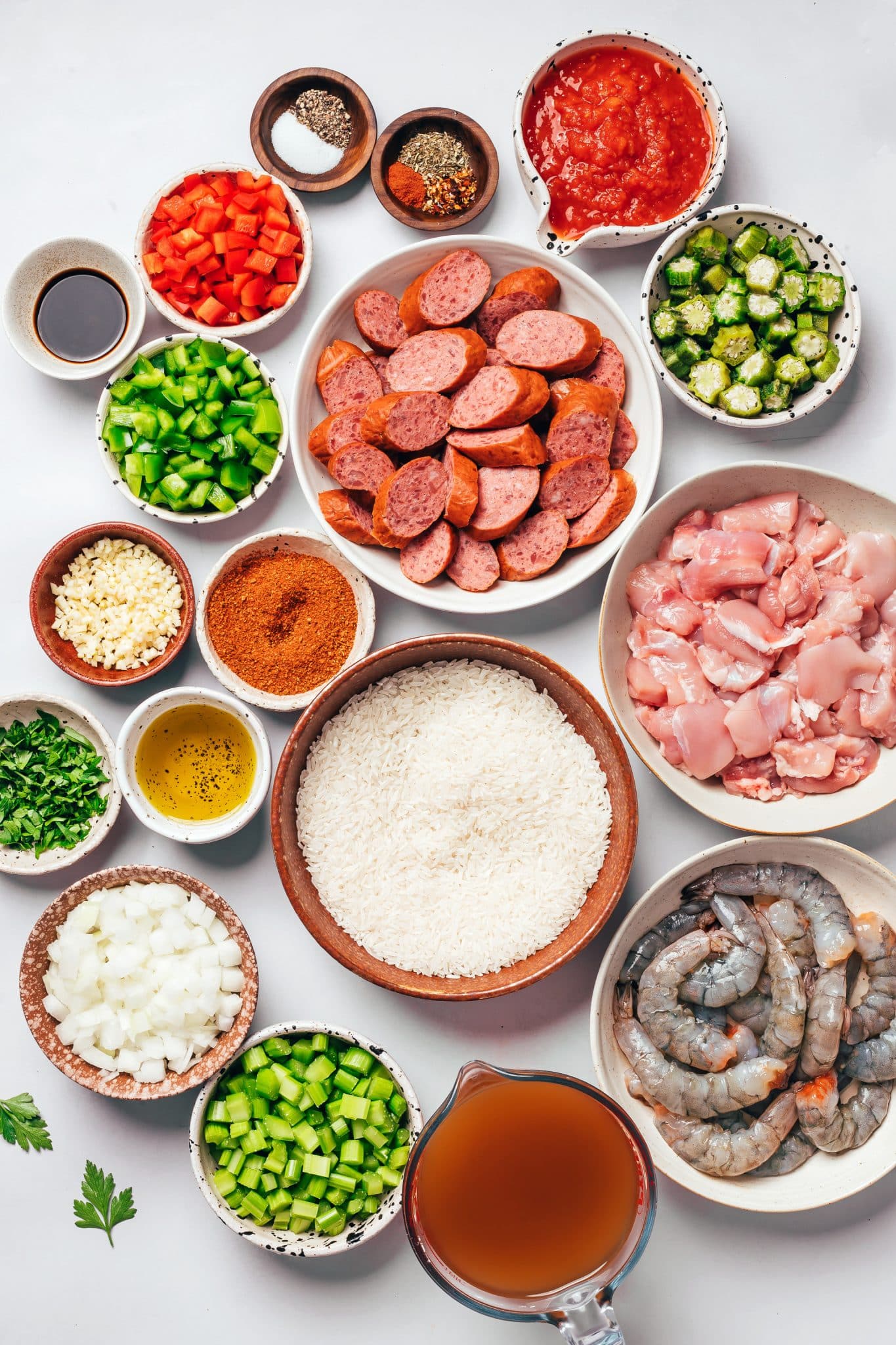
Andouille Sausage: I recommend using andouille sausage for its smoky, garlicky, slightly spicy flavor. If you can’t find it, another fully cooked smoked sausage, such as kielbasa, will work, although the flavor will be milder.
Chicken: I like to make my jambalaya with boneless, skinless chicken thighs because they stay juicy and tender. Boneless, skinless chicken breasts also work, but be careful not to overcook them since they dry out more easily.
Shrimp: Use raw jumbo shrimp that have been peeled and deveined. Frozen shrimp work just as well, but thaw them completely before adding them to the pot. I don’t recommend precooked shrimp, as they can become rubbery.
Vegetables: Sometimes referred to as the holy trinity of Cajun cooking, or simply “trinity,” this aromatic mixture consists of finely diced onion, celery, and bell pepper. It’s the Cajun and Creole equivalent of French mirepoix or Spanish sofrito, where vegetables are gently cooked in butter or oil to soften and bring out their natural sweetness rather than deeply caramelize them. This recipe uses both red and green bell peppers, along with plenty of fresh garlic. You can adjust the ratio of vegetables to suit your preferences, but I wouldn’t leave out the holy trinity altogether.
Cajun Seasoning: This recipe uses 3 tablespoons of Cajun seasoning, dividing it between the chicken and vegetables. Keep in mind that store-bought blends can be very spicy and salty, so add additional heat and salt with caution. My go-to store-bought brand is Slap Ya Mama Cajun Seasoning, which is both spicy and salty. You can also use a brand you’re familiar with or make your own homemade Cajun seasoning blend to control the heat and salt. For a milder, more herb-forward variation, try my homemade Creole seasoning, although the flavor will be slightly different.
Additional Spices: Italian seasoning adds a herby, savory flavor that complements the smoky sausage and Cajun spices. The cayenne pepper and red pepper flakes add extra heat, so feel free to leave them out if you prefer a milder jambalaya.
Tomatoes: A 14-ounce can of diced or crushed tomatoes gives this Creole-style jambalaya its reddish color and rich tomato flavor. I like both options – diced tomatoes add a little more texture, while crushed tomatoes blend more evenly into the rice.
Rice: The type of rice used in jambalaya plays a crucial role in its texture, flavor, and overall success. The best types of rice include long-grain white rice such as Mahatma Extra-Long-Grain White Rice, which doesn’t need to be rinsed before cooking. Long-grain jasmine rice is another good option, especially if you enjoy its slightly floral, aromatic flavor, but unlike the Mahatma rice, jasmine rice should be rinsed and thoroughly drained before adding it to the pot. You can also use parboiled rice, such as Zatarain’s Parboiled Long Grain Rice. It’s more resistant to overcooking but doesn’t absorb flavors as well. I do not recommend substituting short-grain rice (e.g., sushi or arborio rice), brown rice, or instant rice, since they require different cooking times and liquid amounts.
Chicken Broth: Use low-sodium chicken broth so you have more control over the saltiness of the finished dish. Chicken stock also works well.
Okra: Not every jambalaya recipe includes okra, but it’s an ingredient I love in my gumbo recipe and enjoy adding here for its flavor and texture. It’s completely optional, so feel free to leave it out if you’re not a fan – there’s no need to replace it with anything else.
How to Make Jambalaya
The key to making really flavorful jambalaya is building the flavor in layers. We’ll start by browning the sausage and chicken, then use the same pot to cook the vegetables and rice. You can cook the rice on the stovetop or in the oven, whichever you prefer.
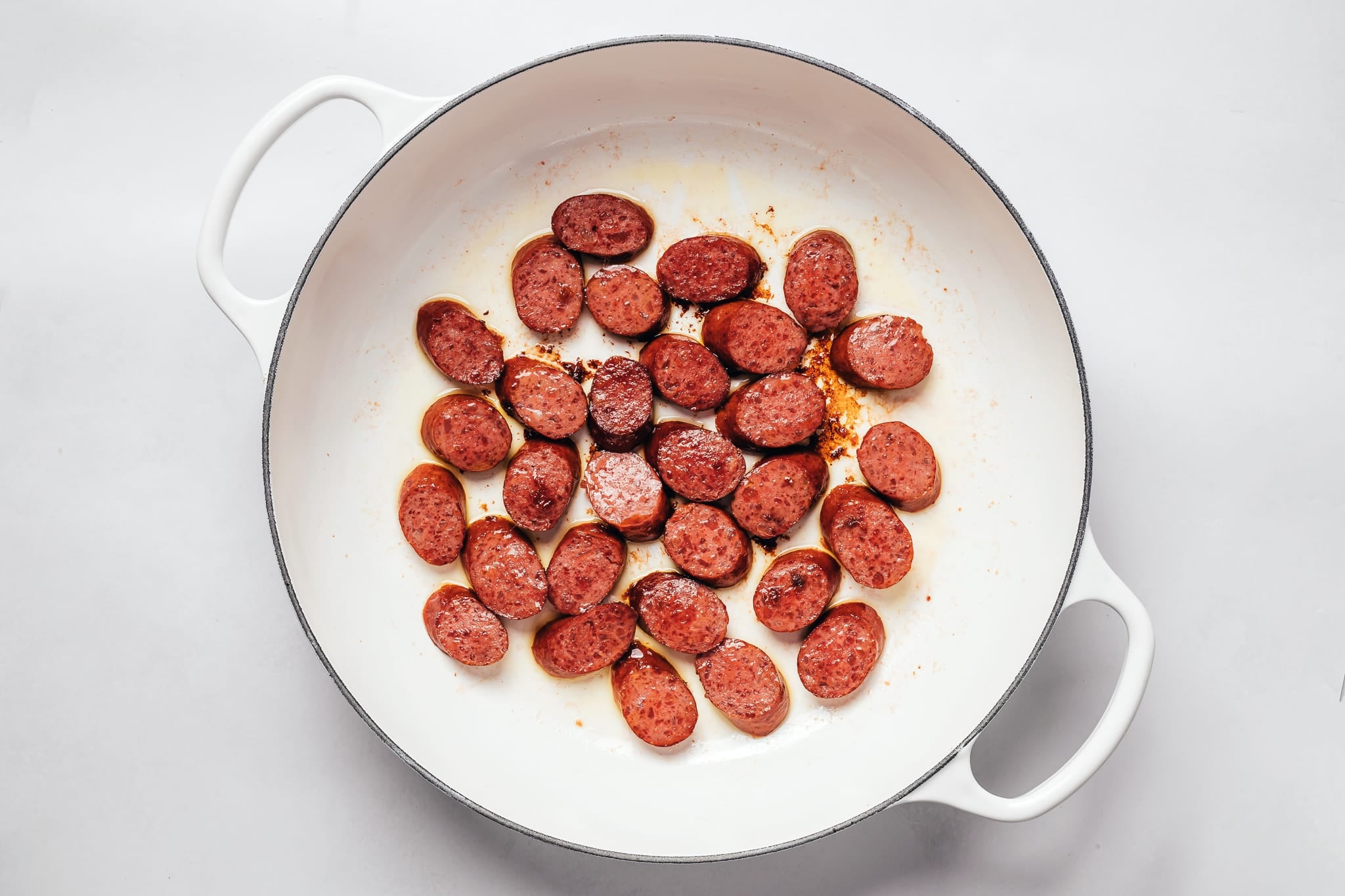
- Brown the sausage. Heat a tablespoon of olive oil in a large Dutch oven or heavy-bottomed pot over medium-high heat. Add the sliced andouille sausage and let it cook for 1-2 minutes per side, until nicely browned. Transfer the sausage to a plate, but leave those flavorful drippings behind – they’ll help season everything else we cook in the pot.
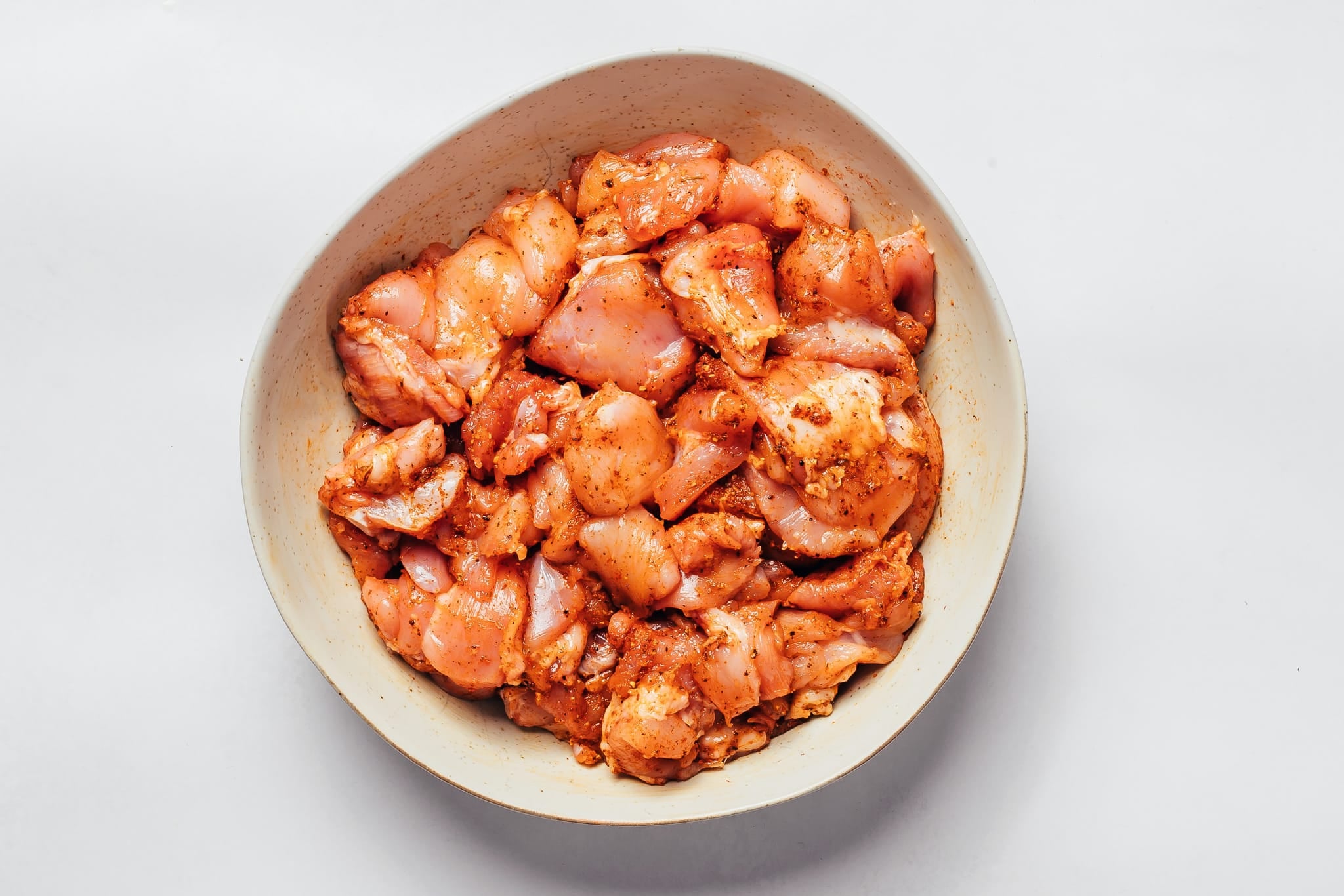
- Season the chicken. Add the bite-sized chicken thighs to a large bowl and toss with approximately 1 tablespoon of Cajun seasoning and some of the salt and black pepper. Give everything a good mix so the chicken is evenly coated before it goes into the pot.
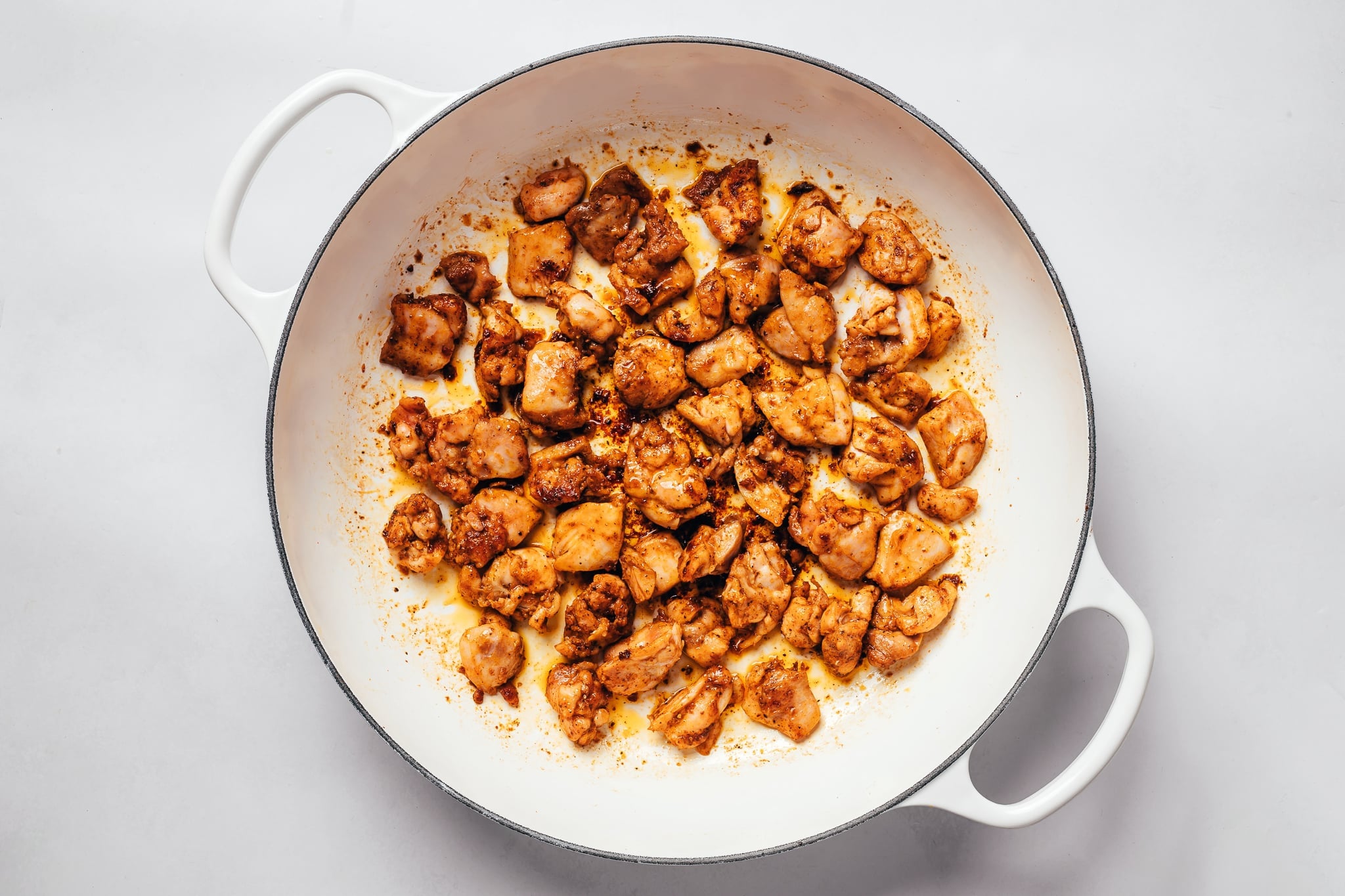
- Cook the chicken. Add another tablespoon of olive oil to the same pot over medium-high heat. Cook the seasoned chicken for 6-8 minutes, stirring occasionally, until lightly browned on the outside and cooked through to 165°F. Try not to crowd the chicken too much, or it will steam instead of brown. Transfer it to the plate with the sausage.
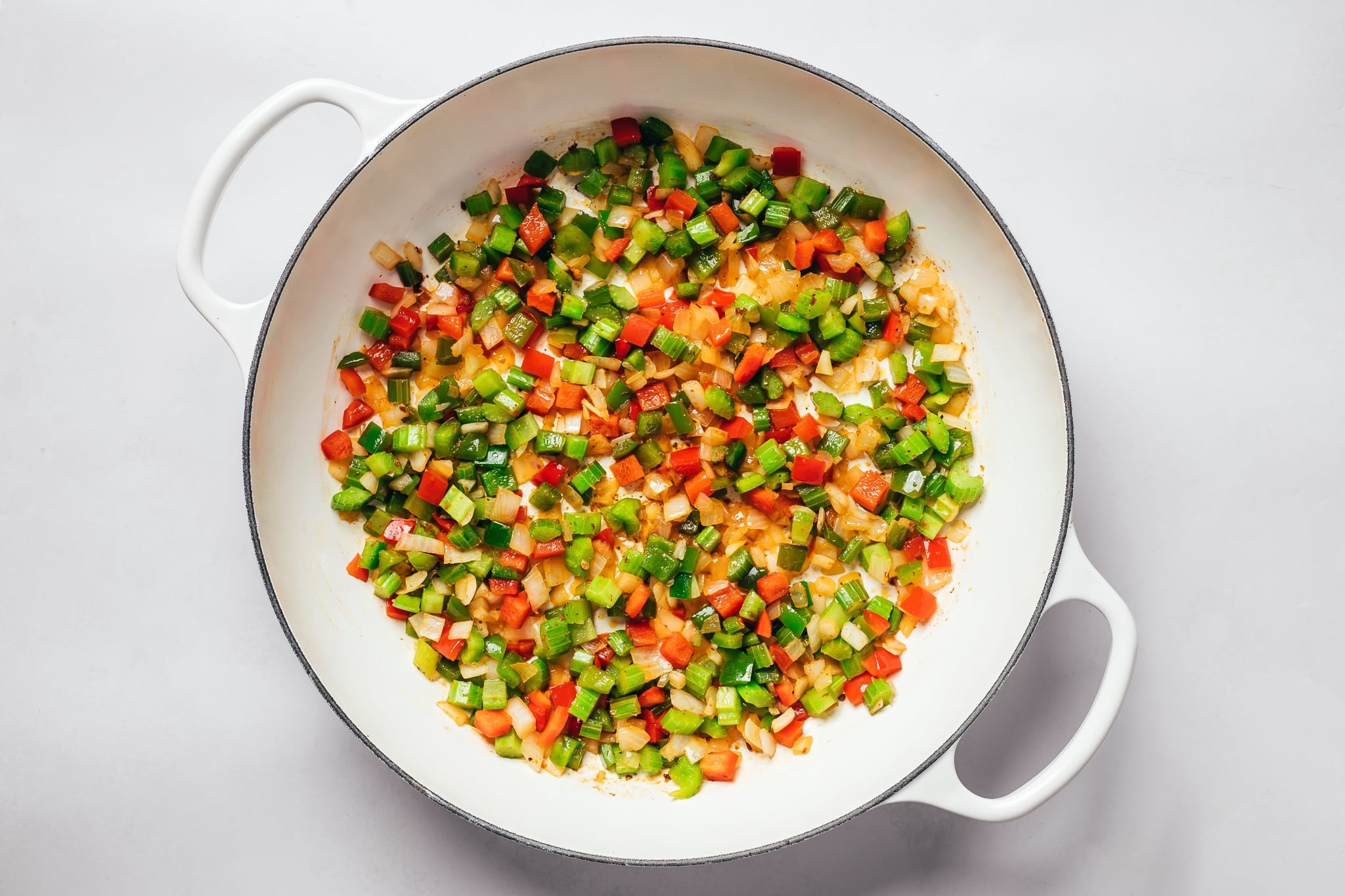
- Sauté the vegetables. Reduce the heat to medium-low and add the remaining olive oil, followed by the onions, red and green bell peppers, and celery. Cook for 8-10 minutes, stirring occasionally, until the vegetables have softened and the onions are translucent. There’s no need to brown or caramelize them – we’re just bringing out their natural sweetness.
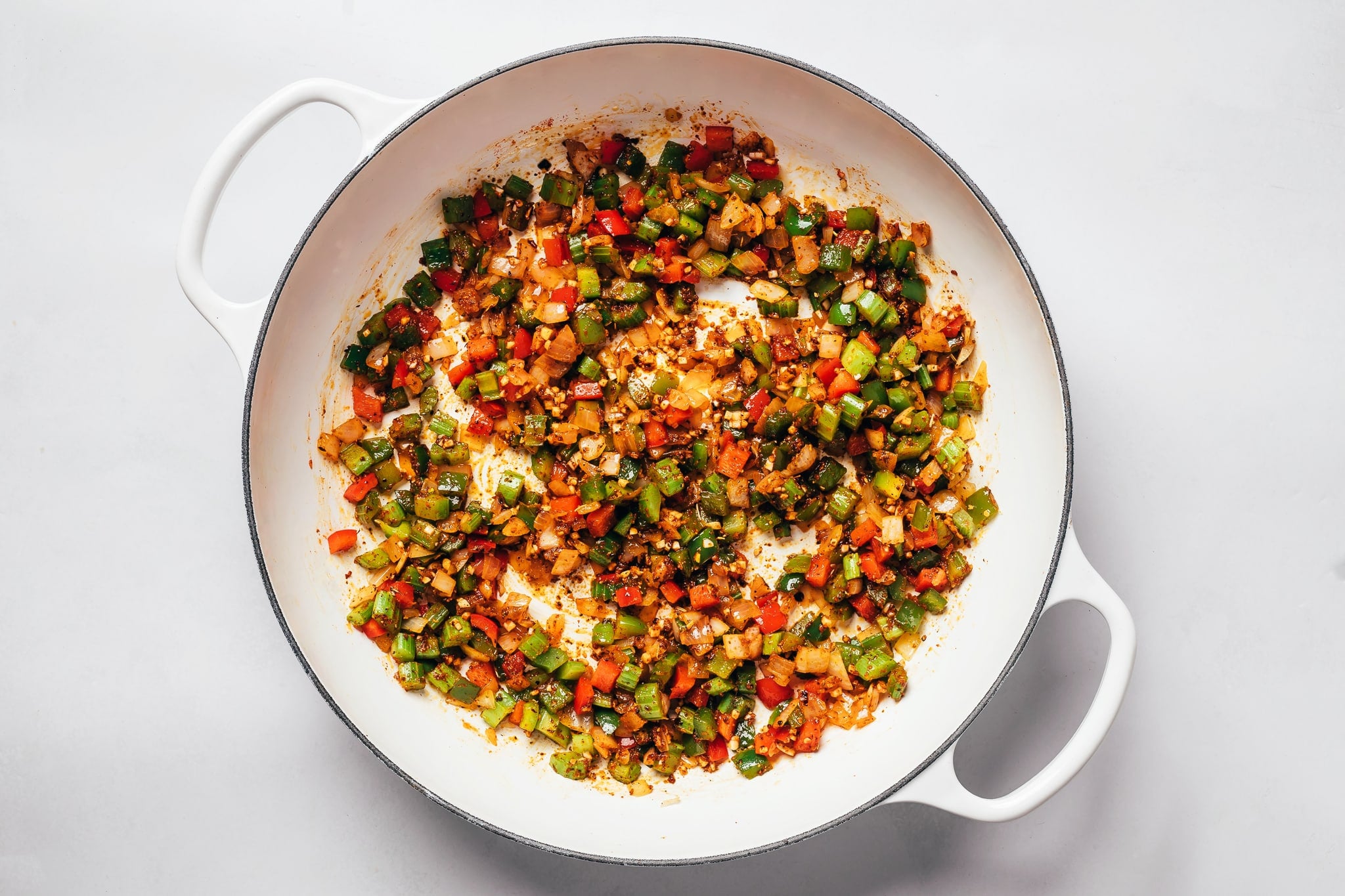
- Add the garlic and seasonings. Stir in the minced garlic, remaining Cajun seasoning, salt, black pepper, and Italian seasoning. Add the cayenne pepper and red pepper flakes if you want the extra heat. Cook for about a minute, stirring constantly. By now, the vegetables should be coated in spices and everything should smell delicious.
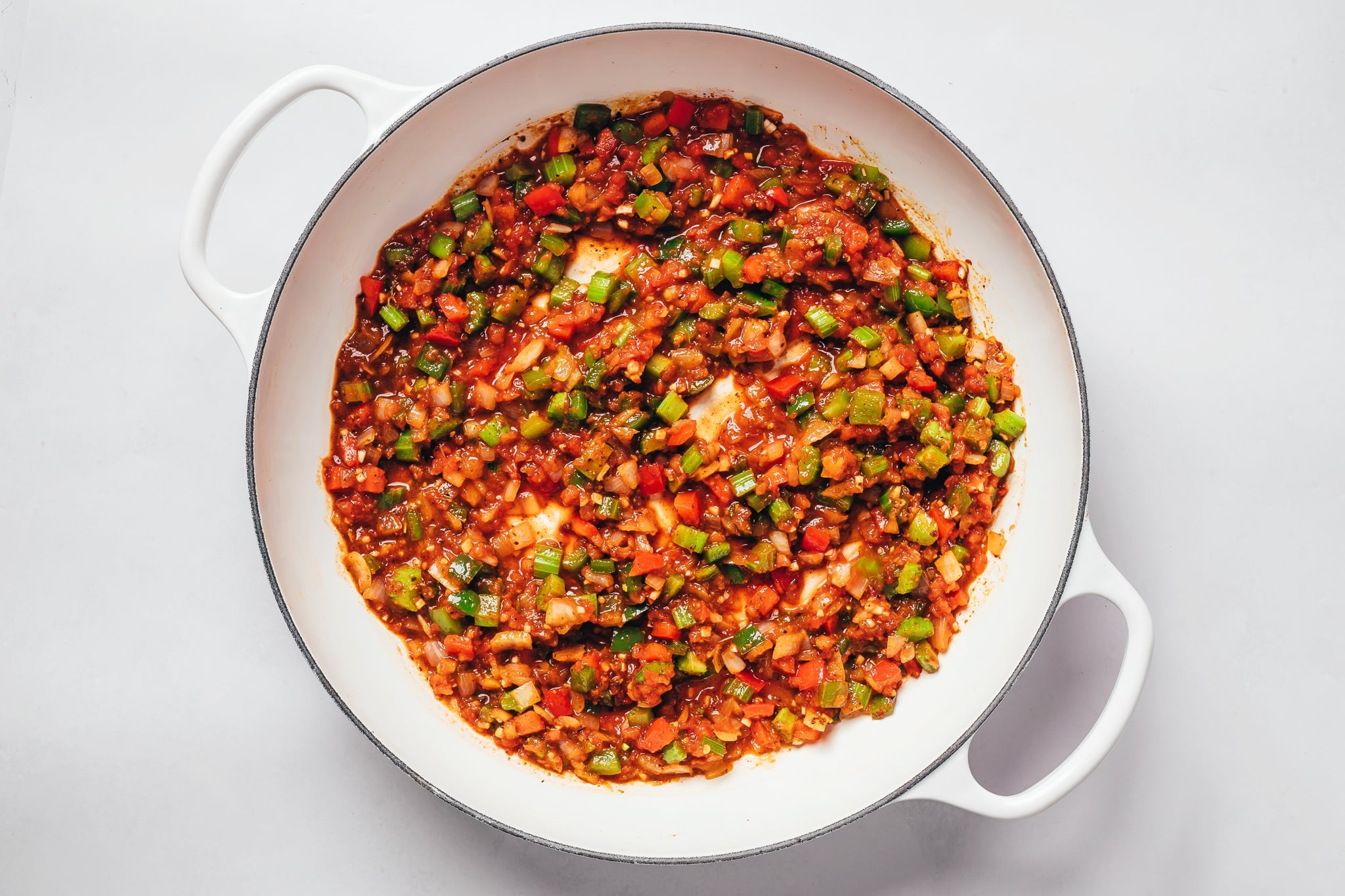
- Stir in the tomatoes. Add the diced or crushed tomatoes and Worcestershire sauce, stirring to combine. As you stir, scrape along the bottom of the pot to loosen any browned bits left from the sausage and chicken. Those little bits are packed with flavor and will help make the rice even more delicious.
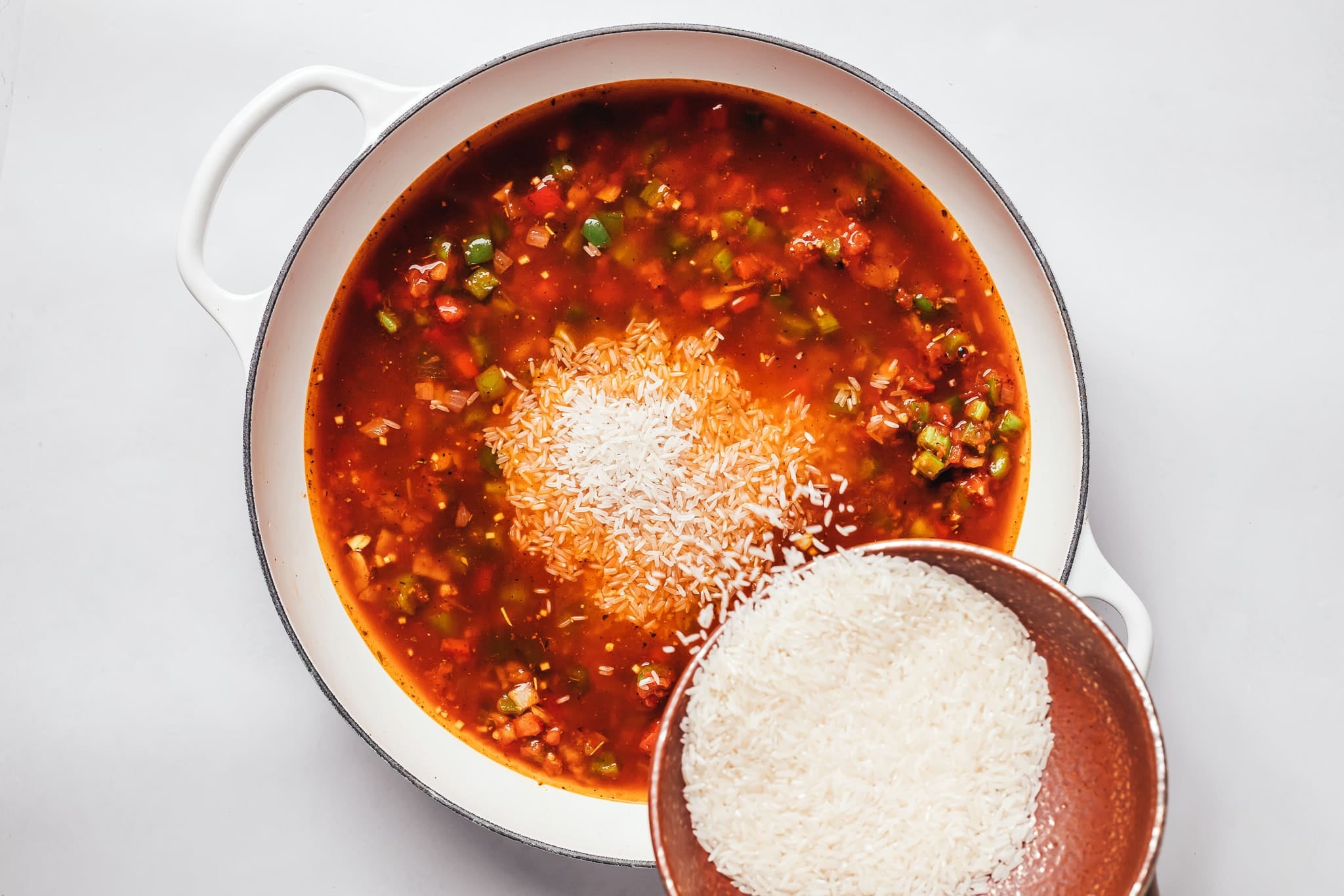
- Add the rice and broth. Stir the uncooked long-grain white rice into the tomato mixture, then pour in the chicken broth. If you’re using Mahatma Extra-Long-Grain White Rice, there’s no need to rinse it first. Jasmine rice, on the other hand, should be rinsed and thoroughly drained. Give everything a gentle stir to distribute the rice evenly, then bring the mixture to a boil.
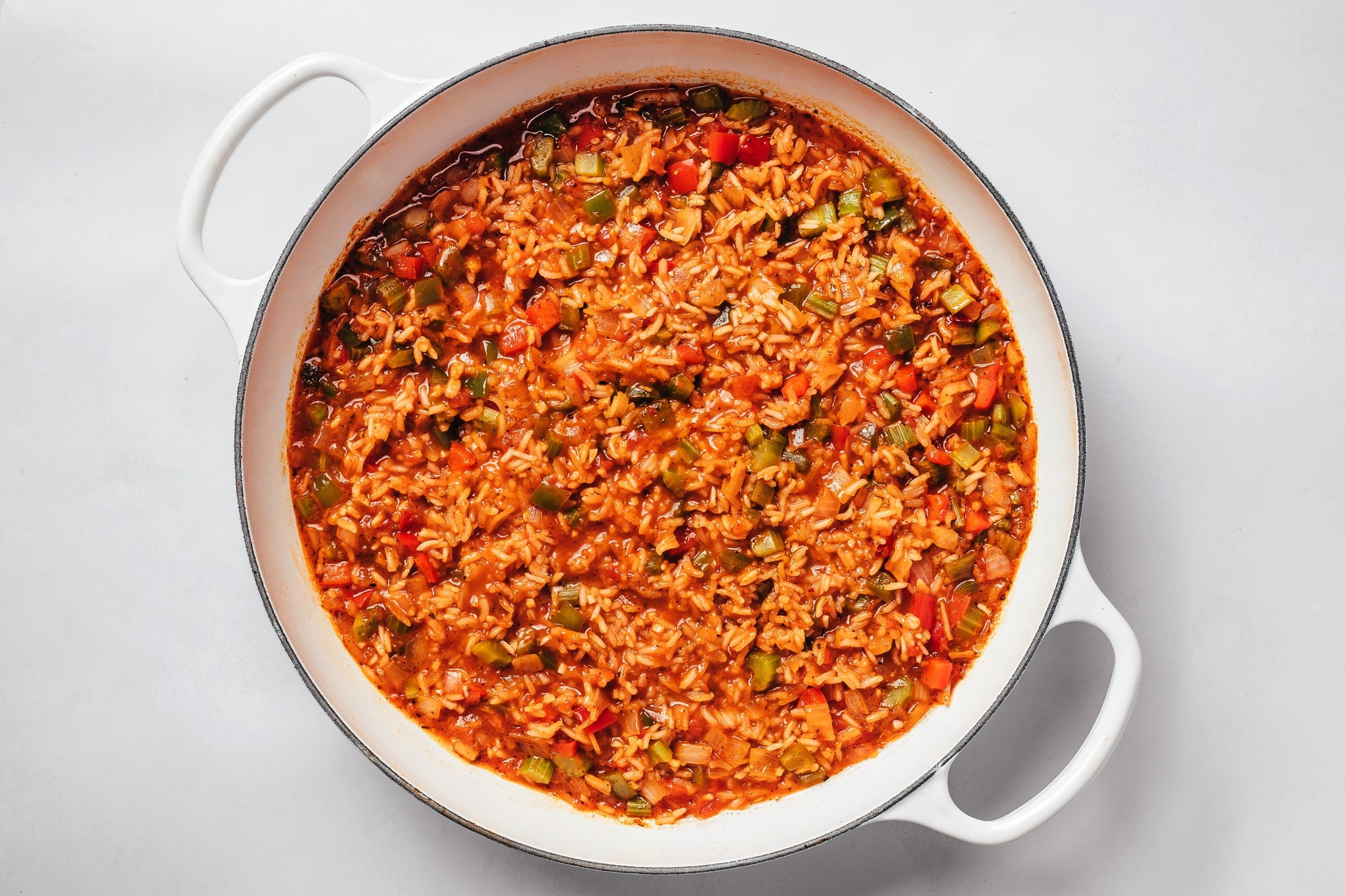
- Cook the rice until nearly tender. At this point, you can finish cooking the rice on the stovetop or in the oven. Both methods work well, but the oven requires less attention.
- Stovetop: Reduce the heat to low and cover the pot with a tight-fitting lid. Let the rice cook for approximately 25-35 minutes, checking occasionally to make sure it isn’t sticking or burning on the bottom. I recommend giving it a gentle stir every 7-8 minutes as needed, but avoid stirring more than necessary. Replace the lid promptly to keep the steam inside.
- Oven: Preheat your oven to 350°F before starting the recipe. Once the rice and broth have come to a boil, cover the Dutch oven tightly and transfer it to the oven. Bake for approximately 25-35 minutes, or until the rice is nearly tender and most of the liquid has been absorbed. There’s no need to stir while it bakes.
Whichever method you choose, the rice is ready when it’s mostly cooked but still a little firm in the center. It will finish cooking in the next step.
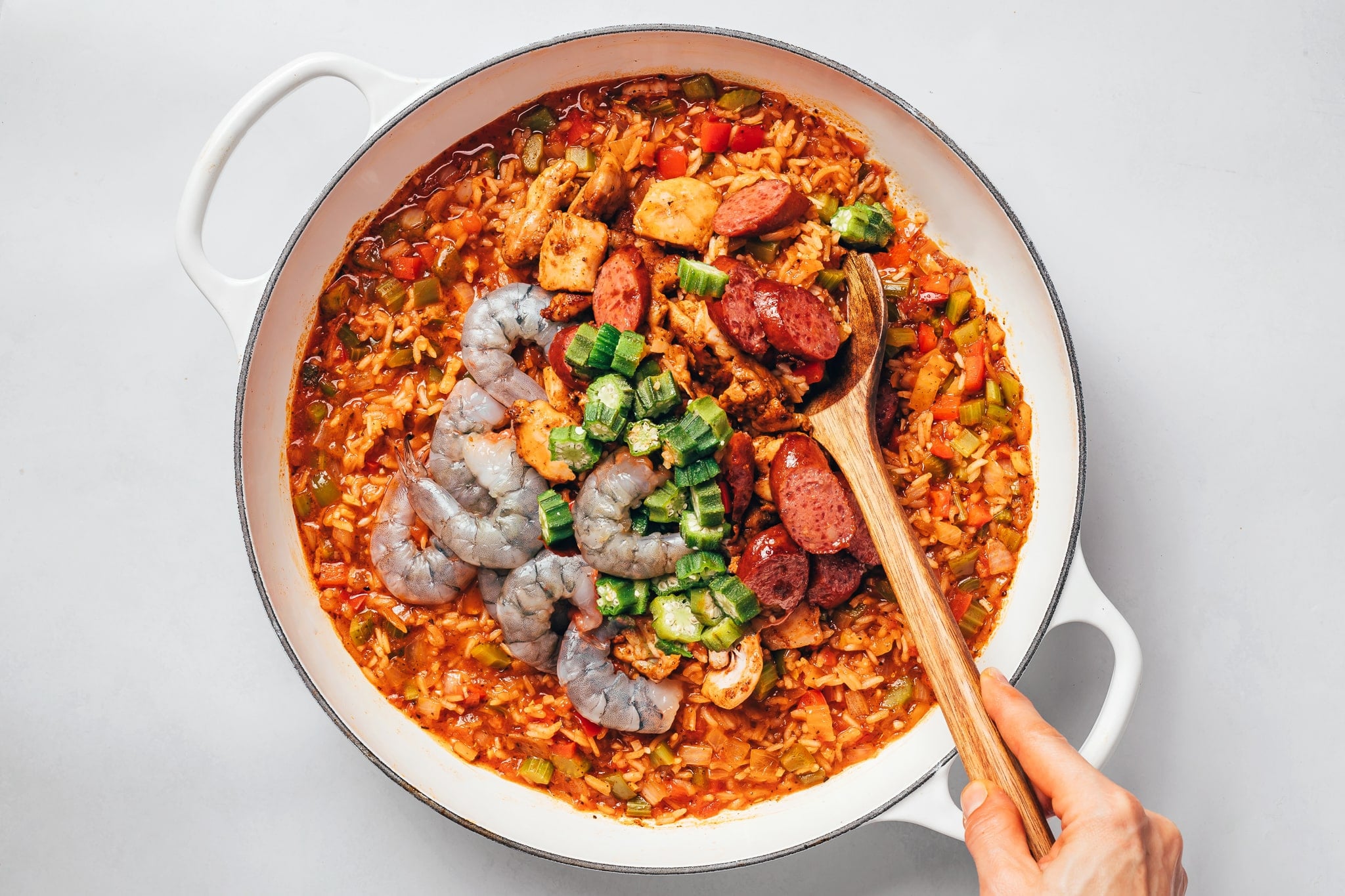
- Add the chicken, sausage, shrimp, and okra. If you cooked the rice in the oven, carefully return the pot to the stovetop and set it over low heat. Gently fold in the browned chicken and sausage, along with the raw shrimp and sliced okra, if using. Cover and cook over low heat for another 5-8 minutes, until the shrimp are pink and opaque, the chicken and sausage are heated through, and the rice is fully tender. Be gentle when stirring so the rice doesn’t become gummy.
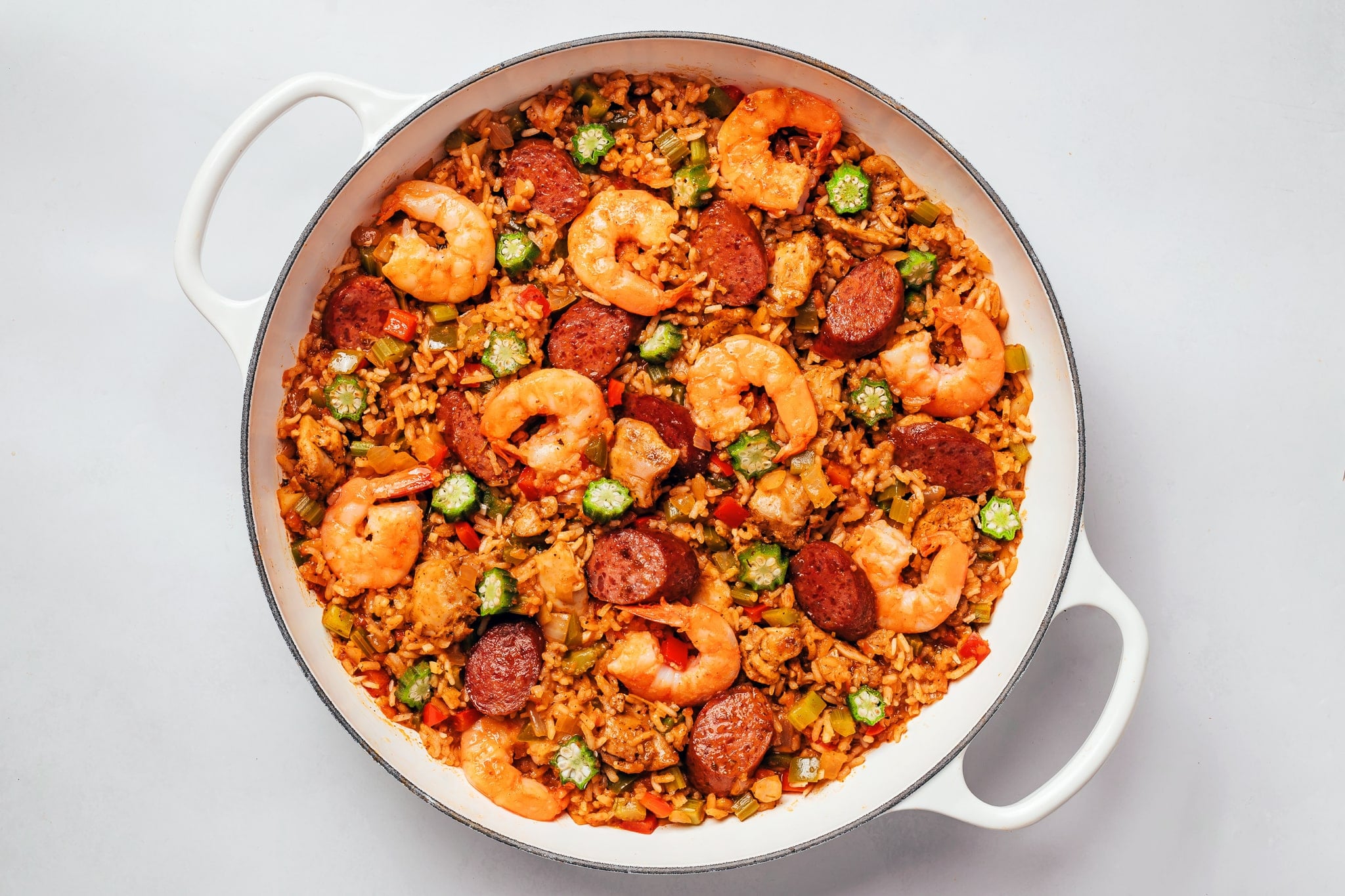
- Rest, garnish, and serve. Remove the pot from the heat and let the jambalaya rest, covered, for 5-10 minutes. This gives the rice a chance to absorb any remaining moisture and settle before serving. Gently fluff everything together, sprinkle with fresh parsley and chopped green onions, and enjoy!
Jambalaya Rice Tips and Troubleshooting
Getting the rice just right is probably the trickiest part of making jambalaya. You want tender, separate grains that have soaked up all that flavorful tomato broth without becoming mushy or sticky. Here are a few common problems and how to handle them.
- Rice is still crunchy or undercooked: If the rice is still firm and the pot looks dry, add a small splash of warm chicken broth, cover, and continue cooking over low heat for another 5 minutes. If there’s still plenty of liquid in the pot, simply cover and give it a little more time before adding additional broth.
- Rice is too wet: If the rice is nearly tender but there’s still excess liquid, remove the lid and let it simmer gently for a few minutes to allow some of the moisture to evaporate. Keep an eye on it so the rice doesn’t overcook or stick to the bottom.
- Rice is sticking or burning: The heat is probably too high. Reduce it to the lowest setting and gently stir along the bottom of the pot as needed. A heavy-bottomed Dutch oven helps distribute heat more evenly, and the oven method is a good alternative if you have trouble with scorching on the stovetop.
- Rice is mushy or gummy: Unfortunately, there’s no easy way to reverse overcooked rice. The best prevention is using the right type of rice, avoiding excessive stirring, and checking for doneness before the recommended cooking time is up.
My biggest tip: Pay attention to the rice rather than relying entirely on the clock. It should be nearly tender, with most of the liquid absorbed, before you add the shrimp, chicken, sausage, and okra. The rice will finish cooking during those last few minutes. Once everything is cooked, let the jambalaya rest, covered, for 5-10 minutes. This gives the rice time to absorb any remaining moisture and helps the grains settle before serving.
How to Store, Freeze, and Reheat Jambalaya
Jambalaya makes delicious leftovers, but I recommend enjoying it fresh or refrigerated for the best texture, especially since this recipe contains shrimp.
- Refrigerator: Divide leftover jambalaya into shallow, airtight containers and refrigerate promptly, within 2 hours of cooking. Store in the refrigerator for up to 3-4 days.
- Freezer: Yes, you can freeze jambalaya, but keep in mind that the rice may become softer or mushy after thawing, and the shrimp can turn rubbery when reheated. For best results, divide the cooled jambalaya into individual portions and transfer to freezer-safe containers or bags, removing as much air as possible. Freeze for up to 2 months for best quality.
- Thawing: Thaw frozen jambalaya overnight in the refrigerator rather than on the countertop.
- Reheating: For the stovetop, add the jambalaya to a skillet or pot with a splash of chicken broth or water. Cover and reheat gently over medium-low heat, stirring occasionally. For the microwave, place an individual portion in a microwave-safe bowl with a splash of broth or water, cover loosely, and heat in intervals, stirring halfway through. Reheat thoroughly to 165°F before serving.
Jambalaya FAQs
Absolutely! As written, this recipe makes 8 generous servings, so doubling makes approximately 16 servings and tripling makes 24. For larger batches, I recommend using two or more large Dutch ovens rather than overcrowding a single pot. The cooking time won’t necessarily double, but larger quantities may take longer to heat and cook evenly. Pay particular attention to the rice, adding more time or a little additional broth if needed.
I don’t recommend substituting either directly for the long-grain white rice in this recipe. Brown rice takes considerably longer to cook and generally needs more liquid, while instant rice cooks much faster. Both would require adjustments to the recipe. If you really want to use brown rice, you could cook it separately according to the package directions and fold it into the seasoned meat and vegetable mixture near the end, using less broth. Just keep in mind that I haven’t tested exact measurements for this variation.
Yes, although I think jambalaya tastes best freshly made, especially when it contains shrimp. If you’re planning to serve it for a party or gathering, I recommend chopping the vegetables, slicing the sausage, and measuring the seasonings a day ahead. Then cook the jambalaya closer to serving time. You can also prepare the entire dish a day ahead and refrigerate it, but the rice may soften and the shrimp can become rubbery when reheated. See my storage and reheating tips above.
Absolutely! If you prefer a more hands-off approach, try my Slow Cooker Jambalaya. It’s made with chicken, andouille sausage, shrimp, vegetables, and Cajun seasoning, but the cooking method is a little different. I recommend cooking the rice separately and adding it toward the end with the shrimp to prevent it from becoming mushy.
Jambalaya is already a pretty hearty meal, so you really don’t need much else! I love serving it with a slice of sweet cornbread to balance the spicy, savory flavors. A simple green salad or a side of Southern collard greens would also be delicious, especially if you’re feeding a crowd.
If you love the bold flavors in this jambalaya, check out some of my other favorite Cajun and Creole-inspired recipes, including Gumbo, Shrimp Étouffée, Cajun Dirty Rice, and this easy Red Beans and Rice.
If you make this jambalaya recipe, I’d love to hear how it turned out! Did you cook the rice on the stovetop or in the oven? Let me know in the comments below, and if you enjoyed the recipe, please leave a star rating. Your feedback is always appreciated and helps other readers, too! Thank you! 💛
Jambalaya Recipe

Ingredients
- 3 tablespoons olive oil, divided
- 1 pound Andouille sausage, thinly sliced (or another fully cooked smoked sausage)
- 1½ pounds boneless, skinless chicken thighs, cut into 1-inch cubes
- 3 tablespoons Cajun seasoning, divided (adjust to taste)
- 1 teaspoon salt, divided (adjust to taste)
- 1 teaspoon black pepper, divided
- 2 medium yellow onions, diced
- 1 green bell pepper, seeded and diced
- 1 red bell pepper, seeded and diced
- 3 stalks celery, diced
- 6 cloves garlic, minced
- ½ teaspoon cayenne pepper, optional, omit if you're sensitive to spicy food
- 1 tablespoon Italian seasoning
- 1 teaspoon red pepper flakes, optional, omit if you're sensitive to spicy food
- 1 (14 ounce) can diced or crushed tomatoes, undrained
- 2 teaspoons Worcestershire sauce
- 1½ cups uncooked long-grain white rice, (see notes)
- 2¾ cups low sodium chicken broth
- 1 cup thinly sliced okra, optional
- 1 pound jumbo raw shrimp, peeled and deveined, thawed if frozen
- fresh chopped parsley, to garnish
- chopped green onions, to garnish
Instructions
- Brown the sausage. Heat 1 tablespoon olive oil in a large Dutch oven or heavy-bottomed pot over medium-high heat. Add the sliced andouille sausage and cook for 1-2 minutes per side, until browned. Transfer to a plate, leaving the flavorful drippings in the pot.1 tablespoons olive oil, 1 pound Andouille sausage
- Season the chicken. In a large bowl, toss the chicken pieces with 1 tablespoon Cajun seasoning, ½ teaspoon salt, and ½ teaspoon black pepper until evenly coated.1½ pounds boneless, skinless chicken thighs, 1 tablespoons cajun seasoning, ½ teaspoon salt, ½ teaspoon black pepper
- Cook the chicken. Add 1 tablespoon olive oil to the same pot over medium-high heat. Add the seasoned chicken and cook for 6-8 minutes, stirring occasionally, until lightly browned and cooked through to an internal temperature of 165°F. Transfer to the plate with the sausage.1 tablespoons olive oil
- Sauté the vegetables. Reduce the heat to medium-low and add 1 tablespoon olive oil. Stir in the onions, red and green bell peppers, and celery. Cook for 8-10 minutes, stirring occasionally, until the vegetables are softened and the onions are translucent.1 tablespoons olive oil, 2 medium yellow onions, 1 green bell pepper, 1 red bell pepper, 3 stalks celery
- Add the garlic and seasonings. Stir in the minced garlic, 2 tablespoons Cajun seasoning, ½ teaspoon salt, ½ teaspoon black pepper, and Italian seasoning. Add the cayenne pepper and red pepper flakes, if using. Cook for 1 minute, stirring constantly, until fragrant.2 tablespoons cajun seasoning, ½ teaspoon salt, ½ teaspoon black pepper, 6 cloves garlic, ½ teaspoon cayenne pepper, 1 tablespoon Italian seasoning, 1 teaspoon red pepper flakes
- Add the tomatoes. Pour in the diced or crushed tomatoes and Worcestershire sauce. Stir well, scraping the bottom of the pot to release any browned bits left from cooking the sausage and chicken.1 (14 ounce) can diced or crushed tomatoes, 2 teaspoons Worcestershire sauce
- Add the rice and broth. Stir in the uncooked long-grain white rice, followed by the chicken broth. Remember: If using Mahatma Extra-Long-Grain White Rice, do not rinse it beforehand. If using jasmine rice, rinse and drain thoroughly before adding. Stir gently to distribute the rice evenly, then bring the mixture to a boil.1½ cups uncooked long-grain white rice, 2¾ cups low sodium chicken broth
- Cook the rice until nearly tender. Choose one of the following methods:Stovetop Method: Reduce the heat to low and cover the pot with a tight-fitting lid. Cook for approximately 25-35 minutes, until the rice is nearly tender and most of the liquid has been absorbed. Check periodically and gently stir every 7-8 minutes as needed to prevent sticking or burning. Avoid excessive stirring and replace the lid promptly.Oven Method: Preheat the oven to 350°F before beginning the recipe. Once the rice mixture reaches a boil, cover the oven-safe Dutch oven tightly and transfer it to the oven. Bake for approximately 25-35 minutes, until the rice is nearly tender and most of the liquid has been absorbed. There is no need to stir during baking.
- Add the chicken, sausage, shrimp, and okra. If using the oven method, carefully return the Dutch oven to the stovetop and set it over low heat. If using the stovetop method, keep the heat on low. Gently fold the cooked chicken and sausage into the nearly tender rice, followed by the raw shrimp and sliced okra, if using. Cover and cook for approximately 5-8 minutes, or until the shrimp are fully cooked and opaque throughout, the chicken and sausage are heated through, and the rice is fully tender. Cook a little longer if necessary, stirring gently as needed to prevent sticking.1 cup thinly sliced okra, 1 pound jumbo raw shrimp
- Rest and serve. Remove the pot from the heat and let the jambalaya rest, covered, for 5-10 minutes. Gently fluff the rice and distribute the chicken, sausage, and shrimp throughout. Garnish with fresh parsley and chopped green onions before serving.fresh chopped parsley, chopped green onions
Video
Notes
- Choosing the rice: I recommend Mahatma Extra-Long Enriched Rice, which should not be rinsed before cooking to preserve its added nutrients. Jasmine rice is another good option, but rinse and drain it thoroughly first. Parboiled rice may take longer to cook. Avoid substituting brown rice, instant rice, or short-grain rice without adjusting the method and liquid.
- Adjust the spice level: Cajun seasoning blends vary considerably in saltiness and heat. My preferred store-bought brand is Slap Ya Mama, which is both spicy and salty. Taste and adjust seasonings carefully.
- As written, this recipe is spicy. Omit the cayenne and red pepper flakes for a milder jambalaya.
- Prevent mushy or undercooked rice: Cook the rice until nearly tender before adding the proteins. Avoid unnecessary stirring and keep the pot covered as much as possible. If the rice is still firm and the pot looks dry, add a splash of warm chicken broth and continue cooking until tender.
- Shrimp and okra: Add the raw, thawed shrimp near the end of cooking to prevent overcooking. The okra is completely optional and can be omitted without replacing it.
- High-altitude cooking: At higher elevations, the rice may take longer to become tender. Add a little additional warm chicken broth if the rice is still firm and the pot is becoming dry.
- Storage and freezing: Refrigerate leftovers promptly in shallow, airtight containers for up to 3-4 days. Freeze individual portions for up to 2 months, keeping in mind that the shrimp may become rubbery and the rice softer after thawing. Reheat thoroughly to 165°F.
Explore More with AI
Nutrition
Nutrition information is automatically calculated, so should only be used as an approximation.









Great recipe! I followed the recipe exactly. Realistically, it was more prep time than 15 minutes and it makes a lot of food. Thank you for the flavorful recipe.
Just made it the other day – truly amazing!! Thank you!! I must say that it is important to cut the chicken up into 1“ pieces. Many of mine we’re larger and it wasn’t as good as should have been. Also have to say the leftovers were still great! Cheers
thanks for posting … can’t wait to try it tonight! And thanks much for the history of this dish. Much appreciated.
So yummy! I had jambalaya in NOLA a couple of weeks ago and wanted to try making it when I got home. This brought back my memory of the dish I had at Chartres House! Definitely a keeper.
I don’t know why this recipe is rated so highly. The ratio of meat/holy trinity to rice needs adjusting. 3.5lbs of meat is way too much (2 to 2.5lbs is ideal) and the amount of bell pepper and onion should be halved. This is primarily a rice-based dish after all.
The ratio of liquid to rice is also off and results in undercooked rice. I ended up using four cups of chicken stock.
Lastly, I don’t know why okra is added since, as the author notes, it is typically reserved for gumbo due to its thickening effect. I’d leave it out as this jambalaya is thick enough and has little purpose with the holy trinity already there.
What a hit this was last night! My whole family enjoyed it, even the in-laws!
Soooooo spicy soooooo delicious. I love this!
Sounds terriific, can’t access it yet still trying
it came out great
Great recipe! Very easy to follow, easy to make. It was too spicy for me after only adding 2tbsp of Cajun seasoning. Next time I think I’ll only use 1 but again, delicious!
AMAZING!!! My husband said it was too spicy but he kept going back for more lol! Thanks!