
This post may contain affiliate links. See my disclosure policy.

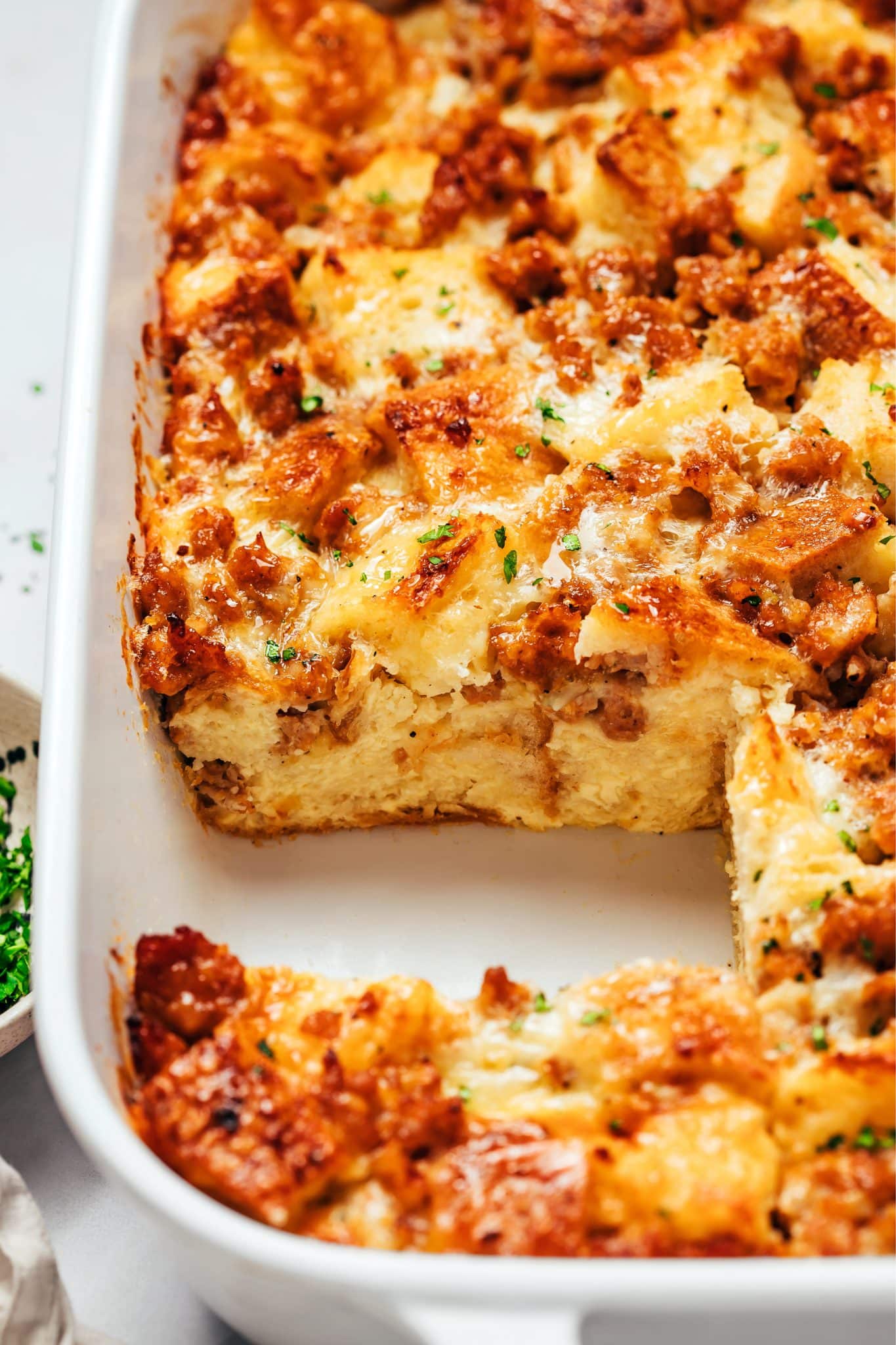
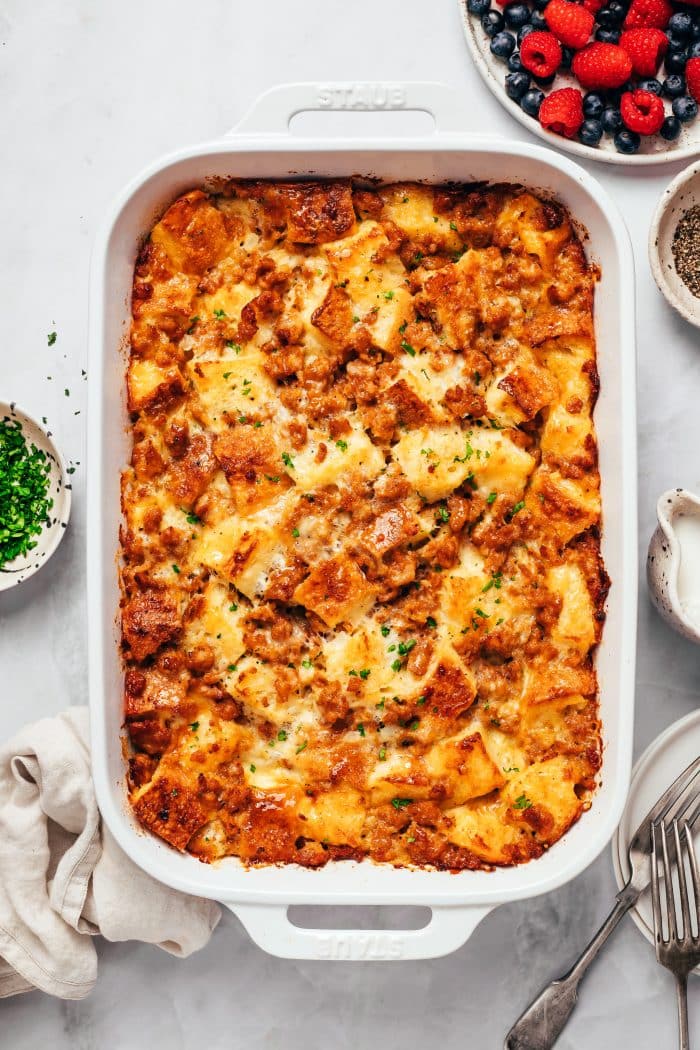
This easy sausage breakfast casserole combines savory breakfast sausage, eggs, day-old bread, Parmesan, and Gouda in one hearty, cheesy dish. It bakes up golden on top with a soft, custardy center and is perfect for feeding a crowd. Best of all, you can assemble everything the night before and bake it fresh in the morning.
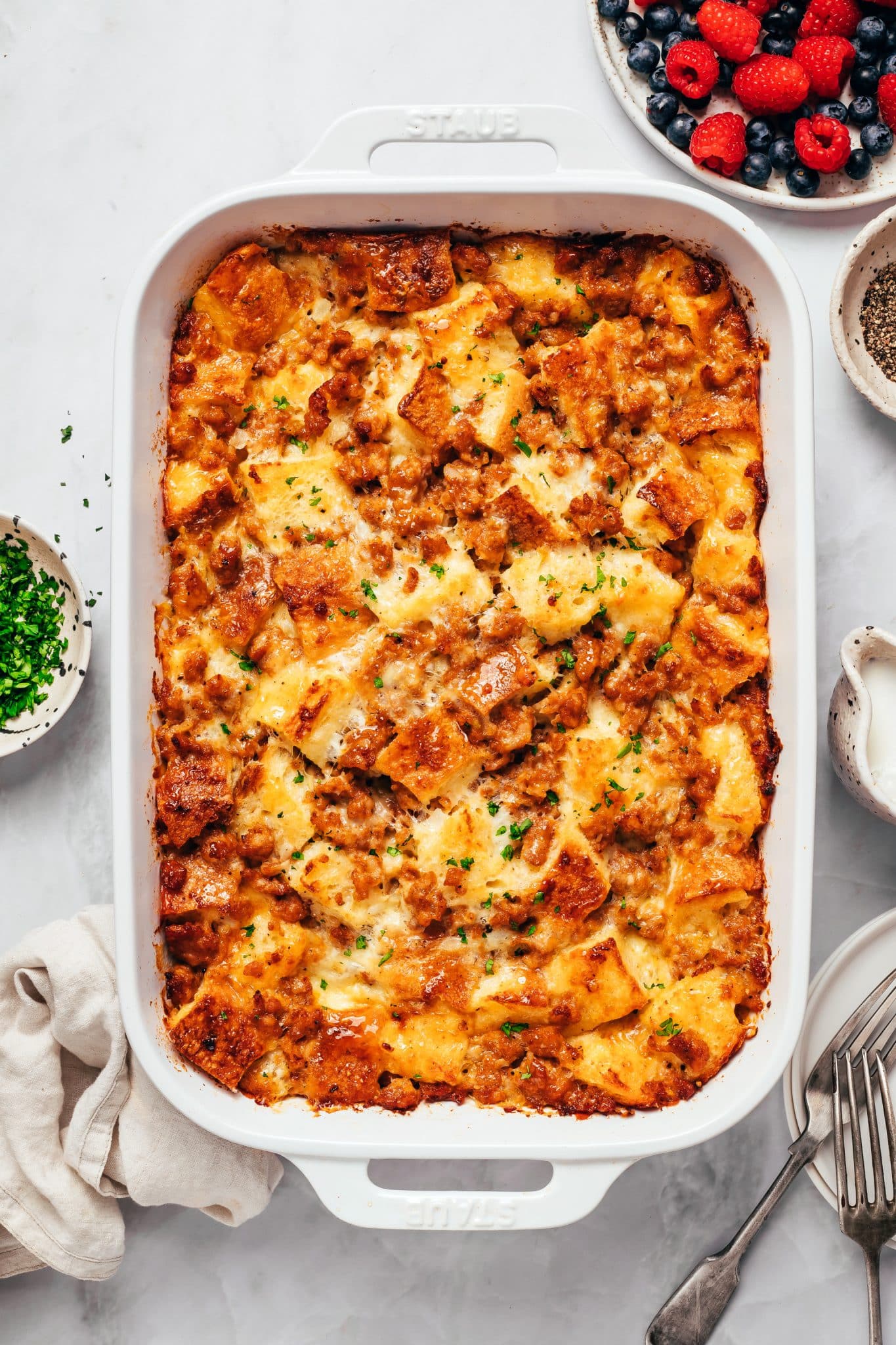
I am a big fan of breakfast casseroles, and this one is my family’s favorite. I make it every year for Christmas morning, plus the occasional weekend brunch, and yes, sometimes even for dinner! It’s hearty, delicious, easy to prepare ahead of time, and endlessly versatile.
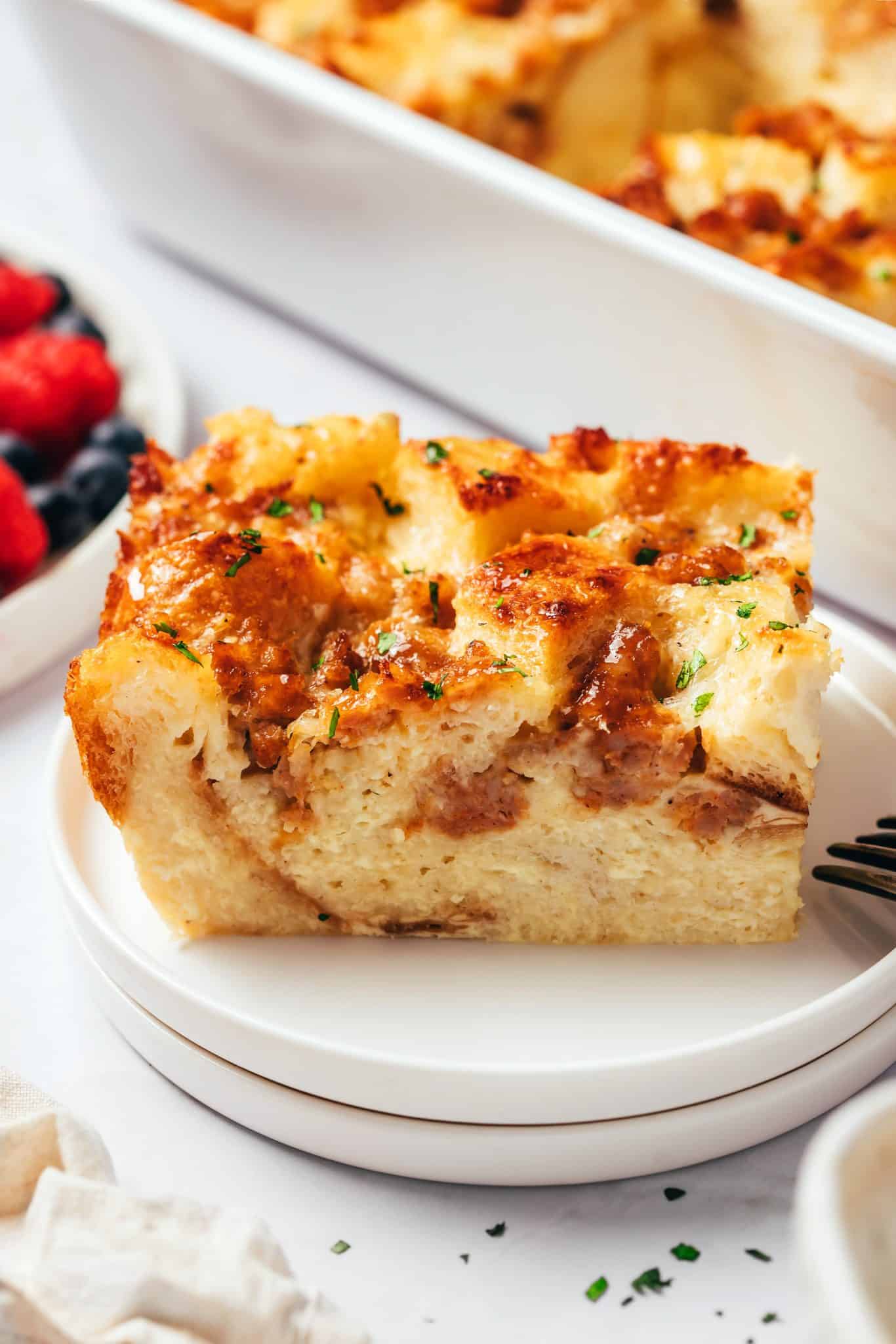
Unlike my tater tot breakfast casserole, this recipe uses cubes of day-old bread to soak up a savory mixture of eggs, milk, sausage, onions, Parmesan, and Gouda. I used sourdough for the casserole pictured here, but it’s just as delicious with day-old French bread, challah, or brioche. Once baked, the top is golden and slightly crispy, while the inside stays soft and custardy, almost like a savory bread pudding.
The trick is giving the bread enough time to absorb the eggs and milk before baking. I’ve made this casserole after refrigerating it for just one hour and after letting it chill overnight, and both turn out perfectly. And just like my biscuits and gravy casserole, this sausage breakfast casserole can be assembled the night before and baked the next morning. For the ultimate breakfast spread, I highly recommend serving it with fresh squeezed orange juice and fresh berries or a yummy fruit salad and bakery-style blueberry muffins.
Quick Look: Easy Breakfast Casserole with Sausage
- Method: Brown the sausage and onions, then combine with the eggs, milk, and cheese. Arrange the cubed bread in a 9×13-inch baking dish, pour the egg mixture over the top, and refrigerate for at least one hour before baking.
- Flavor: Savory sausage and onions with nutty Parmesan, creamy Gouda, and a slightly tangy sourdough bread.
- Time: Approximately 2 hours 40 minutes total, including 20 minutes prep, 20 minutes browning the sausage, 1 hour refrigeration, and 1 hour baking.
- Top tip: Once assembled, this casserole needs at least one hour in the refrigerator for the bread to absorb the eggs and milk.
- Good to know: Assemble it the night before if that’s easier. A fully chilled casserole usually needs an extra 20-30 minutes in the oven.
- Best for: Christmas morning, Easter brunch, weekend breakfasts, and feeding a crowd.
Table of Contents
- Ingredients and Substitutions
- How to Make Sausage Breakfast Casserole
- How to Make Sausage Breakfast Casserole Ahead of Time
- 5 Tips for the Best Sausage Breakfast Casserole
- Easy Breakfast Casserole Variations
- How to Store, Freeze, and Reheat
- Sausage Breakfast Casserole FAQs
- More Breakfast Recipes
- Sausage Breakfast Casserole Recipe
Ingredients and Substitutions
This sausage breakfast casserole is made with simple, easy-to-find ingredients. For the complete list of ingredients and measurements, see the recipe card at the bottom of the post.
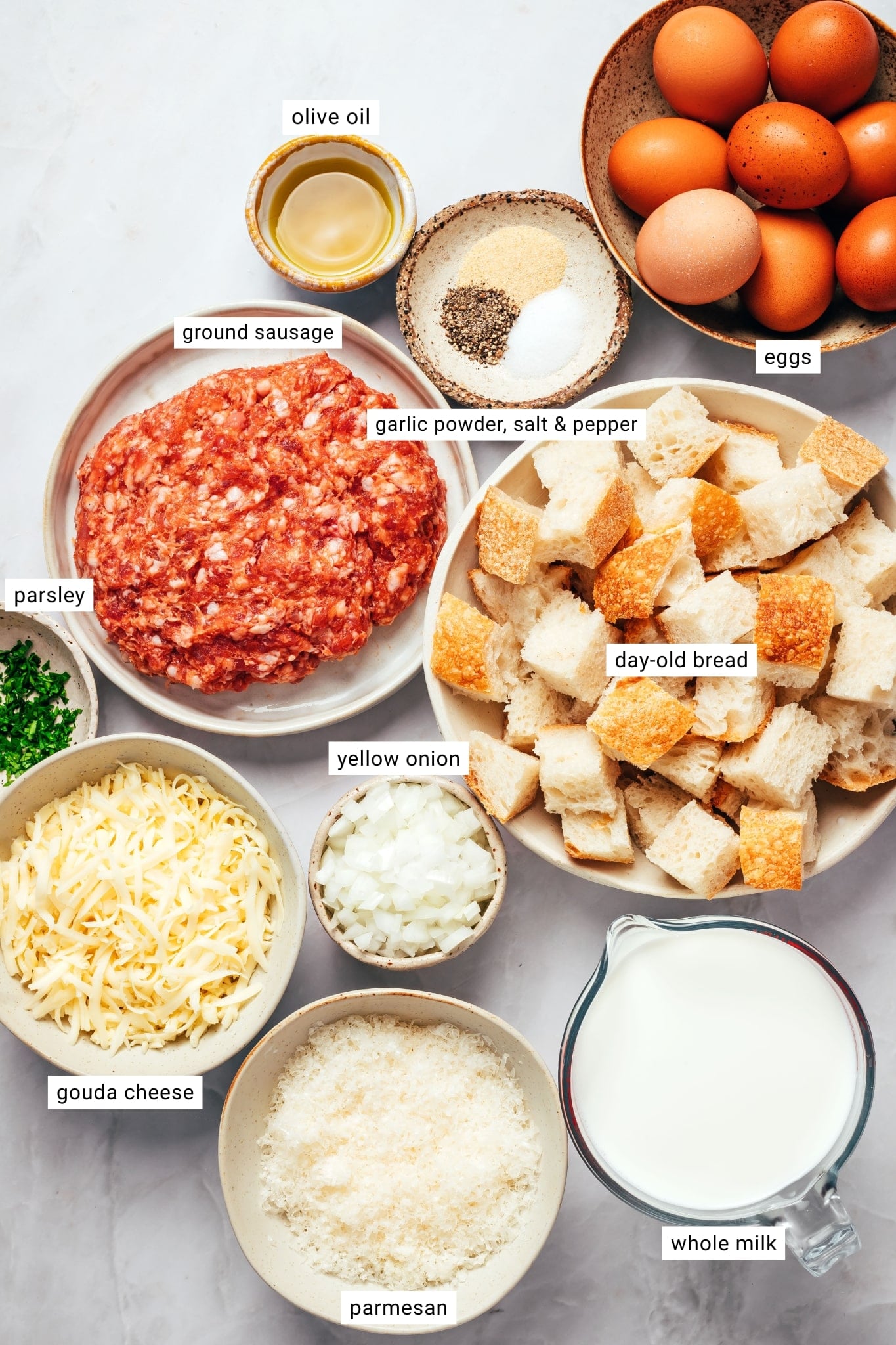
- Ground sausage: I highly recommend making this casserole with pork breakfast sausage for its classic, savory flavor, but sweet or hot Italian sausage also works well. Italian sausage will give the casserole a different flavor depending on its seasonings. Ground chicken or turkey sausage is also an option. Whichever you choose, cook the sausage thoroughly before adding it to the egg mixture.
- Onion and olive oil: Yellow onion adds a little sweetness and flavor to the sausage as it browns. White onion or shallots work as substitutes, and you can use butter in place of olive oil.
- Eggs: Eight large eggs form the base of the casserole, helping everything hold together as it bakes. I recommend sticking with whole eggs for the best results.
- Whole milk: Three cups of whole milk combine with the eggs to create the custard that soaks into the bread. Half-and-half can be substituted for a richer casserole, but I prefer whole milk for a balance of richness and texture. My crustless quiche uses a similar egg-and-dairy custard, but without the bread.
- Parmesan and Gouda cheese: Parmesan adds a salty, nutty flavor, while Gouda melts into the casserole, making it extra cheesy and delicious. You can substitute cheddar, Swiss, or pepper jack for the Gouda, depending on your preference. I recommend shredding the cheese yourself for smoother melting.
- Day-old bread: You’ll need 10 cups of cubed, day-old bread, measured after cutting. I used sourdough for the casserole pictured here, but I’ve also made it using French bread, challah, and brioche. The bread should be slightly dry so it can absorb the egg and milk mixture without becoming overly mushy. Tip: If you’re starting with fresh bread, cut it into cubes and dry it in a 300°F oven for 10-15 minutes, then let it cool before assembling the casserole.
- Seasonings: Salt, black pepper, and garlic powder add flavor without overpowering the sausage and cheese. Keep in mind that both the sausage and Parmesan contribute salt, so additional seasoning may not be necessary.
- Fresh parsley: Optional, but a little chopped parsley adds freshness and color just before serving.
How to Make Sausage Breakfast Casserole
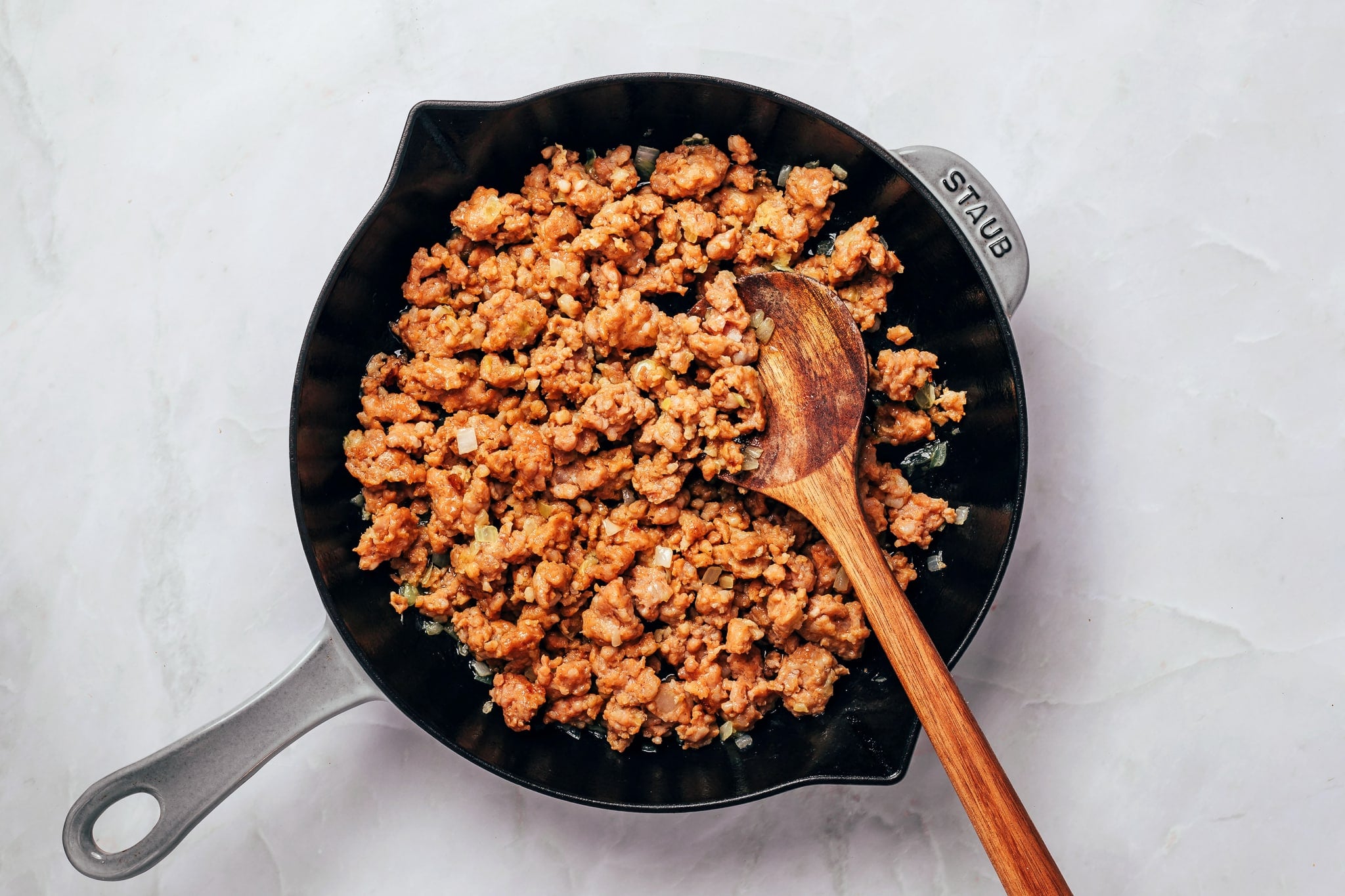
- Brown the sausage and onions. Lightly grease a 9×13-inch baking dish with nonstick cooking spray and set aside. Heat the olive oil in a large skillet over medium heat. Add the diced onion and cook for 3-4 minutes, until it starts to soften. Add the ground sausage and continue cooking for approximately 12-15 minutes, breaking it into smaller pieces as it browns. Once the sausage is fully cooked and the onions are soft, remove from the heat and allow to cool slightly. Tip: To speed up cooling, transfer the sausage and onion mixture to a shallow dish and place it in the refrigerator or freezer for a few minutes, stirring occasionally, until it’s no longer hot. Spreading it out helps it cool faster than leaving it in the skillet.

- Whisk together the eggs and milk. In a large mixing bowl, whisk together the eggs, whole milk, salt, black pepper, and garlic powder until well combined. This mixture forms the custard that will soak into the bread and hold the casserole together as it bakes.

- Add the sausage and cheese. Once the sausage has cooled, stir the grated Parmesan, shredded Gouda, and slightly cooled sausage and onions into the egg mixture. Mix until everything is evenly combined.
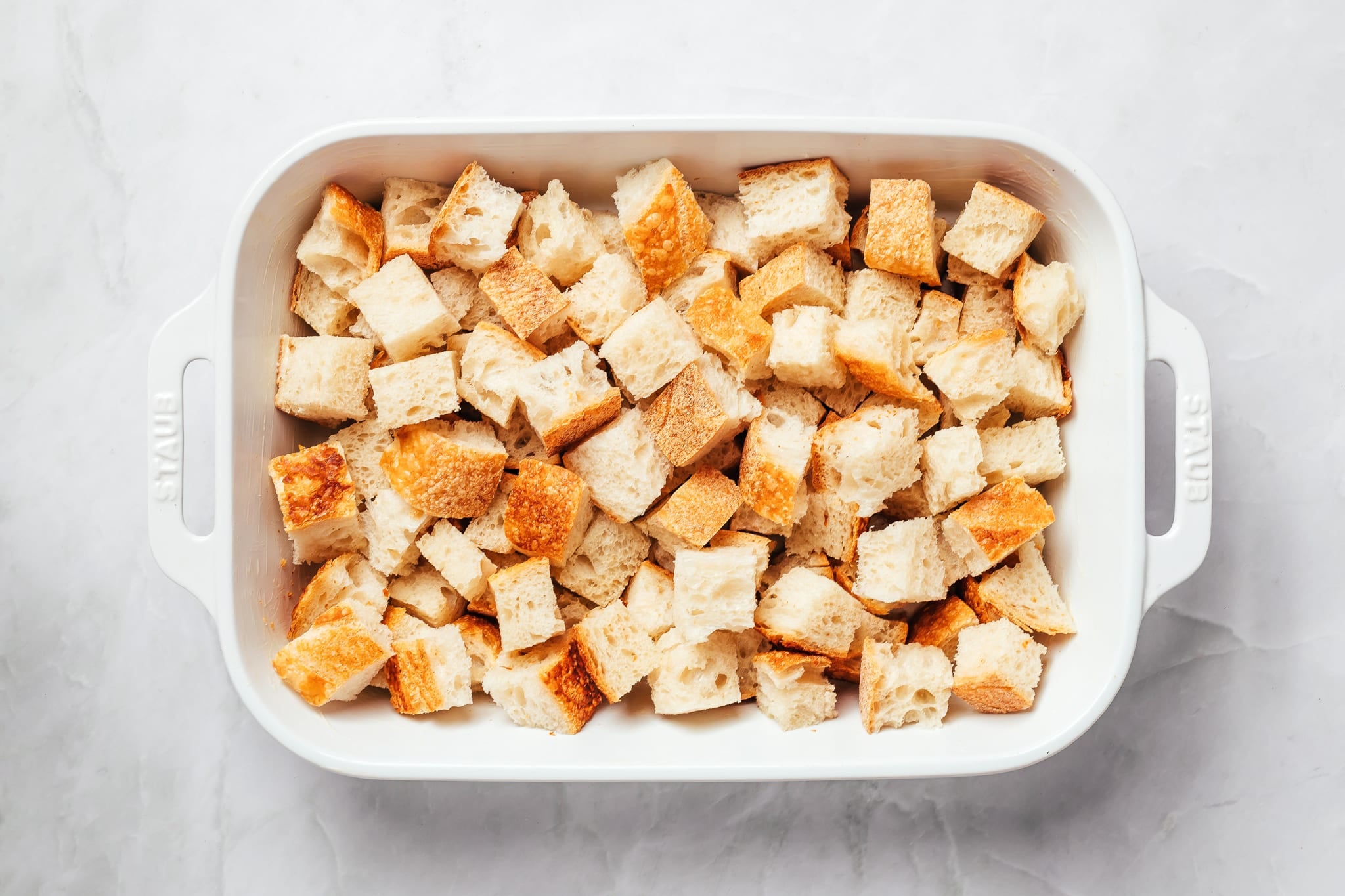
- Add the bread to the baking dish. Spread the cubed, day-old bread evenly in the prepared baking dish. You want the bread distributed throughout the dish so that every serving has a good balance of bread, sausage, eggs, and cheese.
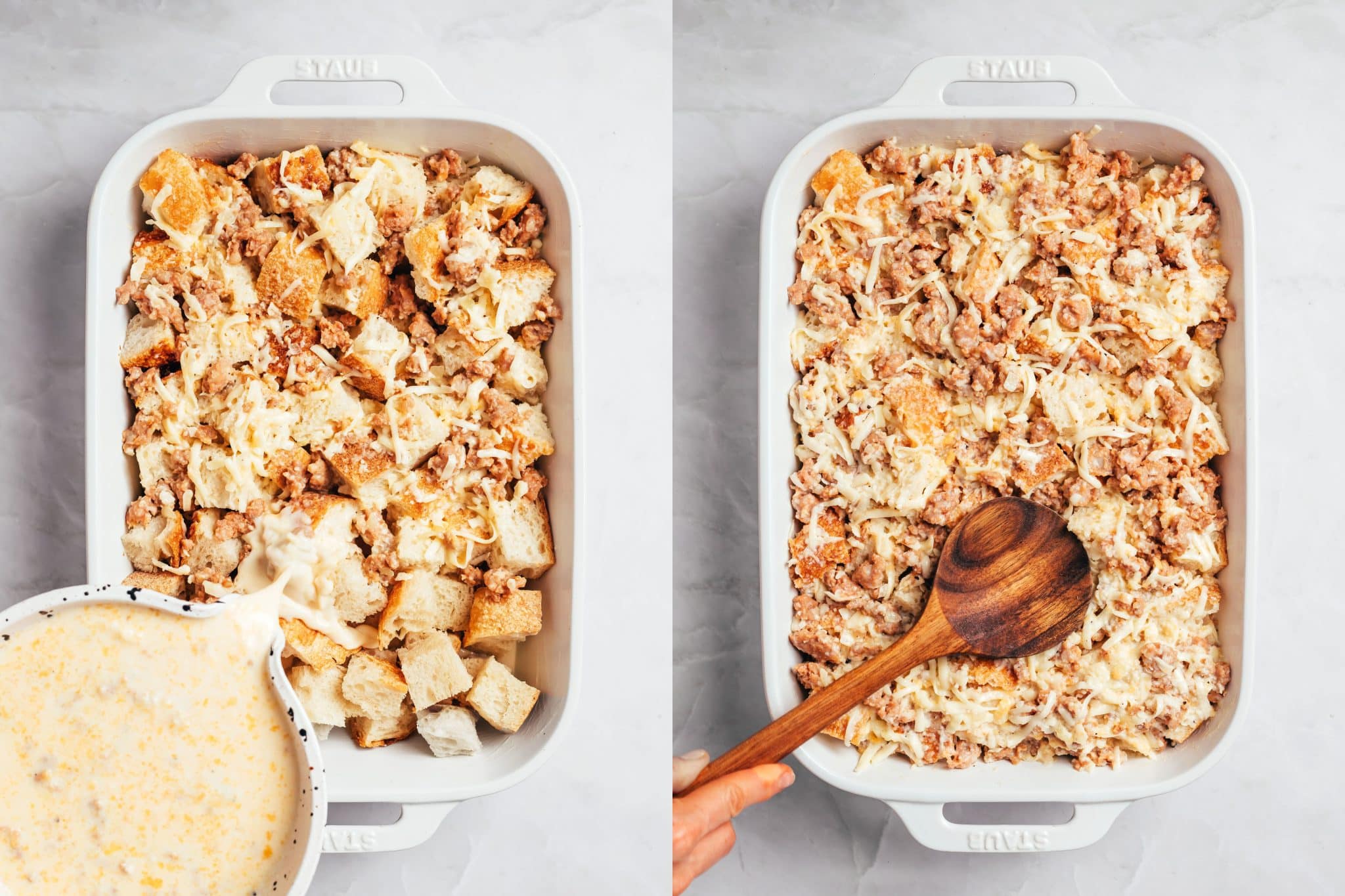
- Pour the egg mixture over the bread. Slowly pour the sausage, cheese, and egg mixture over the bread, distributing the sausage and cheese as evenly as possible. Pour any remaining liquid from the bowl over the top, then use the back of a large spoon to gently press the bread into the mixture. This helps moisten the bread and ensures that the pieces on top don’t stay dry.
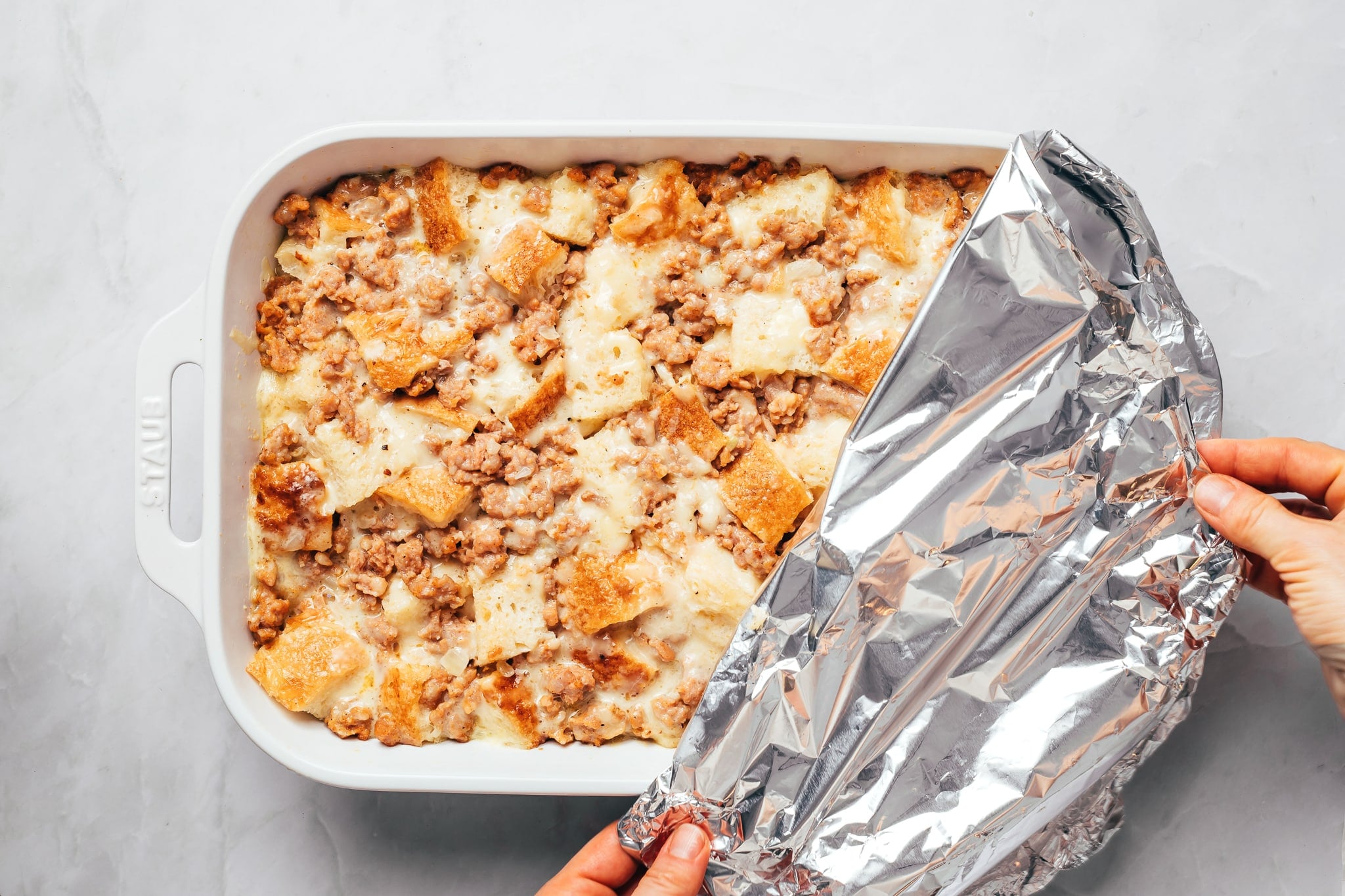
- Cover and refrigerate. Cover the baking dish tightly with aluminum foil and refrigerate for at least 1 hour or overnight. Don’t skip this step! The bread needs time to absorb the eggs and milk, which is what gives the finished casserole its soft, custardy texture.
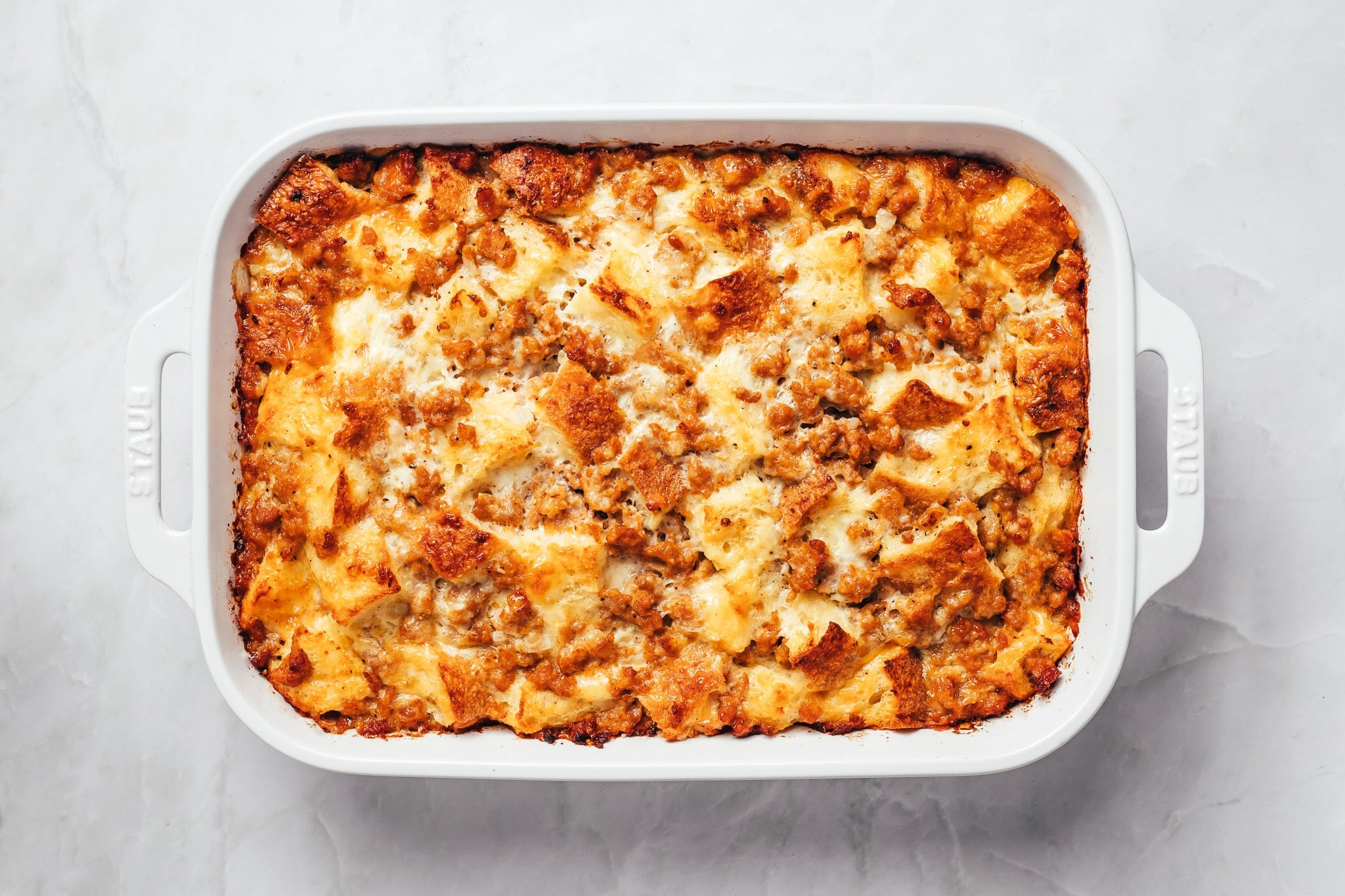
- Bake the breakfast casserole. When you’re ready to bake, preheat the oven to 350°F. Place the covered casserole in the oven and bake for 35 minutes. Remove the foil and continue baking for approximately 25 minutes, or until the top is golden brown and the center is set. If refrigerated overnight: I’ve found that a thoroughly chilled casserole typically needs an additional 20-30 minutes in the oven. Keep an eye on the top and loosely cover with foil if it starts browning too quickly. The casserole is ready when the center reaches an internal temperature of 165°F.
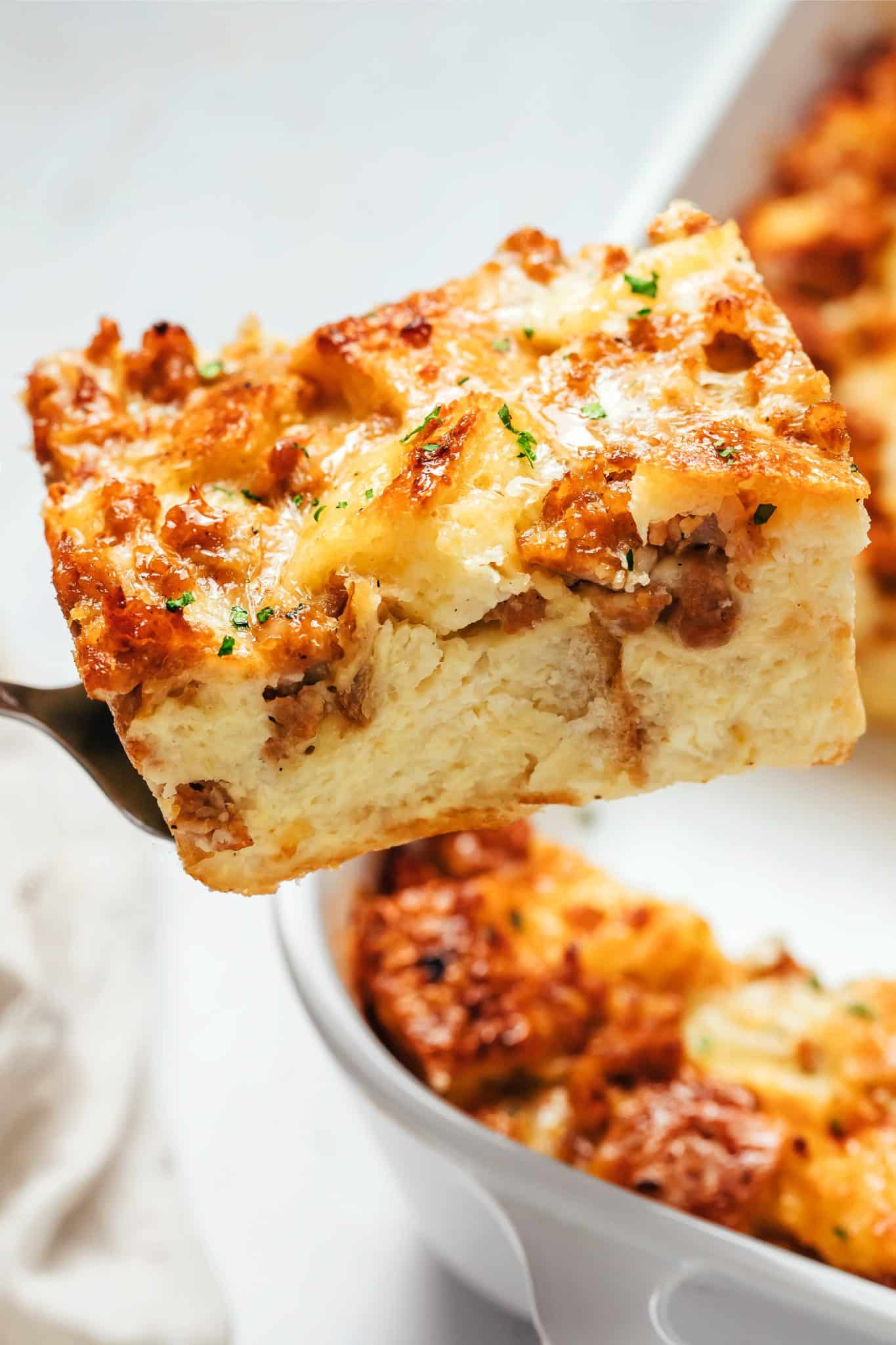
- Rest, garnish, and serve. Remove the casserole from the oven and allow it to rest for 5-10 minutes before slicing. This gives the custard a little time to settle, making it easier to cut into neat portions. Garnish with freshly chopped parsley, if desired, and serve warm.
How to Make Sausage Breakfast Casserole Ahead of Time
This sausage breakfast casserole is a great recipe to make ahead of time, especially around the holidays. Assemble everything the night before, cover tightly with aluminum foil, and refrigerate overnight. The next morning, all that’s left to do is bake!
Baking after overnight refrigeration: Preheat the oven to 350°F and bake as directed, keeping in mind that a thoroughly chilled casserole typically needs an additional 20-30 minutes in the oven. If the top starts browning too quickly, loosely cover it with foil. The casserole is done when the center is set and reaches an internal temperature of 165°F as measured with an instant-read thermometer.
A note about baking dishes: For overnight preparation, I recommend using a roomy 9×13-inch baking dish that can safely go directly from the refrigerator into a preheated oven. Three good options are the All-Clad Stainless Steel Baking Pan, the Staub stoneware baker, and the Pyrex Deep glass baking dish. The deeper Staub and Pyrex dishes are especially helpful for accommodating the generous amount of bread, sausage, and egg mixture. If using Pyrex, make sure the oven is fully preheated before adding the refrigerated dish, and remove any plastic storage lid before baking. Since glass and ceramic bakeware can have different guidelines for temperature changes, always check the manufacturer’s instructions for your specific dish.
5 Tips for the Best Sausage Breakfast Casserole
- Start with day-old bread. Fresh, soft bread can become overly mushy as it absorbs the egg and milk mixture. Slightly stale sourdough, French bread, or another sturdy bread works best because it absorbs the custard while maintaining some structure.
- Drain excess sausage grease. A little fat adds flavor, but too much can make the casserole greasy. If there’s a lot of rendered fat in the skillet after browning the sausage, spoon off the excess before adding it to the egg mixture. Also remember to let the sausage cool slightly so it doesn’t start cooking the eggs prematurely.
- Make sure the bread is evenly soaked. After pouring the egg mixture into the baking dish, gently press down on any pieces of bread sticking up from the liquid. This helps prevent dry patches and ensures a more consistent texture throughout the dish.
- Don’t judge doneness by the golden top alone. The bread and cheese may look perfectly browned before the eggs in the center are fully cooked. Check the middle of the casserole with an instant-read thermometer. It should reach 165°F. If the top is browning too quickly, loosely cover it with aluminum foil while the center finishes cooking.
- Let it rest before slicing. I know it’s tempting to dig right in, but giving the casserole 5-10 minutes to rest after baking allows everything to settle and makes it much easier to cut into neat portions without falling apart.
Easy Breakfast Casserole Variations
One of the things I love about this sausage breakfast casserole is how easy it is to customize. The bread, eggs, and milk form the base, but you can experiment with different meats, cheeses, and vegetables depending on what you have on hand.
Here are a few combinations to try:
- Spinach and mushroom: Add sautéed mushrooms and chopped spinach for extra vegetables and flavor. Cook the mushrooms until they’ve released most of their moisture, and wilt and drain the spinach before adding it to the egg mixture.
- Spicy sausage breakfast casserole: Use hot breakfast sausage, replace the Gouda with pepper jack cheese, and add diced jalapeños or green chiles. Serve with your favorite salsa or hot sauce.
- Bacon, cheddar, and bell pepper: Swap the Gouda for sharp cheddar and add diced red or green bell peppers. Cook the peppers with the onions until softened before adding the sausage. For an extra smoky flavor, sprinkle crispy, crumbled oven-baked bacon over the finished casserole just before serving.
- Italian-inspired: Use sweet or hot Italian sausage, substitute mozzarella for the Gouda, and add sautéed spinach. Keep the Parmesan for its salty, nutty flavor.
Tip: Be careful not to overload the casserole with additional ingredients, especially vegetables that release a lot of water. As a starting point, keep extra vegetables to about 1 cup total, cook off excess moisture, and drain well before adding them. Too much additional moisture can leave the center watery or prevent the casserole from setting properly. And regardless of the variation, keep the original bread, egg, and milk quantities the same and refrigerate for at least one hour before baking.
How to Store, Freeze, and Reheat
- Refrigerator: Transfer leftovers to an airtight container and store in the refrigerator for up to 3-4 days. I recommend cutting the casserole into individual portions before storing so you can easily reheat only what you need.
- Freezer: Yes, you can freeze this sausage breakfast casserole! I recommend freezing it after baking rather than freezing the assembled, unbaked casserole. Divide into individual portions, then wrap tightly in plastic wrap followed by aluminum foil, or place in freezer-safe containers. Freeze for up to 2-3 months. Thaw overnight in the refrigerator before reheating.
- Reheating in the oven: Preheat your oven to 350°F. Place the refrigerated casserole portions in an oven-safe dish and cover loosely with aluminum foil to prevent them from drying out. Heat for approximately 15-25 minutes, depending on the size of the portions, or until warmed through to an internal temperature of 165°F. Remove the foil for the last few minutes if you want to crisp up the top.
- Reheating in the microwave: Place an individual serving on a microwave-safe plate and cover loosely with a microwave-safe lid. Microwave for 1 minute, then continue heating in 30-second intervals until the center reaches 165°F.

Sausage Breakfast Casserole FAQs
Cut the bread into cubes first, then measure out 10 cups using a dry measuring cup. Fill the cup loosely without pressing down or packing the bread. Since bread slices vary so much in size, especially with sourdough, French bread, challah, and brioche, measuring the cubes is much more accurate than counting slices.
The center should be soft and custardy, but it shouldn’t be wet or have pools of uncooked egg mixture. If the center is still soggy, the casserole may need more time in the oven. Make sure it has reached an internal temperature of 165°F before removing it. Excess sausage grease or watery vegetables can also contribute to a soggy casserole. If the top is already golden brown, cover it loosely with foil while the center finishes cooking.
Pretty much! A breakfast strata is a savory bread pudding made with bread, eggs, milk, and ingredients like cheese, meat, and vegetables. The ingredients are typically layered or combined in a baking dish and refrigerated before baking so the bread can absorb the egg mixture. This sausage breakfast casserole follows the same basic method.
I recommend sticking with a 9×13-inch baking dish for this recipe. Between the 10 cups of bread, eight eggs, three cups of milk, sausage, and cheese, there’s quite a bit of filling! A smaller dish may be too full, and a thicker casserole will take longer to bake through. If you use a different size, make sure it’s large and deep enough to hold everything, and check that the center reaches 165°F rather than relying on the original baking time.
Yes, although the flavor and texture will be different. You could replace the sausage with sautéed mushrooms, spinach, bell peppers, or a combination of vegetables. Just be sure to cook off any excess moisture before adding them. I haven’t tested a completely meatless version with these exact proportions, so I recommend keeping the original egg, milk, and bread quantities unchanged.
More Breakfast Recipes


Whether you’re making this sausage breakfast casserole for a holiday gathering or an ordinary weekend breakfast, I hope you enjoy it as much as my family does! If you give it a try, I’d love to hear what you think. Leave a comment and star rating below, and let me know how it turned out! Thank you so much! 💛
Sausage Breakfast Casserole Recipe

Ingredients
- 1 tablespoon olive oil, or butter
- 1 medium yellow onion, diced
- 1 pound ground pork breakfast sausage, or sweet or hot Italian sausage
- 8 large eggs
- 3 cups whole milk,
- ½ teaspoon salt, plus more to taste
- 1 teaspoon freshly ground black pepper
- 1 teaspoon garlic powder
- 1 cup grated Parmesan cheese
- 1 cup Gouda cheese, freshly shredded
- 10 cups cubed day-old bread, measured after cutting (sourdough, French bread, challah, or brioche)
- freshly chopped parsley, to garnish
Instructions
- Prepare the baking dish. Lightly spray a 9×13-inch baking dish with nonstick cooking spray or grease with butter. Set aside while preparing the other ingredients.
- Cook the sausage and onions. Warm the olive oil in a large skillet over medium heat. Add the diced onion and sauté for 3-4 minutes, stirring occasionally. Add the ground sausage and cook for approximately 12-15 minutes, breaking it apart with a wooden spoon or spatula until fully cooked and browned. Drain off excess grease, if necessary. Remove from the heat and let the mixture cool until no longer hot.1 tablespoon olive oil, 1 medium yellow onion, 1 pound ground pork breakfast sausage
- Prepare the egg mixture. Crack the eggs into a large mixing bowl. Add the whole milk, salt, black pepper, and garlic powder. Whisk thoroughly until the eggs are fully blended with the milk and seasonings.8 large eggs, 3 cups whole milk, ½ teaspoon salt, 1 teaspoon freshly ground black pepper, 1 teaspoon garlic powder
- Combine the sausage and cheese. Add the grated Parmesan, shredded Gouda, and cooled sausage and onion mixture to the bowl of whisked eggs. Stir gently until the sausage and cheese are distributed throughout the mixture.1 cup grated Parmesan cheese, 1 cup Gouda cheese
- Assemble the casserole. Arrange the cubed day-old bread in an even layer in the prepared baking dish. Carefully pour the egg, sausage, and cheese mixture over the bread, spreading the sausage and cheese across the dish as evenly as possible. Gently press the bread down with the back of a spoon to help it absorb the liquid.10 cups cubed day-old bread
- Cover and refrigerate. Cover the baking dish tightly with aluminum foil and refrigerate for at least 1 hour or overnight. This soaking time is essential for allowing the bread to absorb the egg and milk mixture before baking.
- Bake the casserole. Preheat the oven to 350°F. Keeping the dish covered with aluminum foil, bake for 35 minutes. Carefully remove the foil and continue baking for approximately 25 minutes, or until the surface is golden brown and the center is fully set. Check the center with an instant-read thermometer; it should register 165°F.If refrigerated overnight: Plan for approximately 20-30 minutes of additional baking time, as the casserole will be thoroughly chilled. If the surface becomes too brown before the center is cooked through, loosely cover it with foil.
- Rest and serve. Remove the casserole from the oven and let it stand for 5-10 minutes. Cut into 10 portions, garnish with freshly chopped parsley if desired, and serve warm.freshly chopped parsley
Notes
- Bread: Measure the 10 cups of bread after cutting it into cubes, without packing them into the measuring cup. Day-old sourdough, French bread, challah, and brioche all work well. If using fresh bread, spread the cubes on a baking sheet and dry them in a 300°F oven for 10-15 minutes, until slightly dry but not browned. Cool before using.
- Don’t skip refrigeration: The assembled casserole must be refrigerated for at least 1 hour to give the bread time to absorb the egg mixture. You can also assemble it the night before and refrigerate overnight.
- Adjust the baking time: A casserole refrigerated overnight generally takes 20-30 minutes longer to bake than one chilled for just an hour. Always check the center for doneness rather than relying on time alone.
- Check the center: The casserole is done when the middle is set and reaches an internal temperature of 165°F. Cover loosely with foil if the top browns too quickly.
- Storage and freezing: Refrigerate leftovers in an airtight container for up to 3-4 days. For longer storage, freeze individual portions of the fully baked casserole for 2-3 months. Thaw overnight in the refrigerator and reheat to 165°F.
Explore More with AI
Nutrition
Nutrition information is automatically calculated, so should only be used as an approximation.














Can you leave this in refrigerator overnight and bake in the morning?
Yes.
Chilling in the refrigerator for at least 1 hour (or up to overnight) allows the milk and egg mixture to soak into the day-old bread, making it nice and soggy and perfect for baking. It’s the same idea as French toast; the best recipes allow the milk and eggs to soak into the slices of bread before cooking.
In the morning, just take it out and let it sit at room temperature while you preheat your oven, then bake as directed.
It may require additional time 🙂
Add about a teaspoon or 2 of mustard to this recipe , with the wet ingredients and it makes the flavors pop
I am making this tomorrow. 10 cups of bread is equal to how much bread? Using sourdough. Everything I read says 20 slices that seems like a lot. How much do you use?
Around 15, assuming 2/3 of a cup per slice 🙂
Thank you, I was wondering that myself. Any trick to making it day old if I bought the bread tonight?
To give fresh bread the slightly stale texture that’s often ideal for casseroles, especially those like bread pudding or stuffing where you want the bread to absorb a lot of flavor without becoming too soggy, you can use a quick oven-drying technique. Here’s how to do it:
Preheat your oven to about 300°F (150°C).
Slice or cube the bread depending on what your recipe calls for. This increases the surface area, allowing more moisture to escape, which helps the bread dry out more evenly and quickly.
Spread the bread pieces in a single layer on a baking sheet. If you’re using slices, you might want to split them into half or quarters.
Bake the bread in the preheated oven for about 10-20 minutes. Check periodically to make sure it’s drying without browning too much. If it starts to take on too much color, you can turn off the oven and let the bread sit inside as the oven cools down.
Remove from the oven and let the bread cool. It should feel dry to the touch and slightly harder than when it was fresh. If it’s not quite there yet, you can pop it back in the oven for a few more minutes.
This method effectively simulates the drying-out process that naturally occurs to bread over a day or so, making it perfect for recipes that require a sturdier, more absorbent bread.
Can you cook this in a crock pot?
Per the tip above in the main post:
”
Slow Cooker Breakfast Casserole:
This breakfast casserole is easy to make in the crock pot. Prepare it the night before, set your slow cooker to low, and let it cook while you sleep.
Spray the bowl of your slow cooker with non-stick olive oil or butter cooking spray.
Cook the onion and sausage in a large skillet over medium heat until cooked through. Transfer to the slow cooker with the day-old bread cubes.
Whisk together the eggs, milk, cheese, salt, black pepper, and garlic powder until fully combined, and pour over the sausage and bread. Mix to combine everything together.
Cook for 7-8 hours or until the eggs are fully cooked. Do not cook on high heat.
“
This sounds really good and easy with endless possibilities for variations. Have you ever tried mixing all the ingredients together and then baking them off in a muffin tin for individual servings? If so, are there any changes to the baking time etc. that I should make?
Yes, transforming a traditional breakfast casserole recipe into individual servings using a muffin tin is a fantastic idea for convenient, portion-controlled eating. When doing so, it’s important to adjust the baking time, as the smaller size of the muffin cups allows the mixture to cook more quickly than a single, large casserole dish. Typically, these mini casseroles may be ready in about 15-20 minutes, depending on the specific ingredients and oven temperature. Keep a close eye on them and test for doneness with a toothpick inserted into the center; it should come out clean when they’re fully cooked. This method not only offers a quick and easy serving option but also adds a delightful presentation to your breakfast table.
Do you use Italian sausage?
This recipe can be made with hot or sweet Italian sausage or your favorite breakfast sausage 🙂
Never found the recipe
Its directly above in the Breakfast Casserole Recipe Card 🙂
It turned out great, thanks!
Can you use shredded potatoes instead of bread?
I have not tried that, but the potatoes will have more moisture than the bread.
Maybe try my Tatertot breakfast casserole instead?