
This post may contain affiliate links. See my disclosure policy.

Not all potatoes cook the same way. Starchy potatoes, like Russets, turn light and fluffy when baked or mashed, while waxy potatoes, like red potatoes and fingerlings, stay firm and creamy. All-purpose potatoes, including Yukon Golds, fall somewhere in between. Knowing the difference makes it much easier to choose the right potato for whatever you’re cooking.
Let’s look at exactly what it means when we compare waxy vs. starchy potatoes, which varieties share common features, and which ones are best for specific recipes.
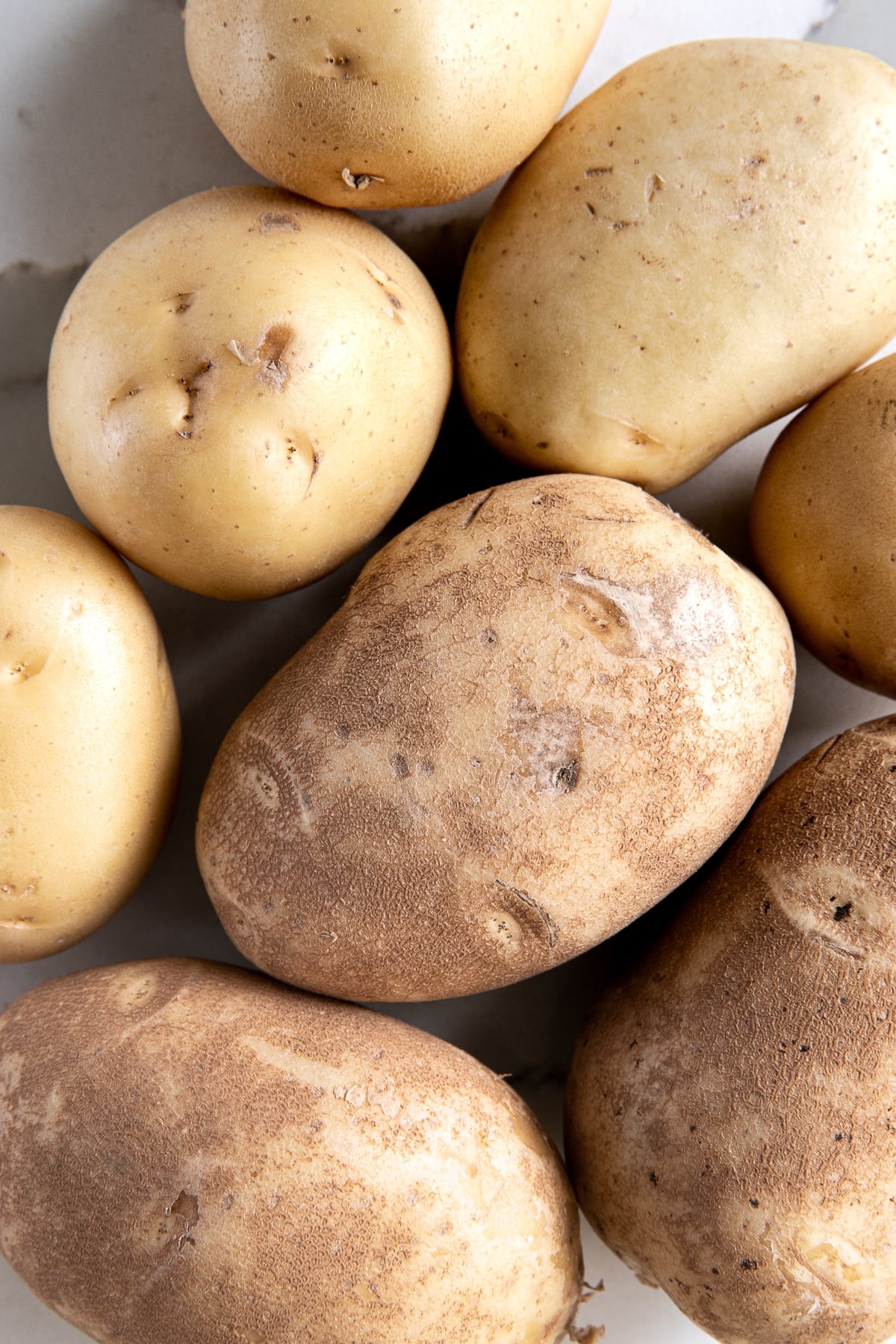
With more than 5,000 varieties worldwide and a history stretching back thousands of years, it’s no wonder potatoes have become a staple in kitchens around the world. Few ingredients can go from something dug out of the ground to something so delicious with such simple preparation. Potatoes can be roasted, baked, sautéed, steamed, grilled, fried, and even microwaved. And let’s not forget the glory of French fries!
But as versatile as potatoes are, they don’t all cook the same way. For my creamy mashed potatoes, I always use Russets because I want a light, fluffy texture. When I’m making crispy oven roasted potatoes, however, I prefer a mixture of baby Yukon Gold and red potatoes for their creamy centers and crisp, golden edges.
Neither choice is necessarily better than the other. They simply produce different results. The trick is understanding how starch and moisture affect a potato’s texture so you can choose the right variety for whatever you’re cooking, whether it’s mashed potatoes, potato salad, soup, or French fries.
Table of Contents
- What’s the Difference Between Waxy and Starchy Potatoes?
- Starchy Potatoes: Types, Characteristics, and Best Uses
- Common Types of Starchy Potatoes
- Best Uses for Starchy Potatoes
- Waxy Potatoes: Types, Characteristics, and Best Uses
- Common Types of Waxy Potatoes
- Best Uses for Waxy Potatoes
- All-Purpose Potatoes: Types, Characteristics, and Best Uses
- Common Types of All-Purpose Potatoes
- Best Uses for All-Purpose Potatoes
- Which Potato Should You Use?
- Can You Substitute Waxy and Starchy Potatoes?
- How to Choose Potatoes at the Grocery Store
- Frequently Asked Questions
What’s the Difference Between Waxy and Starchy Potatoes?
The biggest difference between waxy and starchy potatoes is their starch and moisture content, which determines how they behave when cooked.
- Starchy potatoes contain more starch and generally less moisture. They cook up soft, dry, and fluffy, making them especially good for mashed potatoes, baked potatoes, and French fries. Russet potatoes are the most familiar example.
- Waxy potatoes contain less starch and more moisture. They have a smoother, firmer texture and hold their shape better during cooking, making them ideal for potato salads, boiled potatoes, and chunky soups. Common examples include red potatoes and many fingerling varieties.
- All-purpose potatoes fall somewhere in between. Yukon Gold potatoes, for example, have a naturally creamy texture and enough starch to make delicious mashed potatoes, but they also hold together well when roasted or simmered in soups.
Quick Look: Waxy vs. Starchy vs. All-Purpose Potatoes
| Characteristic | Starchy | All-Purpose | Waxy |
|---|---|---|---|
| Starch content | Higher | Moderate | Lower |
| Moisture content | Lower | Moderate | Higher |
| Cooked texture | Light, fluffy, crumbly | Smooth, creamy | Firm, moist, creamy |
| Holds its shape? | Less well | Moderately well | Very well |
| Common varieties | Russet | Yukon Gold, many white potatoes | Red Bliss, many fingerlings |
| Best uses | Mashing, baking, frying | Roasting, mashing, gratins | Potato salad, boiling, chunky soups |
Keep in mind that these are general categories, not strict rules. Individual potato varieties can behave differently, and neither skin color nor size is a reliable way to determine starch content. For a closer look at specific varieties, see my guide to the different types of potatoes.
Starchy Potatoes: Types, Characteristics, and Best Uses
Starchy potatoes, sometimes called mealy or floury potatoes, contain more starch and less moisture than waxy varieties. When cooked, their flesh becomes soft, light, and fluffy rather than firm and dense. This makes them especially good for baking, mashing, and frying. The trade-off is that they break apart more easily when boiled or simmered, so they’re not always the best choice for dishes where you want the potatoes to hold their shape.
Common Types of Starchy Potatoes
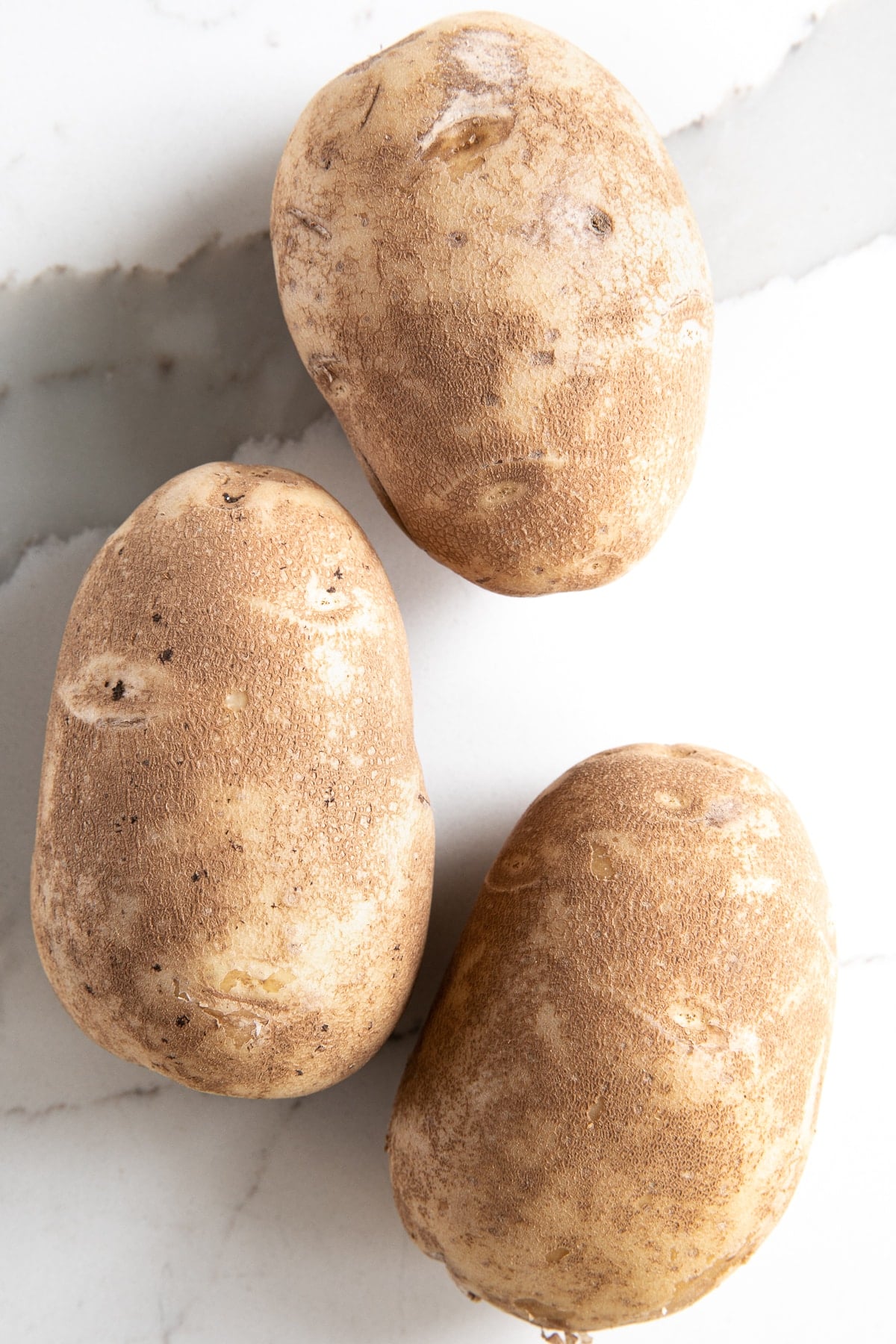
Russet potatoes are the most familiar type of starchy potato in the United States. They’re typically large and oblong, with rough, brown skin and white flesh.
You’ll also see Russets marketed as Idaho potatoes, but these aren’t necessarily the same thing. Idaho refers to where the potatoes are grown, not a specific variety. Idaho grows several types of potatoes, including Russets, reds, yellows, and fingerlings.
Best Uses for Starchy Potatoes
- Baked potatoes: Russets are my go-to for perfect baked potatoes. As they bake, they develop a fluffy interior ideal for soaking up butter, sour cream, and other toppings.
- Twice-baked potatoes and potato skins: Russets are also great for twice-baked potatoes because their fluffy flesh is easy to scoop out, mash, and mix with cheese, butter, and other ingredients. Their thicker skins are also perfect for making crispy potato skins that hold up to plenty of toppings.
- Mashed potatoes: I always use Russets for my creamy mashed potatoes. Their fluffy texture makes them easy to mash, and they absorb butter, warm milk, and sour cream perfectly. Just be careful not to overmix, or they can turn gluey.
- French fries and hash browns: Their relatively low moisture content makes Russets excellent for crispy air fryer French fries and homemade hash browns. Remember to remove excess surface moisture before cooking to get crisp, golden edges.
- Roasted potatoes: Russets also make excellent roasted potatoes, especially when you want a crispy exterior and a fluffy interior rather than a dense, creamy center.
- Creamy potato soups: As Russets simmer, they soften and break down more easily, releasing starch that helps naturally thicken the broth. In my ham and potato soup, I explain how choosing Russets instead of Yukon Gold or red potatoes changes the finished texture.
Waxy Potatoes: Types, Characteristics, and Best Uses
Waxy potatoes contain less starch and more moisture than starchy varieties, giving them a smooth, dense, and naturally creamy texture. Unlike Russets, which become fluffy and break apart easily, waxy potatoes hold their shape much better during cooking. This makes them especially useful for potato salads, soups, stews, and recipes where you want tender potatoes that stay intact – of course, even waxy potatoes can become mushy if overcooked.
Most waxy potatoes also have thin, delicate skins that don’t need to be peeled before cooking.
Common Types of Waxy Potatoes
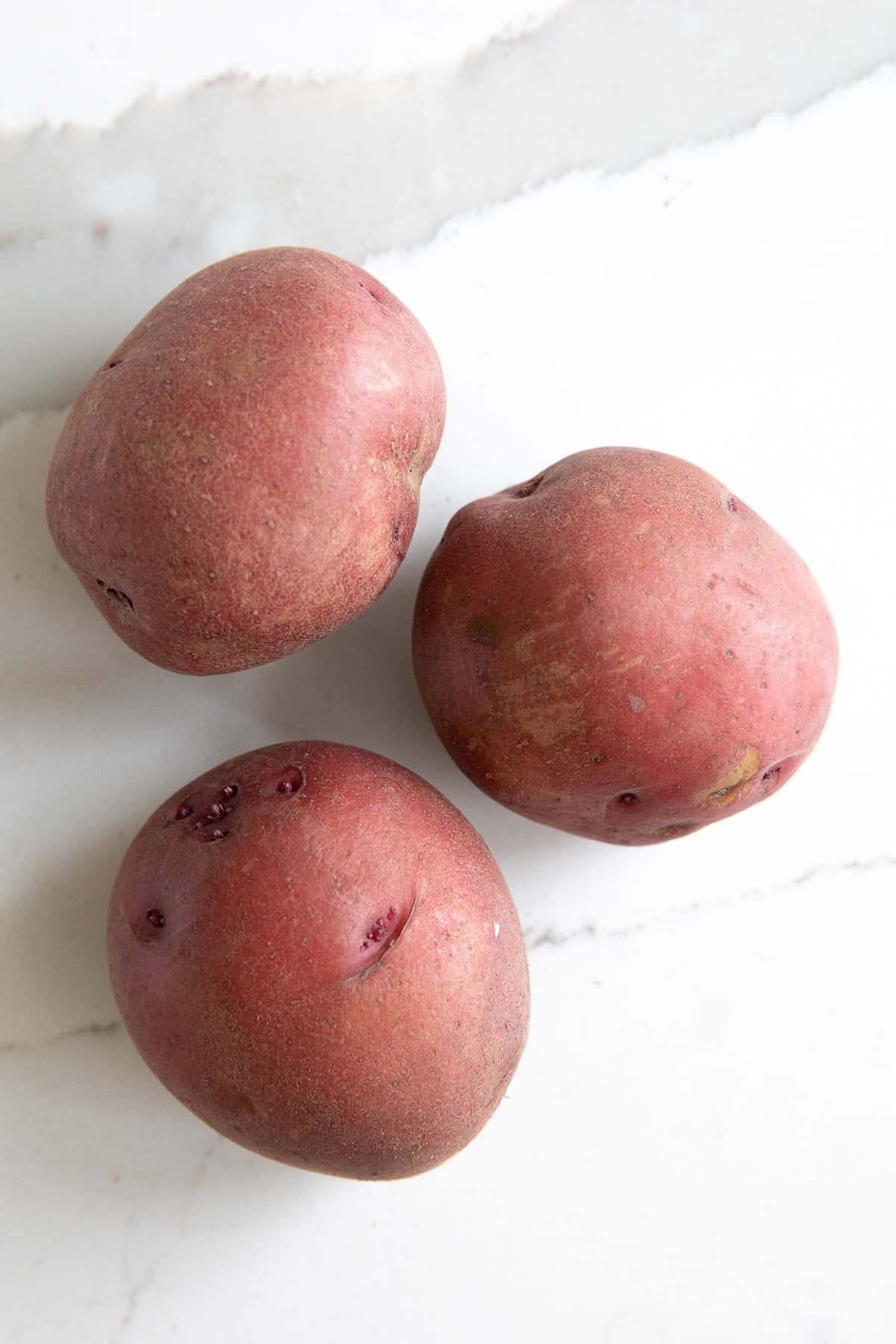
- Red potatoes: Varieties like Red Bliss, Red Pontiac, and Norland have thin red skins and firm, creamy flesh. They’re especially good for boiling, roasting, and potato salads.
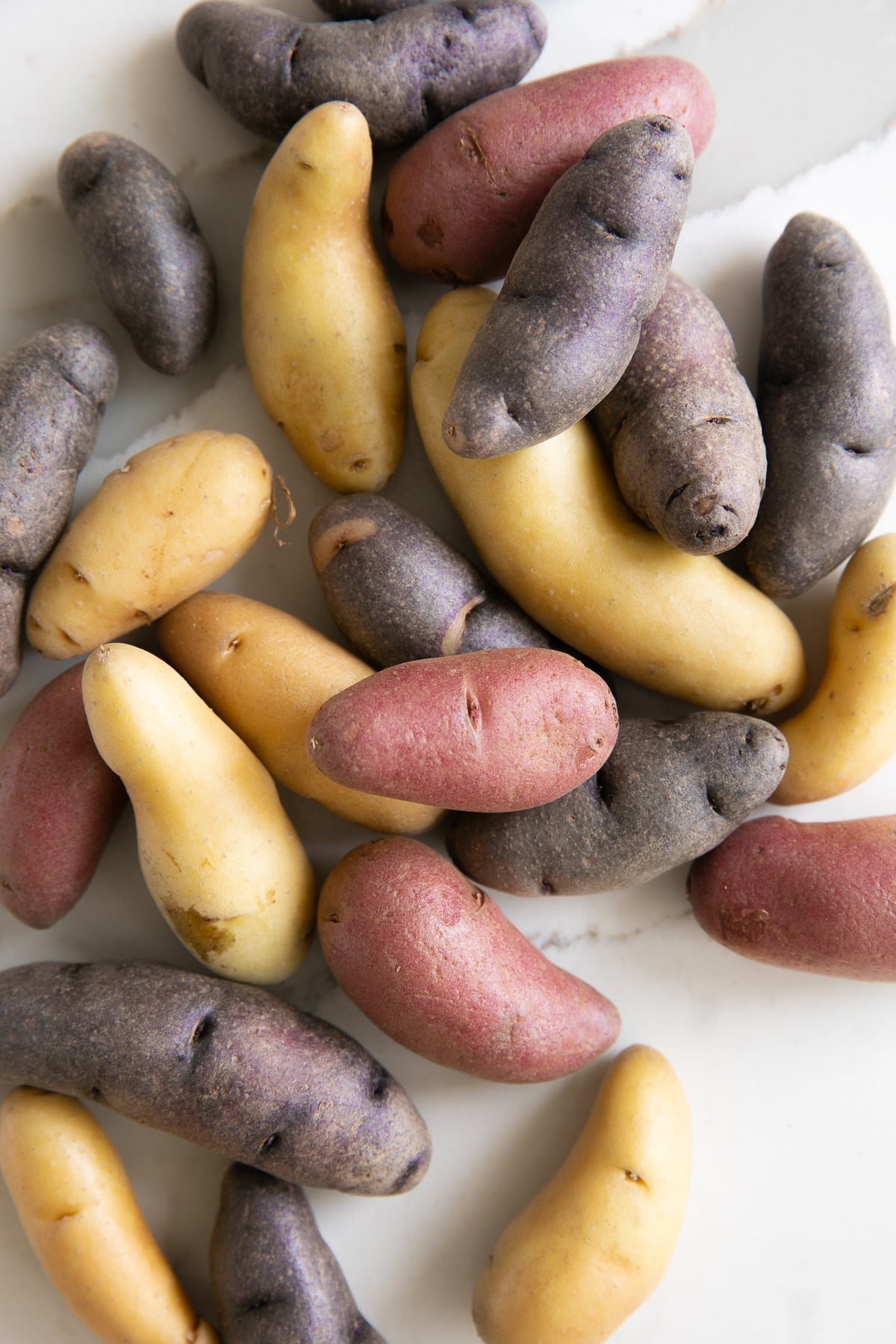
- Fingerling potatoes: These small, elongated potatoes are naturally firm and waxy, with thin skins and a buttery, sometimes slightly nutty flavor. Popular varieties include French Fingerling, Russian Banana, and Ruby Crescent. Despite their small size, fingerlings are typically harvested at maturity.
- New potatoes: New potatoes are simply potatoes that are harvested before reaching full maturity. They have especially thin, delicate skins and moist, creamy flesh. They’re usually small and are excellent for boiling, steaming, and roasting.
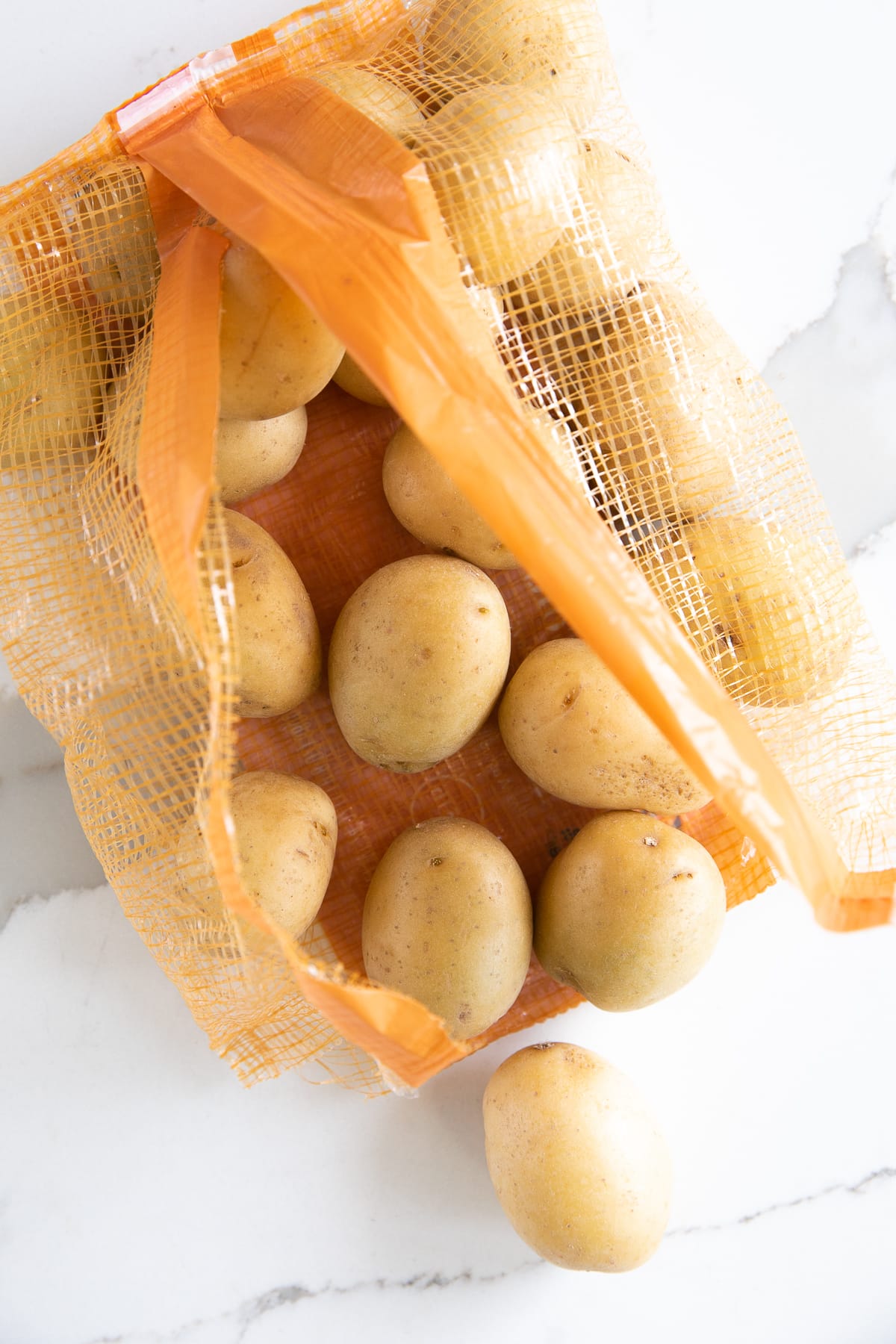
- Baby or creamer potatoes: These terms generally describe small potatoes rather than a particular variety. Many are red or yellow potatoes with thin skins and creamy interiors, making them convenient for cooking whole or halved.
Best Uses for Waxy Potatoes
- Potato salads: Waxy potatoes hold their shape when boiled and tossed (gently!) with dressing. Red potatoes are an excellent choice, although I often use all-purpose Yukon Gold potatoes in my classic potato salad and German potato salad for their similarly creamy texture.
- Boiled potatoes: Because they stay firm and creamy, waxy potatoes are perfect for making my garlic butter boiled potatoes and Syracuse salt potatoes. Small potatoes with thin skins are especially convenient since they can be cooked whole without peeling.
- Roasted potatoes: Waxy potatoes develop beautifully golden edges while maintaining soft, creamy centers. My roasted fingerling potatoes are a great example. I also use a combination of baby red and Yukon Gold potatoes in my crispy oven roasted potatoes.
- Chunky soups and stews: Red potatoes and other waxy varieties are great when you want distinct pieces of potato rather than potatoes that break down and thicken the broth. They’re a good choice for brothy soups, vegetable stews, and my New England clam chowder, where I use red potatoes to keep the pieces tender and intact.
All-Purpose Potatoes: Types, Characteristics, and Best Uses
All-purpose potatoes fall somewhere between waxy and starchy varieties, with moderate starch and moisture levels. They have a naturally creamy texture but still hold their shape reasonably well during cooking. This makes them incredibly versatile, especially for roasting, mashing, boiling, and baking.
Unlike Russets, which become light and fluffy, or waxy red potatoes, which stay relatively firm, all-purpose potatoes offer a little of both. They’re a great choice when you want potatoes that are soft and creamy without completely falling apart.
Common Types of All-Purpose Potatoes
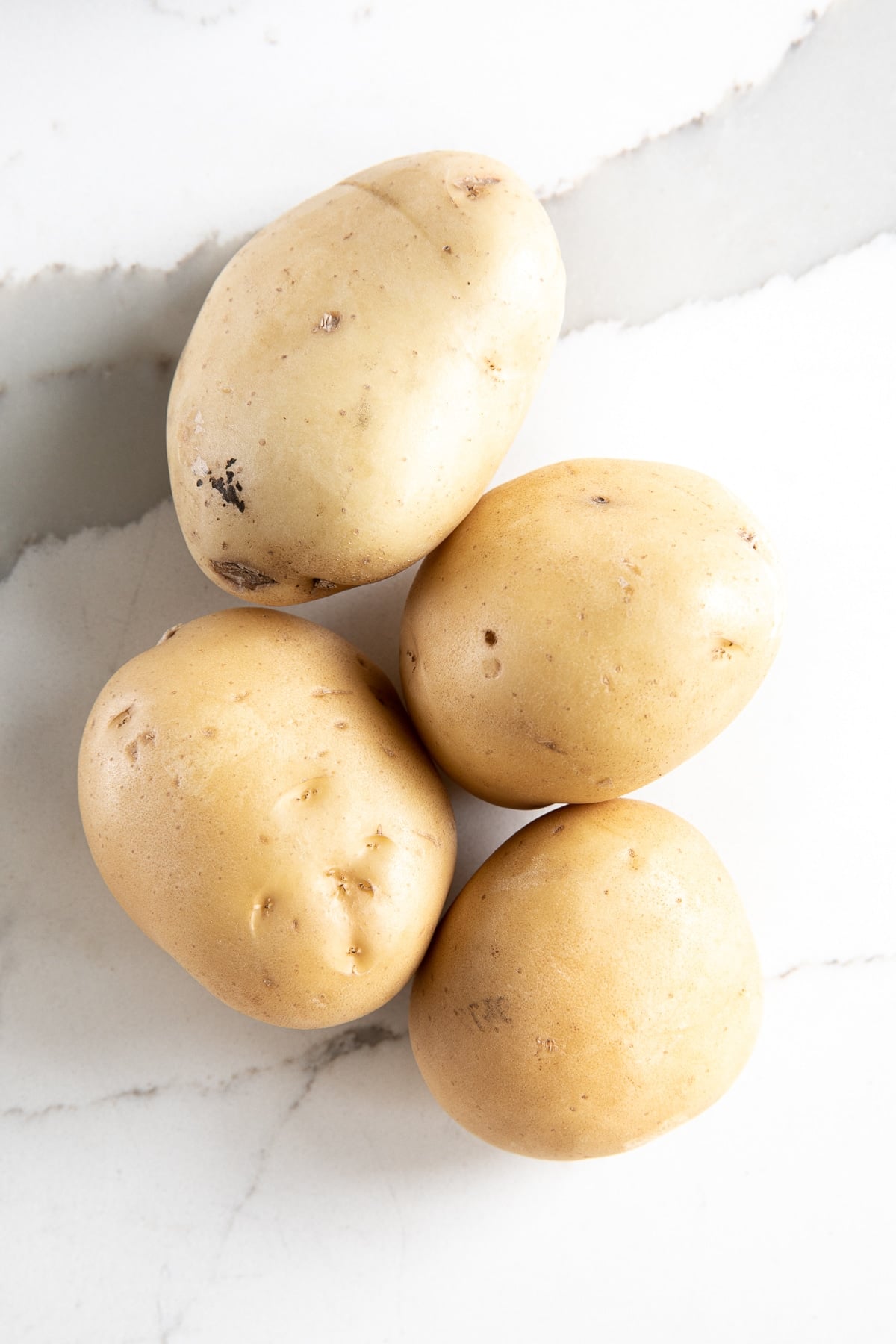
- Yukon Gold potatoes: Perhaps the best-known all-purpose potato, Yukon Golds have thin, light golden skin, yellow flesh, and a naturally buttery flavor. They’re creamy enough for mashed potatoes but sturdy enough for roasting, soups, and casseroles.
- Yellow potatoes: Many potatoes sold as gold or yellow potatoes have characteristics similar to Yukon Golds, including smooth skin and creamy yellow flesh. However, not all yellow potatoes are Yukon Golds, and their starch levels can vary by variety.
- White potatoes: Some white potato varieties, including Kennebec, are versatile enough for several cooking methods. However, white potatoes can range from relatively waxy to quite starchy, so the specific variety matters more than the color of its skin.
Best Uses for All-Purpose Potatoes
- Roasted potatoes: Yukon Golds are one of my favorite potatoes for roasting because they develop golden edges while maintaining creamy, tender centers. I especially love them in my Greek lemon potatoes, where the wedges hold together beautifully while roasting with olive oil, lemon juice, garlic, and herbs.
- Mashed potatoes: Yukon Golds make naturally creamy mashed potatoes with a slightly denser texture than Russets. You can use them on their own or combine them with Russets for a balance of fluffy and creamy, as I suggest in my Crockpot mashed potatoes.
- Potato soups: Yukon Gold potatoes soften beautifully without breaking down as quickly as Russets. They’re my preferred choice for loaded potato soup because they create a creamy, comforting texture while keeping recognizable pieces of potato in the soup.
- Scalloped potatoes and casseroles: Yukon Golds are excellent for layered potato dishes because their thin slices become tender while generally holding together. They’re what I use to make scalloped potatoes and can also be substituted for the Russets in my potatoes au gratin, giving the finished dish slightly more distinct potato layers.
What about purple potatoes? Purple potatoes aren’t automatically waxy, starchy, or all-purpose. Their color comes from naturally occurring pigments, while their starch content and cooked texture depend on the specific variety. Some remain firm and creamy, while others cook up softer and more floury.
Which Potato Should You Use?
The best potato for a recipe depends on how you’re cooking it and the texture you want. Some potatoes turn fluffy and fall apart easily, while others stay firm and creamy. Use this quick-reference guide to help choose the best potato for your next recipe.
| Cooking Method or Dish | Best Potato | Why It Works |
|---|---|---|
| Baked potatoes | Russet | Thick skin and a light, fluffy interior that’s perfect for toppings. |
| Twice-baked potatoes and potato skins | Russet | Fluffy flesh that’s easy to scoop and mash, with sturdy skins that crisp nicely. |
| Mashed potatoes | Russet or Yukon Gold | Russets make fluffy mashed potatoes; Yukon Golds produce a denser, creamier mash. |
| French fries | Russet | High starch and lower moisture help create crispy fries with fluffy centers. |
| Hash browns | Russet | Lower moisture makes it easier to achieve crispy, golden shreds. |
| Roasted potatoes | Russet, Yukon Gold, red, or baby potatoes | Russets develop fluffy centers, while Yukon Golds, reds, and many baby potatoes stay creamier and hold their shape. |
| Boiled potatoes | Red, fingerling, Yukon Gold, or new potatoes | Their firm, creamy texture helps them stay intact when boiled. |
| Steamed or buttered potatoes | New or baby red and yellow potatoes | Their thin skins and tender, creamy flesh are perfect for simple preparations with butter and herbs. |
| Potato salad | Red, Yukon Gold, or small waxy potatoes | They hold together when cooked and tossed with dressing. |
| Smashed potatoes | Baby red or yellow potatoes | Their small size, tender skins, and creamy flesh make them ideal for flattening and roasting until crispy. |
| Chunky soups and stews | Red or Yukon Gold | They soften without completely falling apart during simmering. |
| Creamy potato soups | Russet | They break down more easily, releasing starch that helps naturally thicken the soup. |
| Scalloped potatoes and gratins | Yukon Gold or Russet | Yukon Golds hold more distinct layers, while Russets soften more and release starch into the sauce. |
My tip: Don’t think of these recommendations as strict rules. For example, Russets make fantastic roasted potatoes if you want a crispy exterior and fluffy center, while red or Yukon Gold potatoes are better when you want creamy potatoes that hold their shape. Both are delicious, but the results are different.
Can You Substitute Waxy and Starchy Potatoes?
Yes! In most recipes, you can substitute waxy potatoes for starchy potatoes (and vice versa), but the texture of the finished dish may be different. I’ve noticed this difference firsthand in my ground beef and potatoes recipe. I tested it with both Yukon Gold and Russet potatoes, and while both worked, the Yukon Golds held their shape much better. The Russets became softer and started to break apart sooner. So, the most important thing to consider is whether you want your potatoes to stay firm and hold their shape or become soft and fluffy.
Here’s what to expect when making substitutions:
- Using Russets instead of red or Yukon Gold potatoes: Russets soften and break apart more easily, especially in soups, stews, and potato salads. They’ll make creamy soups thicker, but may become mushy in recipes where you want distinct pieces of potato. Cook gently and avoid excessive stirring.
- Using red potatoes instead of Russets: Red potatoes stay firmer and produce a denser, creamier texture. You can mash them, but they won’t be as light and fluffy as Russets. Use a potato masher rather than a food processor or mixer, which can make them gummy.
- Using Yukon Gold instead of Russets: Yukon Golds are one of the easiest substitutions. They’re delicious mashed, roasted, or baked, but have a slightly denser, creamier texture than Russets.
- Using Yukon Gold instead of red potatoes: This works particularly well for potato salads, roasted potatoes, and soups. Yukon Golds become slightly softer during cooking but generally hold their shape well.
When should you avoid substitutions? For recipes like twice-baked potatoes and crispy potato skins, I recommend sticking with large Russets. Their thick, sturdy skins and fluffy interiors are especially well suited to these preparations.
How to Choose Potatoes at the Grocery Store
Shopping for potatoes can be surprisingly confusing, especially when grocery stores label them as “baking potatoes,” “gold potatoes,” or “baby potatoes” rather than identifying the actual variety. Here are a few things to keep in mind:
- Look for the variety name: Russet, Yukon Gold, Red Bliss, and other named varieties give you a better idea of how the potatoes will cook. Keep in mind that potatoes labeled “yellow” or “gold” aren’t necessarily Yukon Golds.
- Don’t confuse Idaho potatoes with Russets: Idaho refers to where the potatoes were grown, not their variety. Although Idaho is especially famous for Russets, the state also produces red, yellow, white, and fingerling potatoes.
- Look beyond “new” and “baby” labels: These terms don’t tell you exactly how a potato will cook. When shopping for small potatoes, look for red or yellow varieties if you want a firmer, creamier texture that holds its shape.
- Don’t rely on skin color alone: Red potatoes are generally waxy, and Russets are starchy, but color isn’t always a reliable indicator of texture. Purple potatoes, for example, can be waxy, all-purpose, or starchy depending on the variety.
- Choose the right size: Large Russets are ideal for baked potatoes and potato skins, while small, similarly sized potatoes are convenient for roasting, boiling, and smashing. Choosing potatoes of approximately the same size also helps them cook evenly.
- Check for freshness: Look for firm potatoes without soft spots, wrinkled skin, significant sprouting, or green patches. Avoid potatoes that feel spongy or have visible signs of decay.
My tip: Whenever possible, buy the specific variety called for in your recipe. If it isn’t available, choose a substitute based on the texture you want rather than simply picking a potato that looks similar.
Frequently Asked Questions
Generally, yes, but the difference isn’t enormous. According to the USDA FoodData Central database, one pound of raw Russet potatoes contains approximately 72 grams of starch and 82 grams of total carbohydrates, compared with 61 grams of starch and 72 grams of carbohydrates in the same weight of red potatoes. That’s about 19% more starch in Russets.
Not necessarily. Cooking time depends more on the size of the potatoes, how they’re cut, and the cooking method than whether they’re waxy or starchy. A whole potato will take much longer to cook than one cut into small pieces, regardless of variety. The best way to check for doneness is to pierce the potatoes with a fork or knife. They should be tender without being mushy.
With thousands of potato varieties out there, you don’t need to memorize them all to cook them well. The important thing is knowing what kind of texture you’re looking for: light and fluffy, smooth and creamy, or firm enough to hold its shape. Once you know the difference, choosing the right potato becomes a whole lot easier.
Still not sure which potato to use? Tell me what you’re making in the comments below! I’m happy to help you figure it out.










Great discussion. Thanks
Thanks for the feedback, I am glad you enjoyed it 🙂