
This post may contain affiliate links. See my disclosure policy.

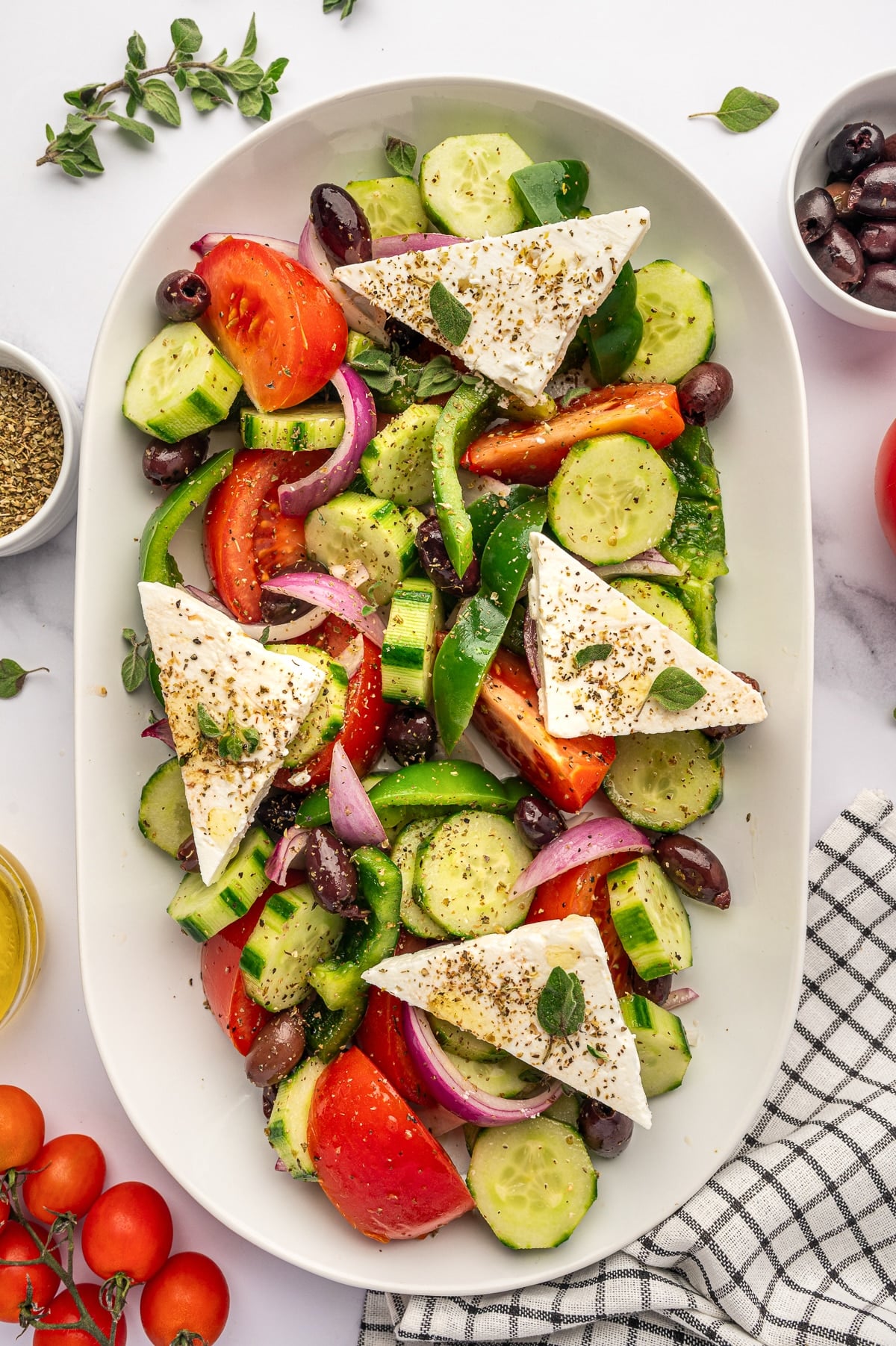
This Greek Salad Recipe, also known as Horiatiki, is all about fresh vegetables, briny olives, creamy feta, and a simple olive oil and red wine vinegar dressing. It’s bright, crunchy, salty, tangy, and ready in 15 minutes. No lettuce, no fancy dressing, just classic Greek salad done right.
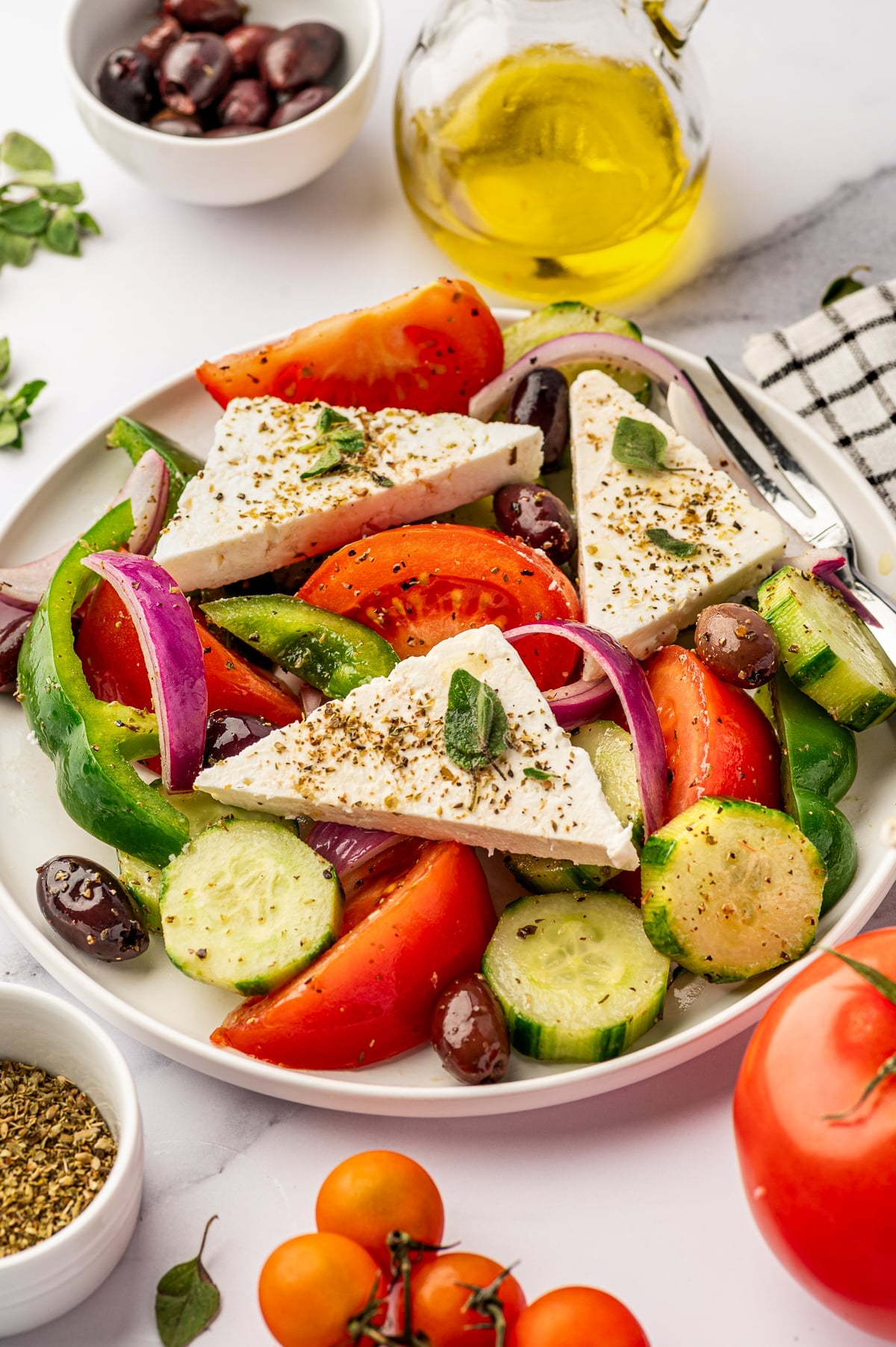
This Greek Salad Recipe was inspired by my family’s trip to Greece in the summer of 2021, when we spent three weeks island hopping through Crete, Milos, Santorini, Naxos, Ano Koufonisi, and Mykonos. Aside from the crystal-clear beaches and super-friendly locals, the food was the most memorable part of the trip. We sampled a little bit of everything: lamb stew, grilled octopus, roadside sausage, village barbecues, and, of course, Greek salad.
Table of Contents
What’s in a Traditional Greek Salad?
Authentic Greek salad, also known as Horiatiki or “village salad,” is shockingly fresh, uncomplicated, and very much about the ingredients.
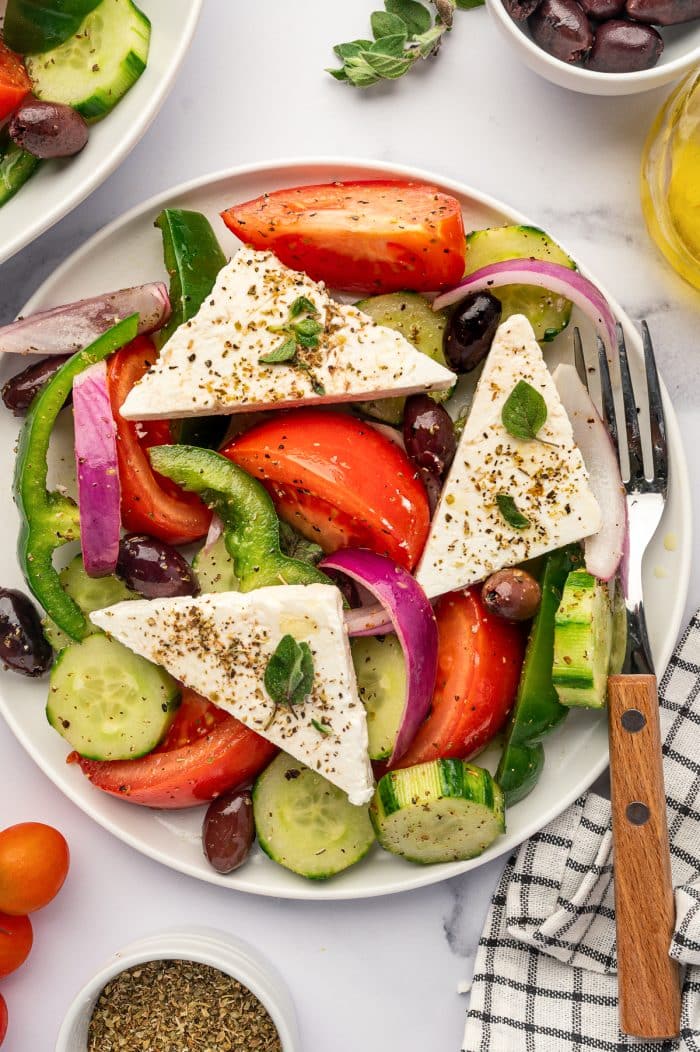
A true Greek salad starts with just six main ingredients: ripe tomatoes, cucumber, red onion, green bell pepper, Kalamata olives, and thick, brine-soaked feta cheese. There is no lettuce. It is finished simply with extra-virgin olive oil, red wine vinegar, dried oregano, and a pinch of salt.
Served in restaurants and small, family-run tavernas, Greek salads are at their best from late spring through early fall, when tomatoes are in season. They are usually enjoyed as part of a larger meal with fresh bread for soaking up the flavorful juices at the bottom of the bowl.


Greek Salad Ingredients
Find the printable recipe with measurements in the recipe card below.
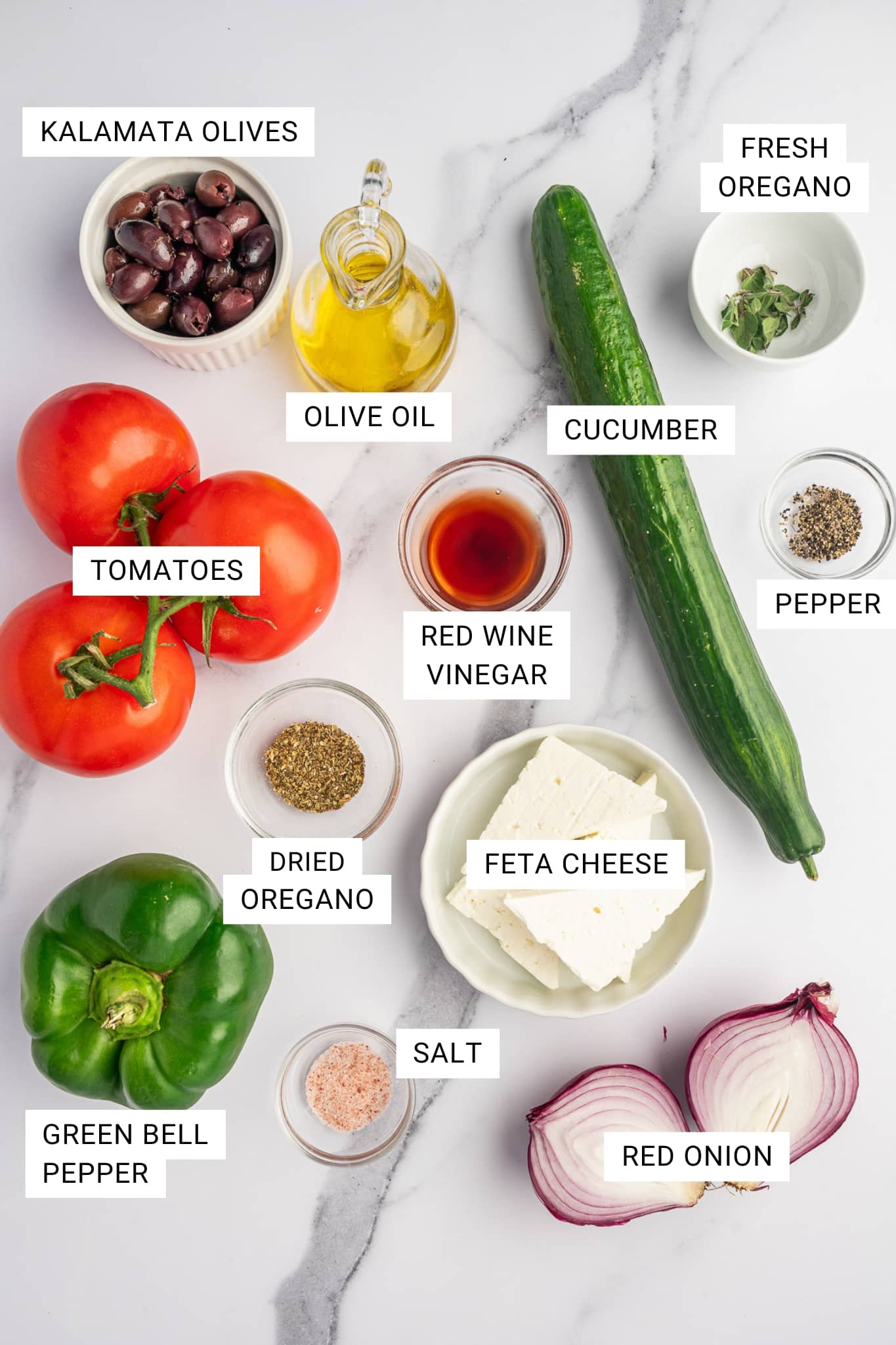
- Tomatoes: If your tomatoes are bland, the salad will be bland. This is a tomato-season salad at heart, so use the ripest, juiciest tomatoes you can find. Cut larger tomatoes into wedges.
- Cucumber: English or Persian cucumbers work best. Partially peeling it gives the salad that classic striped cucumber look. If you only have standard garden cucumbers, fully peel the waxy skin and scoop out the seeds.
- Red onion: Adds sharp, savory bite. If your onion is strong, soak the slices in cold water or a little red wine vinegar for 10 minutes, then drain.
- Green bell pepper: Traditional Greek salads are made with green bell pepper. They have a slightly bitter, grassy flavor that balances the sweet tomatoes and salty feta.
- Kalamata olives: Pitted olives are easier to eat, but whole olives are common in more traditional presentations.
- Feta cheese: Greece has incredible feta cheese. It tastes fresher and creamier, with just the right amount of tang. I’m still searching for the perfect Greek salad feta here at home, but Valbreso Chunk Feta, made from 100% pure sheep milk, is the closest I’ve found.
- Dried oregano: Dried oregano gives Greek salad its classic flavor. Sprinkle some over the vegetables and a little extra over the feta.
- Greek salad “dressing”: Drizzle the salad with extra-virgin olive oil and red wine vinegar, then finish with dried oregano and a pinch of salt. For an even more traditional approach, go light on the vinegar and let the salted tomatoes sit for a few minutes. Their juices mix with the olive oil, oregano, and feta to create the best part of the salad.
How to Make Greek Salad
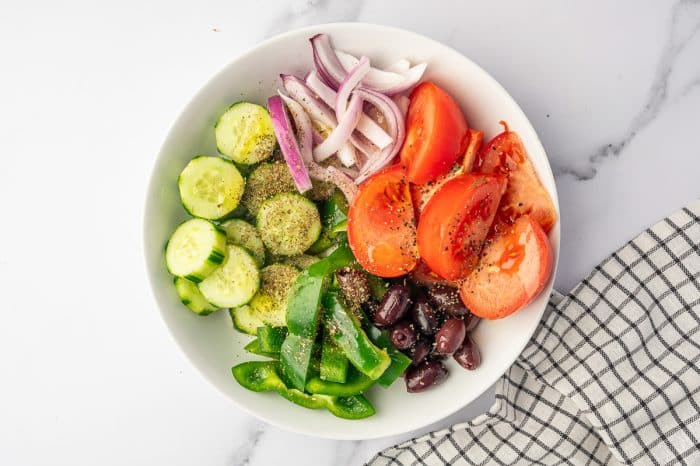
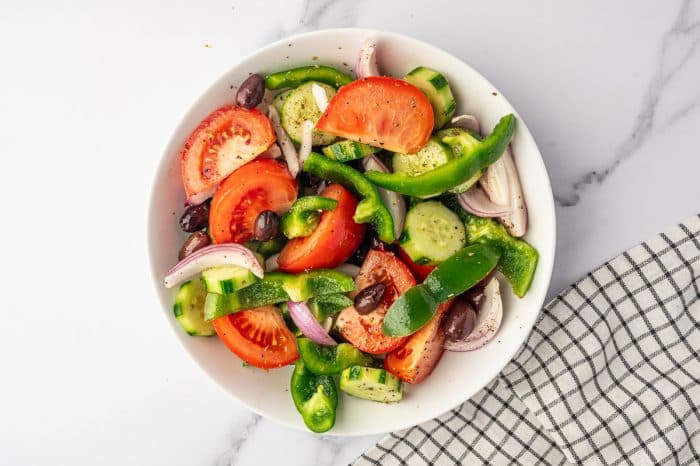
- Prepare the vegetables: Partially peel the cucumber, then slice it into rounds. Cut the tomatoes into wedges, thinly slice the red onion, and slice the green bell pepper into rings or strips.
- Assemble the salad: Add the cucumber, tomatoes, red onion, green bell pepper, and Kalamata olives to a large bowl or shallow serving platter.
- Season and dress: Sprinkle with dried oregano, salt, and black pepper. Drizzle with extra-virgin olive oil and red wine vinegar, then toss gently to combine.
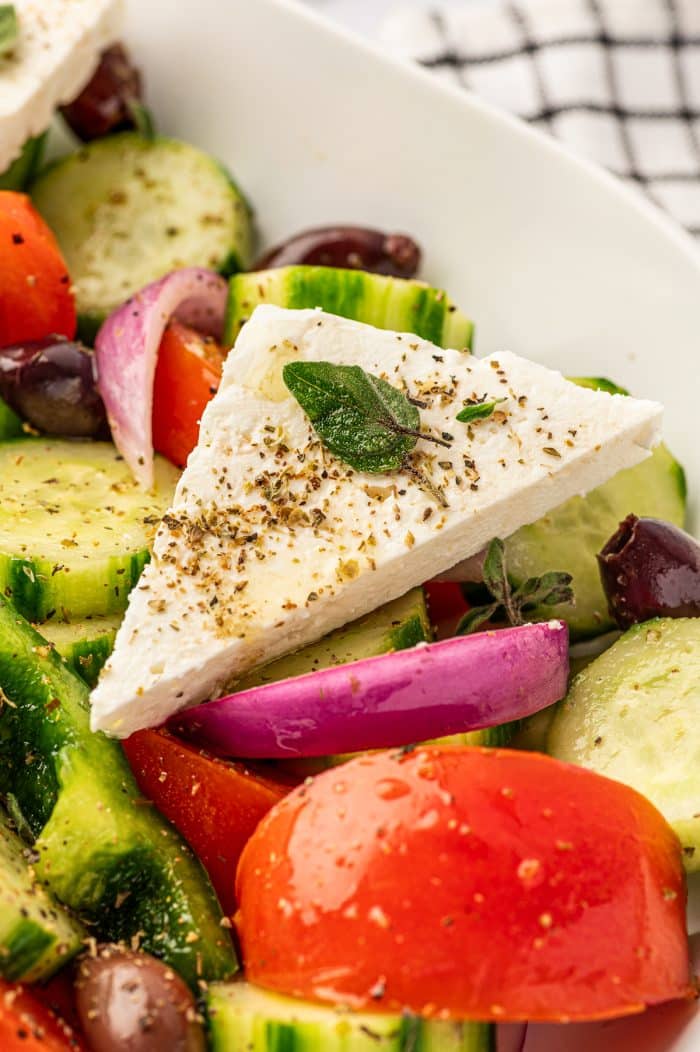
- Add the feta: Place the feta triangles or slabs on top of the salad. Drizzle with a little more olive oil and sprinkle with extra dried oregano.
- Serve: Let the salad sit for a few minutes before serving so the tomato juices mingle with the olive oil, vinegar, and oregano. Serve with warm pita or crusty bread for scooping up the juices at the bottom of the bowl.
How to Customize a Greek Salad
Traditional Greek salad is beautifully simple, but there’s still room to play. Add capers for extra briny flavor, a squeeze of fresh lemon juice for brightness, or turn it into a loose take on Cretan Dakos, a rustic Greek salad variation made with tomatoes, olive oil, oregano, feta or Cretan cheese, and crunchy barley rusks. If you don’t have barley rusks, a handful of crushed pita chips makes an easy, crunchy substitute.
What to Serve with Greek Salad
You can serve this Greek salad as a starter, side dish, or main dish. In any case, I highly recommend enjoying it with warm pita, crusty bread, toasted pita wedges, or anything that can soak up the flavorful juices at the bottom of the bowl. Here are some more serving ideas:
- Add protein: Use my Greek chicken marinade or citrus chicken marinade to make flavorful baked chicken breasts or grilled chicken to serve alongside this salad. It’s also great with Greek chicken souvlaki, gyro meat, baked salmon, or juicy baked Greek lemon chicken thighs.
- Enjoy with Mediterranean-inspired appetizers: Serve it alongside tzatziki, hummus, baba ganoush, or whipped feta dip for a fresh, colorful spread.
- Vegetarian pairings: Serve this Greek salad with warm pita bread, crispy falafel, Greek lemon rice, Greek lemon potatoes, or roasted chickpeas.
Frequently Asked Questions
Does traditional Greek salad have lettuce?
No. Traditional Greek salad is usually made without lettuce. It is made with tomatoes, cucumber, red onion, green bell pepper, Kalamata olives, feta, oregano, olive oil, and vinegar.
What kind of feta is best for Greek salad?
For the best Greek salad, use a block of feta packed in brine, preferably made with sheep’s milk or a blend of sheep’s and goat’s milk. It has a creamier texture and tangier, fresher flavor than pre-crumbled feta, which tends to be drier and less flavorful. Keep the feta in one large slab or a few big pieces on top of the salad, then drizzle it with extra-virgin olive oil and sprinkle with dried oregano.
Traditional Greek Salad vs. American Greek Salad
Traditional Greek salad is usually made without lettuce. It’s a simple, rustic salad made with ripe tomatoes, cucumber, red onion, green bell pepper, Kalamata olives, dried oregano, olive oil, red wine vinegar, and a slab of feta on top.
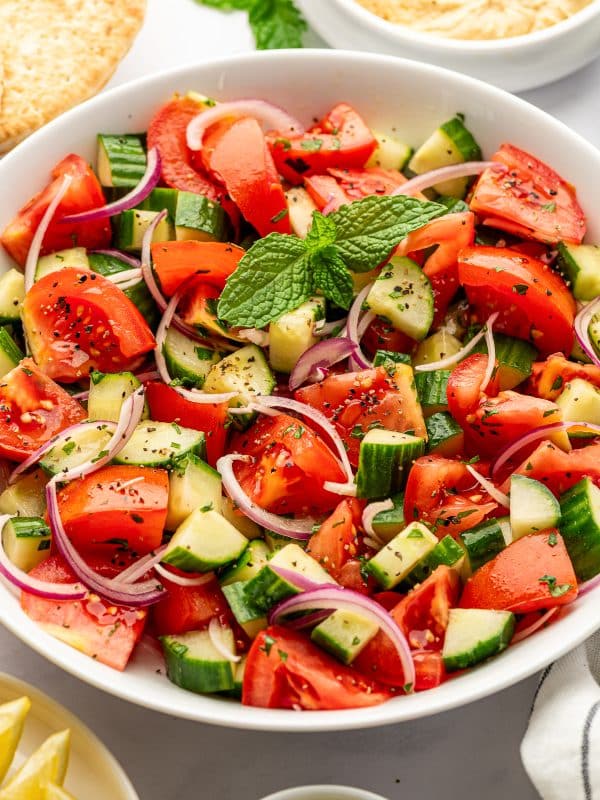
American-style Greek salads are often a little busier. They may include romaine lettuce, crumbled feta, pepperoncini, chickpeas, grilled chicken, or a more developed Greek vinaigrette. Delicious? Absolutely. Traditional? Not quite.
If you’re looking for something more lettuce-based, try my Mediterranean salad. For a heartier chickpea-forward option, try my Mediterranean chickpea salad. And if you want a full meal with protein, my Greek salad with chicken and meal-prep friendly Greek chicken bowls are the way to go.
Make-Ahead and Storage Tips
- To make ahead: Slice the vegetables up to 1 day in advance and store them separately from the feta and dressing.
- To store: Greek salad is best served fresh, but leftovers can be stored in an airtight container in the refrigerator for up to 1 day after dressing.
- Best tip: Add the feta, olive oil, vinegar, and oregano just before serving. The vegetables will release liquid as they sit, which is delicious with a side of fresh bread.
More Greek and Mediterranean Recipes




If you try making this classic Greek salad recipe, I’d love to hear what you think! Please leave a comment and a star rating below, your feedback helps other readers discover (and enjoy) this recipe too. Thank you so much! 💛

Greek Salad Recipe (Horiatiki)

Ingredients
- 1 English cucumber, partially peeled and sliced into rounds
- 3-4 ripe tomatoes, cut into wedges
- ½ cup Kalamata olives, pitted
- ½ red onion, thinly sliced
- 1 green bell pepper, sliced
- 2 teaspoons dried oregano, divided
- ½ teaspoon salt, plus more to taste
- ½ teaspoon black pepper, optional
- 3 tablespoons extra-virgin olive oil, divided
- 2 tablespoons red wine vinegar
- 1 (7-ounce) block feta cheese, cut into large triangles or slabs
Instructions
- Prepare the vegetables: Partially peel the cucumber, then slice it into rounds. Cut the tomatoes into wedges. Thinly slice the red onion and slice the green bell pepper into rings or strips.
- Assemble the salad: Add the cucumber, tomatoes, red onion, green bell pepper, and Kalamata olives to a large bowl or shallow serving platter.
- Season and dress: Sprinkle the vegetables with 1 teaspoon dried oregano, salt, and black pepper. Drizzle with 2 tablespoons olive oil and the red wine vinegar, then toss gently to combine.
- Add the feta: Arrange the feta triangles or slabs over the top of the salad.
- Finish and serve: Drizzle the remaining 1 tablespoon olive oil over the feta and sprinkle with the remaining 1 teaspoon dried oregano. Let the salad sit for a few minutes, then serve immediately.
Notes
- Feta: Keep the feta in large pieces or slabs for a more traditional presentation. Feta packed in brine has the best flavor and texture.
- Tomatoes: Use ripe, juicy tomatoes. This salad is simple, so the tomatoes really matter.
- Cucumber: English cucumber works well because it has thin skin and fewer seeds. Partially peeling it gives the salad a classic striped look.
- Red onion: If your onion tastes strong, soak the slices in cold water or red wine vinegar for 10 minutes, then drain.
- Olives: Pitted Kalamata olives are easier to eat, but whole olives are common in more traditional presentations.
- Dressing: Traditional Greek salad does not need a thick vinaigrette. Olive oil, red wine vinegar, dried oregano, salt, and pepper are enough.
- Let it rest: Let the salad sit for a few minutes before serving so the tomato juices can mingle with the olive oil, vinegar, and oregano.
- Make ahead: Slice the vegetables up to 1 day in advance and store them separately from the feta, olive oil, and vinegar.
- Storage: Greek salad is best served fresh. Leftovers can be stored in an airtight container in the refrigerator for up to 1 day, but the vegetables will soften and release liquid.
Explore More with AI
Nutrition
Nutrition information is automatically calculated, so should only be used as an approximation.
Check out more of my travels throughout Greece on my Instagram HIGHLIGHTS!











This was the best darn Greek Salad Recipe. We’re experiencing really hot weather in our area, so this was a refreshing meal to serve. I made it for my beach company last night and everyone is asking for the recipe. I have shared this awesome recipe with my fellow foodies via email. I also included the web link to hopefully drive more traffic to your site. Thank you for continuing to provide such delicious and healthy recipes!
Thank you so much, Peggy! I am thrilled everyone loved it, and I really appreciate you sharing the recipe and link with your fellow foodies. Your kind words mean so much! 🙂
This greek salad recipe is soo amazing. I got this feta made in Greece and found this recipe to try to make a salad like I had years ago in Greece, and this recipe nailed it! Now I just need to learn how to make dips and bread like they do in Greece! Thank you!
Thank you so much, Dani! I am so glad my Greek salad brought back those Greece memories. Good feta makes such a difference, and now you definitely need some homemade pita and dips to go with it! Try my hummus and tzatziki recipes for a start 🙂
I like to marinade the onion slices in vinegar a little before adding them to salad
I love quick pickled onions too 🙂
Great tasting salad dressing!