
This post may contain affiliate links. See my disclosure policy.
I’ve been making zucchini noodles (zoodles) since 2011, and the biggest lesson I’ve learned is simple: less cooking is better. In this guide, I’ll show you how to make and cook zucchini noodles so they stay tender-crisp, not watery or soggy.
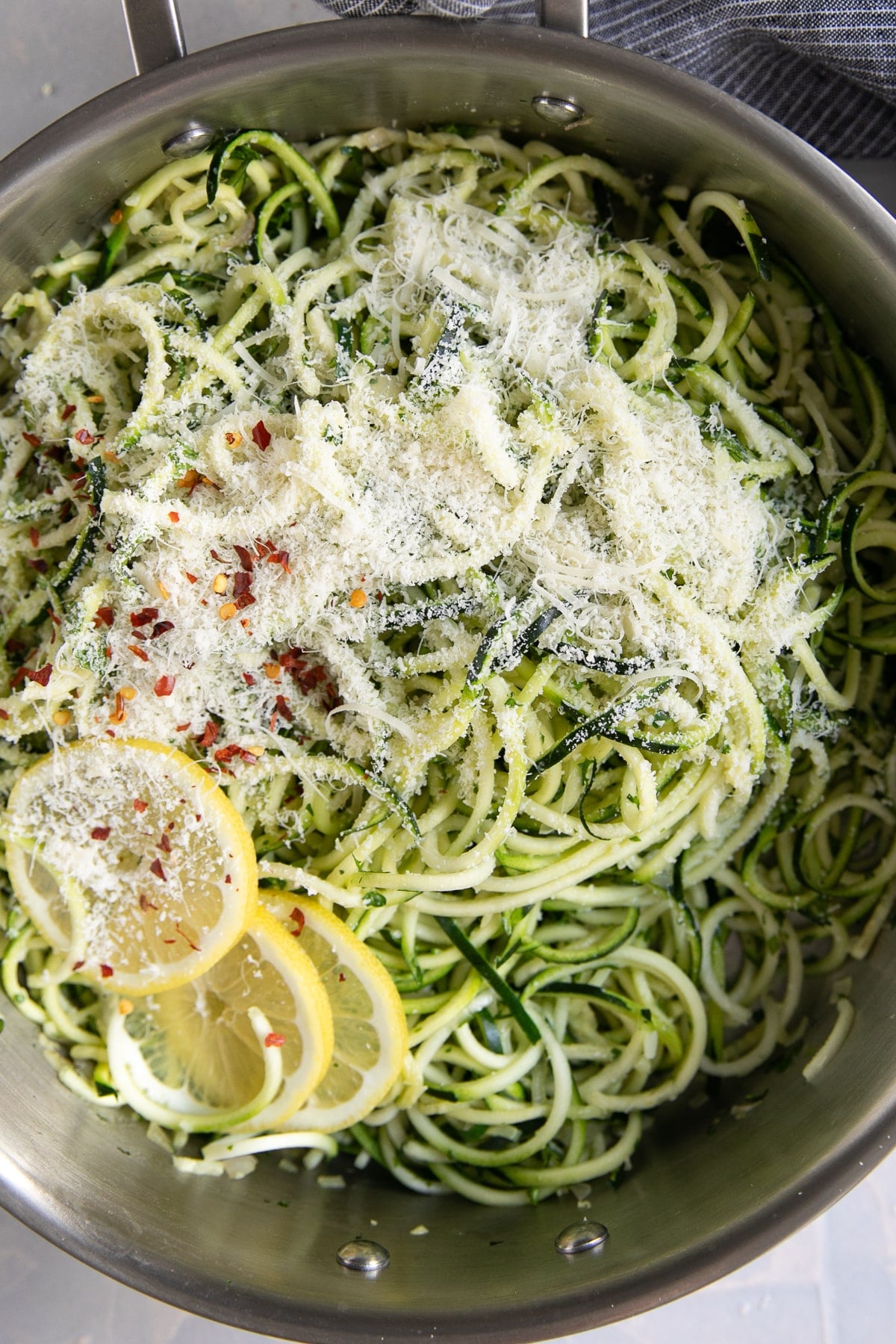
Table of Contents
- What are Zucchini Noodles?
- The Best Zucchini for Zucchini Noodles
- How to Make Zucchini Noodles
- How to Keep Zucchini Noodles From Getting Watery
- How to Cook Zucchini Noodles
- Garlic Parmesan Zucchini Noodles Recipe
- What to Serve with Zucchini Noodles
- Storage and Make-Ahead Tips
- More Zucchini Recipes
- Garlic Parmesan Zucchini Noodles (Zoodles) Recipe
I’ll be honest, I was a little skeptical of zucchini noodles at first. But after I started making them, I quickly realized that zucchini noodles, aka zoodles, are really quite delicious, especially when they’re prepared the right way. The key is cooking them just until they’re tender-crisp – instead of letting them become soft and watery.
They’re also just a fun way to use zucchini. Whether you already love zoodles or you’re making them for the first time, I’ll show you how to make and cook zucchini noodles for the best possible texture and flavor.
What are Zucchini Noodles?
Zucchini noodles, also called zoodles, are thin strips of fresh zucchini (or courgette if you’re in the UK) cut into a noodle-like shape. They’re a naturally gluten-free, low-carb alternative to traditional pasta and have a mild flavor that pairs well with everything from homemade marinara, and creamy Alfredo sauce, oven baked chicken breast, tangy balsamic chicken, and garlic butter steak bites
Unlike regular pasta, zucchini contains a lot of water, so zoodles are best when they’re cooked very briefly. Overcooking is the main reason zucchini noodles become soft, watery, or mushy.
The Best Zucchini for Zucchini Noodles
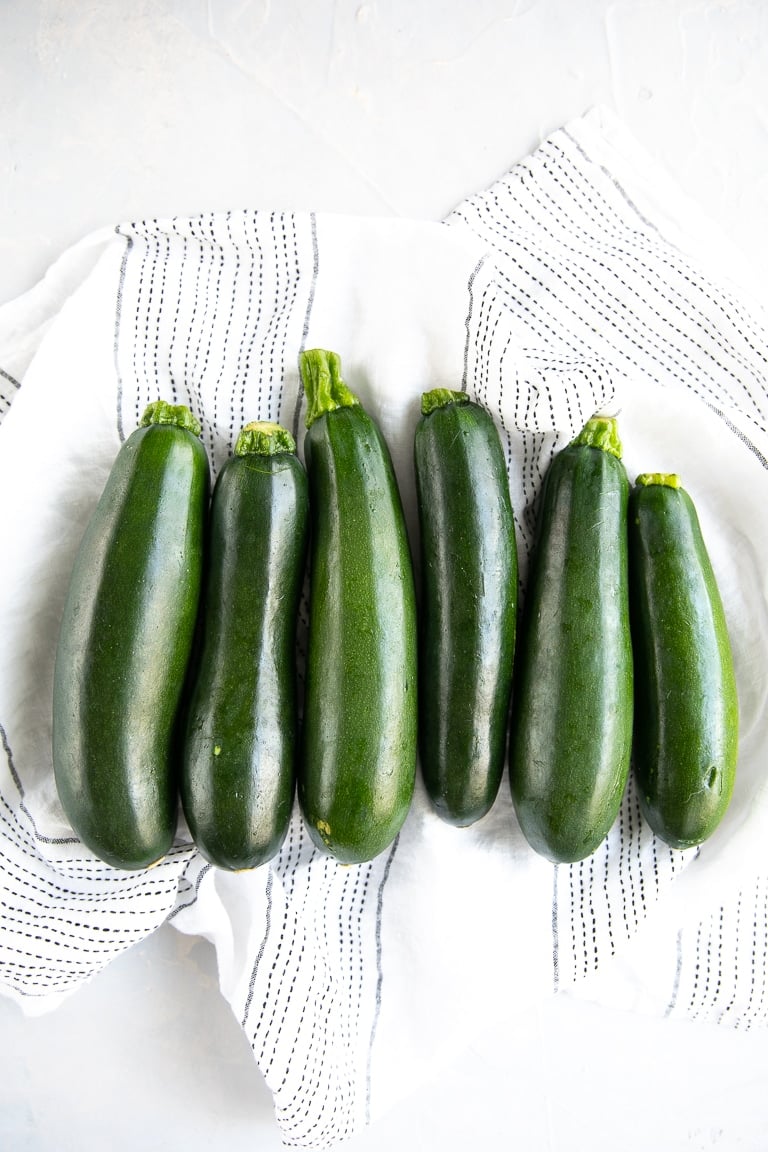
For the best zucchini noodles, look for small to medium zucchini that are firm, relatively straight, and free from soft spots. I prefer thinner zucchini because they have a smaller seedy center and produce more noodles from the firmer outer flesh.
There’s no need to peel the zucchini before spiralizing it. The skin helps the noodles hold their shape and adds color and texture. Simply wash and dry the zucchini, then trim off the ends before spiralizing.
How to Make Zucchini Noodles
Making zucchini noodles is surprisingly easy and only takes a few minutes. Start by washing and drying the zucchini, then trim off both ends. There’s no need to peel it first – keeping the skin on helps the noodles hold their shape and gives them a little more texture.
My preferred way to make zoodles is with a spiralizer, but a julienne peeler also works really well if you don’t have one or just want to make a smaller batch.
Using a Spiralizer
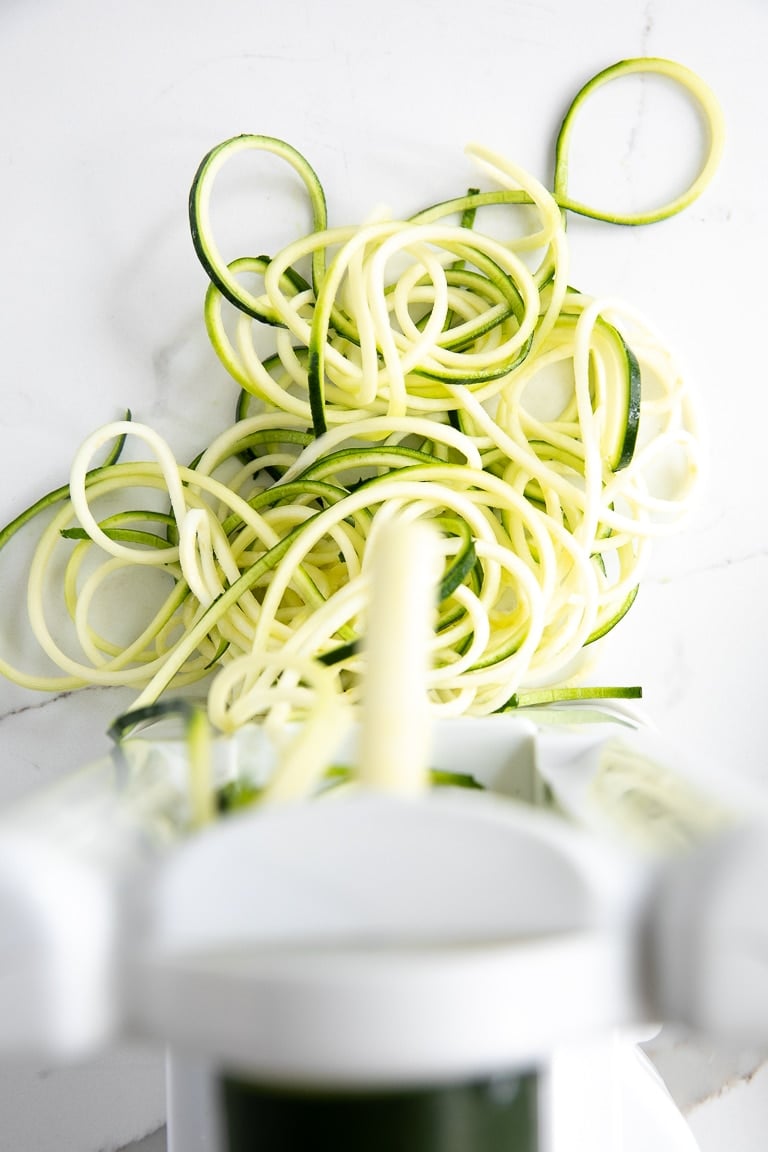
A spiralizer is the easiest way to make long, curly zucchini noodles that look most like spaghetti.
- Trim off both ends of the zucchini.
- Secure the zucchini in the spiralizer according to the manufacturer’s instructions.
- Choose the blade for your preferred noodle thickness and slowly turn the handle, applying gentle, even pressure as you spiralize.
- If the noodles are especially long, cut them into shorter strands with kitchen scissors or a knife so they’re easier to cook and eat.
Tip: Try not to force the softer, seed-heavy center of the zucchini through the spiralizer. Noodles from this part contain more water and tend to soften much faster during cooking.
How to Make Zucchini Noodles Without a Spiralizer
No spiralizer? A julienne peeler is my favorite alternative. It produces thinner, straighter zucchini noodles rather than long curls, but they cook and taste just as good.
Place the zucchini on a cutting board and run the julienne peeler lengthwise from one end to the other. Rotate the zucchini as you go, continuing until you reach the softer, seedy center.
I especially like using a julienne peeler when I’m making just one or two servings since it’s quick, easy to clean, and doesn’t take up much space.
How to Keep Zucchini Noodles From Getting Watery
If you’ve made zucchini noodles before, you already know that water is their biggest challenge. Zucchini naturally contains a lot of moisture, and once it’s spiralized, even more surface area is exposed. So, while you probably won’t eliminate every drop of liquid (it’s literally impossible, you guys), you can definitely keep your zoodles from becoming soggy or swimming in water.
For my garlic parmesan zucchini noodles, I like to salt and drain the zoodles before cooking. To do this, spread the spiralized zucchini over a baking sheet lined with paper towels, sprinkle with about 1 teaspoon of salt, and let them sit for 20-30 minutes. The salt will draw out some of the excess moisture. Then gather the noodles in a clean kitchen towel and gently squeeze or blot them dry. Be careful not to squeeze too hard or you’ll damage the noodles.
If you’re short on time, you can also skip the draining step and go straight to cooking. Just keep the cooking time very short and serve the zoodles right away.
A few more tips for avoiding watery zucchini noodles:
- Don’t overcook them. Zoodles only need a few minutes to become tender-crisp. The longer they cook, the more water they’ll release.
- Start with a hot pan. This helps the zucchini cook quickly rather than slowly steaming in its own moisture.
- Don’t overcrowd the skillet. Use a large enough pan so the noodles have plenty of room.
- Wait to add extra salt. Salt draws moisture from zucchini, so season with additional salt just before serving rather than while the noodles are cooking.
- Remove them from the pan immediately. Even after you turn off the heat, they’ll continue to soften and release water if left sitting in the skillet.
- Add sauces just before serving. Thick sauces like pesto work especially well. If you’re using marinara, Alfredo, or another sauce, toss it with the zoodles at the very end rather than letting the noodles simmer in it.
How to Cook Zucchini Noodles
Zucchini noodles cook much faster than traditional pasta. Depending on the method, this can take anywhere from about 30 seconds to 3 minutes.
My favorite method is a quick sauté in a hot skillet since it’s fast, easy, and gives you the most control over the final texture. Blanching and microwaving also work well, especially when you need something quick and simple.
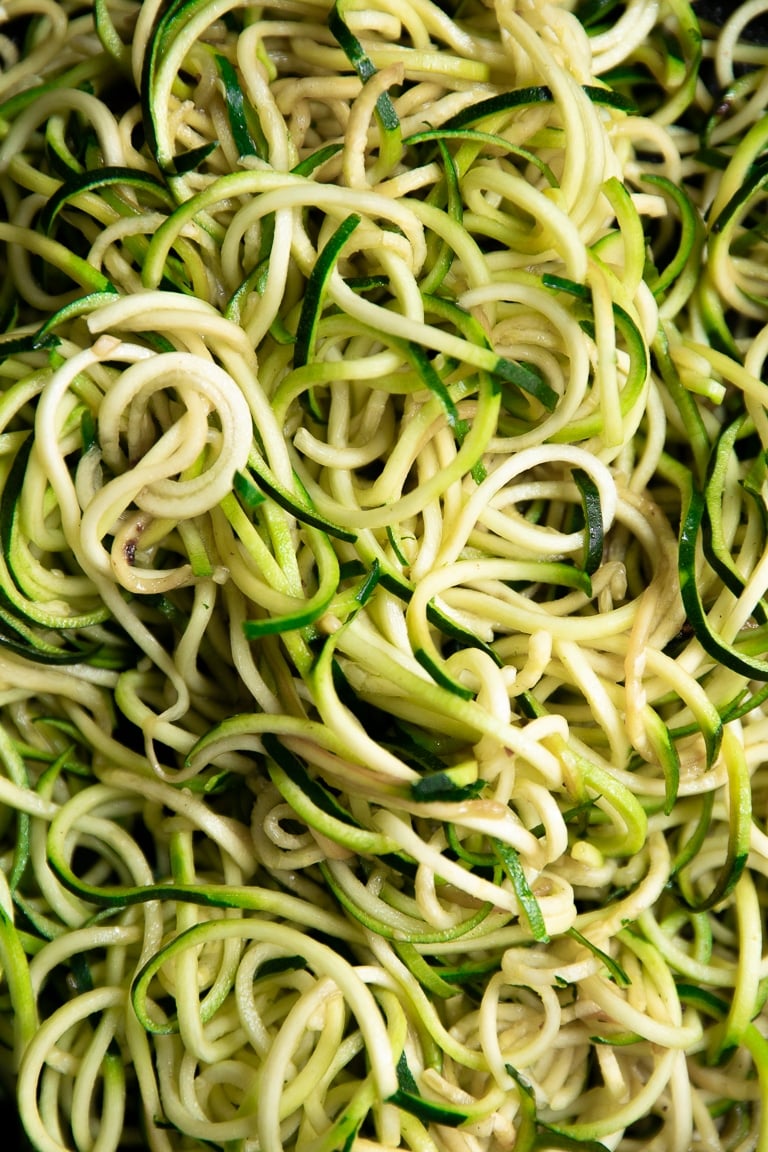
Sauteed Zucchini Noodles
Sauteing is my favorite way to cook zucchini noodles. Heat 1-2 tablespoons of olive oil or butter in a large skillet over medium-high heat. Once the pan is hot, add the zucchini noodles and cook for about 2-3 minutes, tossing frequently, just until they’re tender-crisp.
Avoid overcrowding the skillet, and don’t add extra salt while the noodles are cooking. Remove them from the pan as soon as they’re done and season just before serving.
This method also makes it easy to add garlic, herbs, Parmesan cheese, or your favorite sauce, as I do with my garlic parmesan zucchini noodles below.
Blanched Zucchini Noodles
For a lighter option, you can quickly blanch zucchini noodles in boiling water. Bring a large pot of water to a boil, add the zoodles, and cook for no more than 30-60 seconds.
Drain them immediately in a colander and gently blot away any excess water before serving. Since zucchini noodles cook so quickly, think of this as a quick blanch rather than boiling them like traditional pasta.
Microwave Zucchini Noodles
The microwave is the quickest option when you’re preparing a small amount of zucchini noodles. Place the zoodles in a microwave-safe bowl and microwave in 30-second increments, checking and tossing them after each interval.
Stop cooking as soon as they’re warmed through and tender-crisp. Depending on the amount of zucchini and the strength of your microwave, this usually doesn’t take very long. Drain off any water that collects in the bottom of the bowl, then season and serve immediately.
Garlic Parmesan Zucchini Noodles Recipe
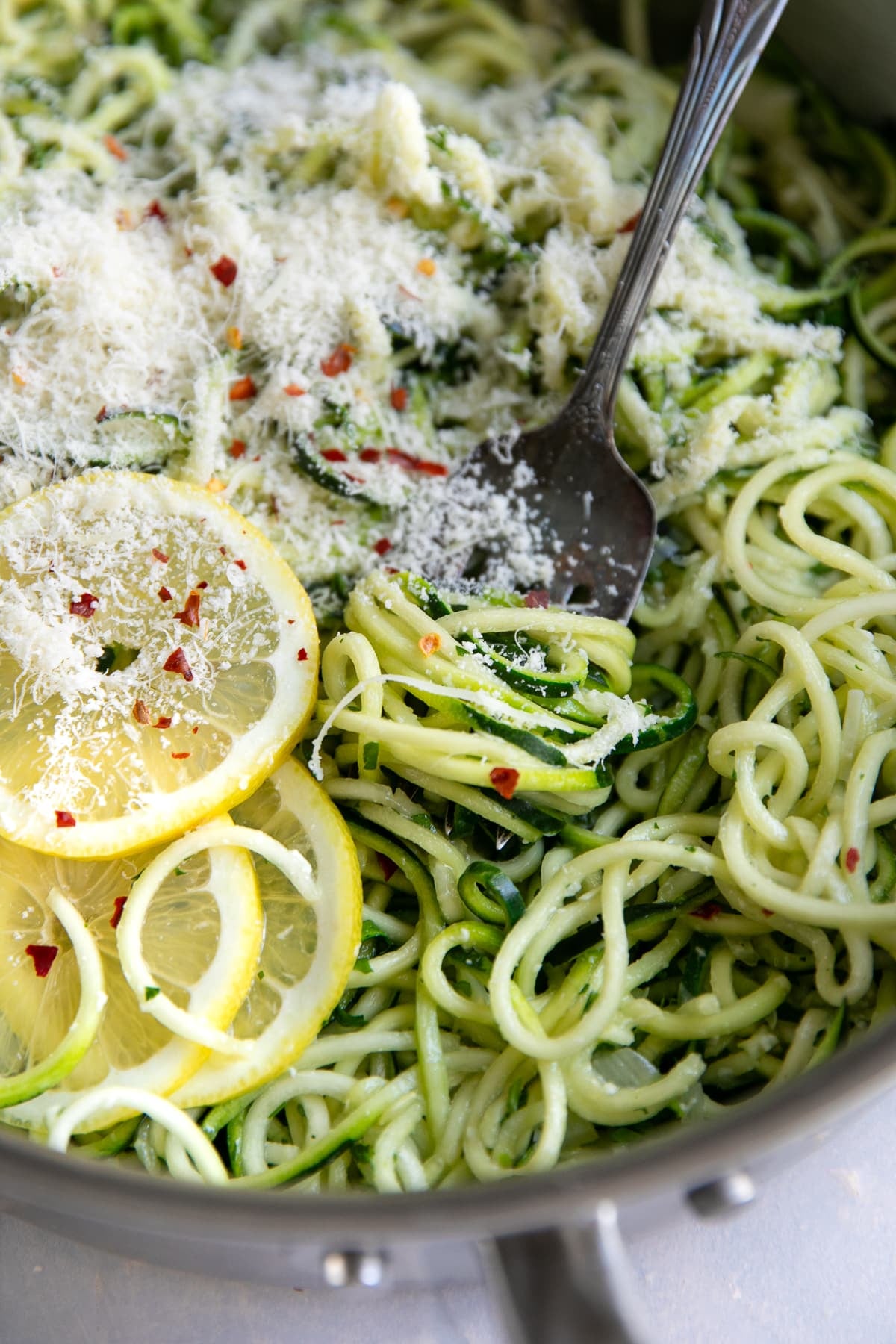
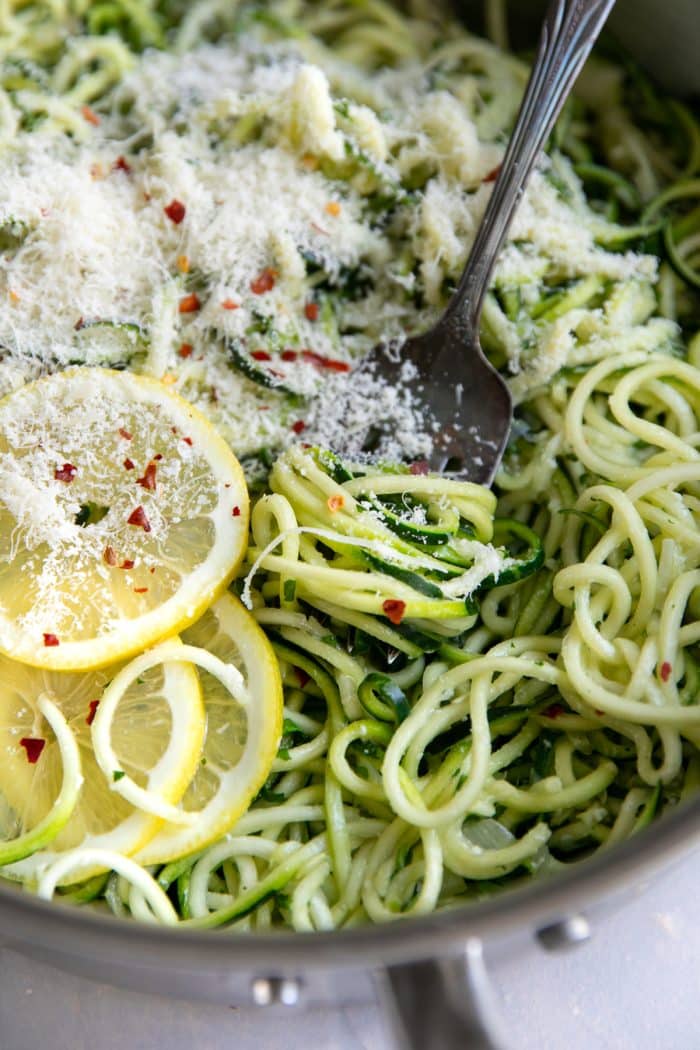
These Garlic Parmesan Zucchini Noodles are one of my favorite ways to turn a pile of plain zoodles into a quick and flavorful side dish. They’re buttery and garlicky with plenty of freshly grated Parmesan, fresh parsley, and a squeeze of lemon to brighten everything up.
How to Make Garlic Parmesan Zucchini Noodles
- Prepare the zucchini noodles. Spiralize the zucchini, then salt and drain the noodles as described above if you’re using that method. Gently blot or squeeze away any excess moisture.
- Saute the garlic and parsley. Heat the olive oil and butter in a large skillet over medium-high heat. Once the butter has melted, reduce the heat to medium and add the garlic and fresh parsley. Cook for 30-60 seconds, stirring continuously so the garlic doesn’t burn.
- Add the zucchini noodles. Add the zoodles to the skillet and toss gently to coat them in the garlic butter. Cook for 2-3 minutes, tossing frequently, until just tender-crisp.
- Finish and serve. Stir in the freshly grated Parmesan and immediately remove the skillet from the heat. Add black pepper, additional salt if needed, and a squeeze of fresh lemon juice. Serve immediately for the best texture.
What to Serve with Zucchini Noodles
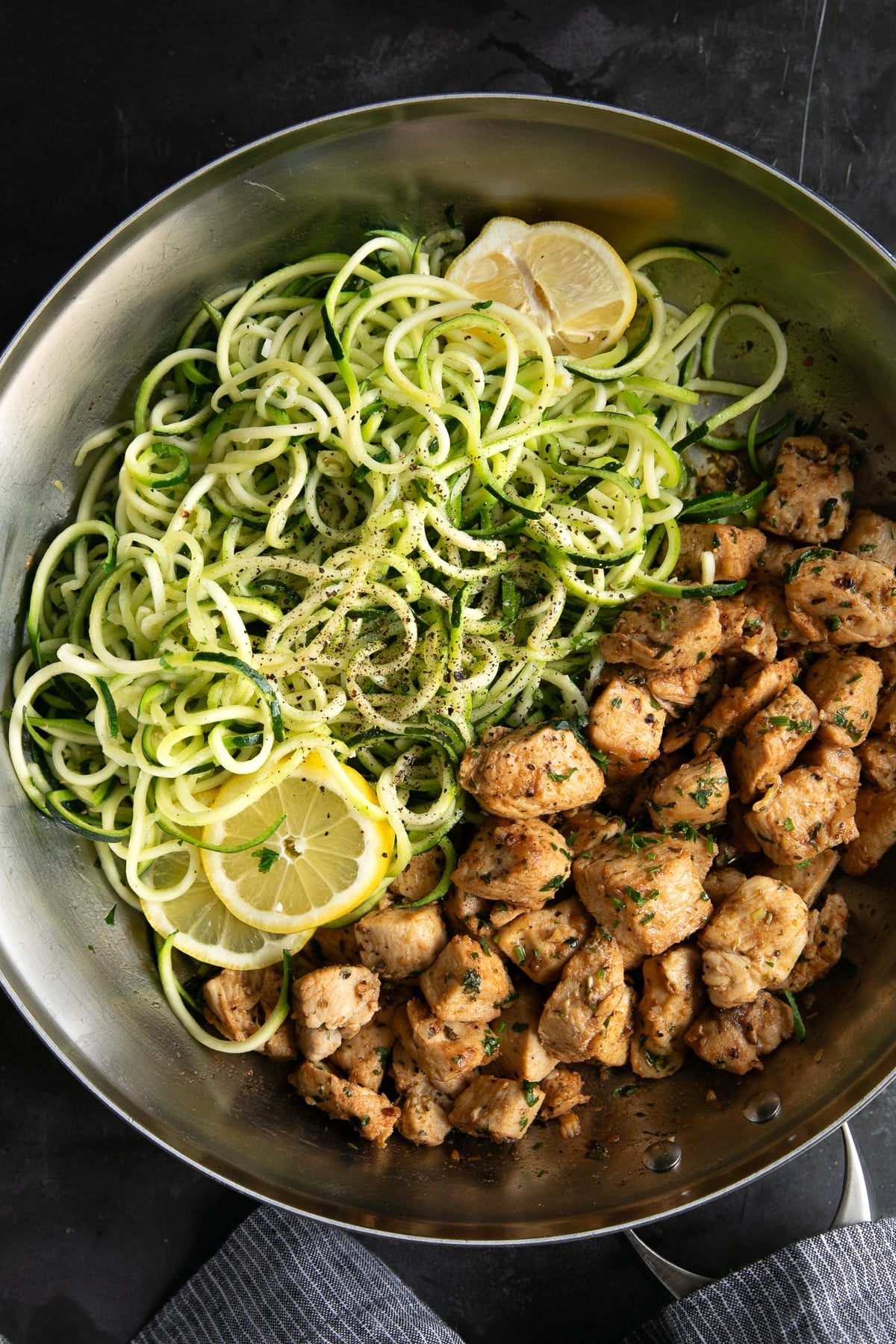
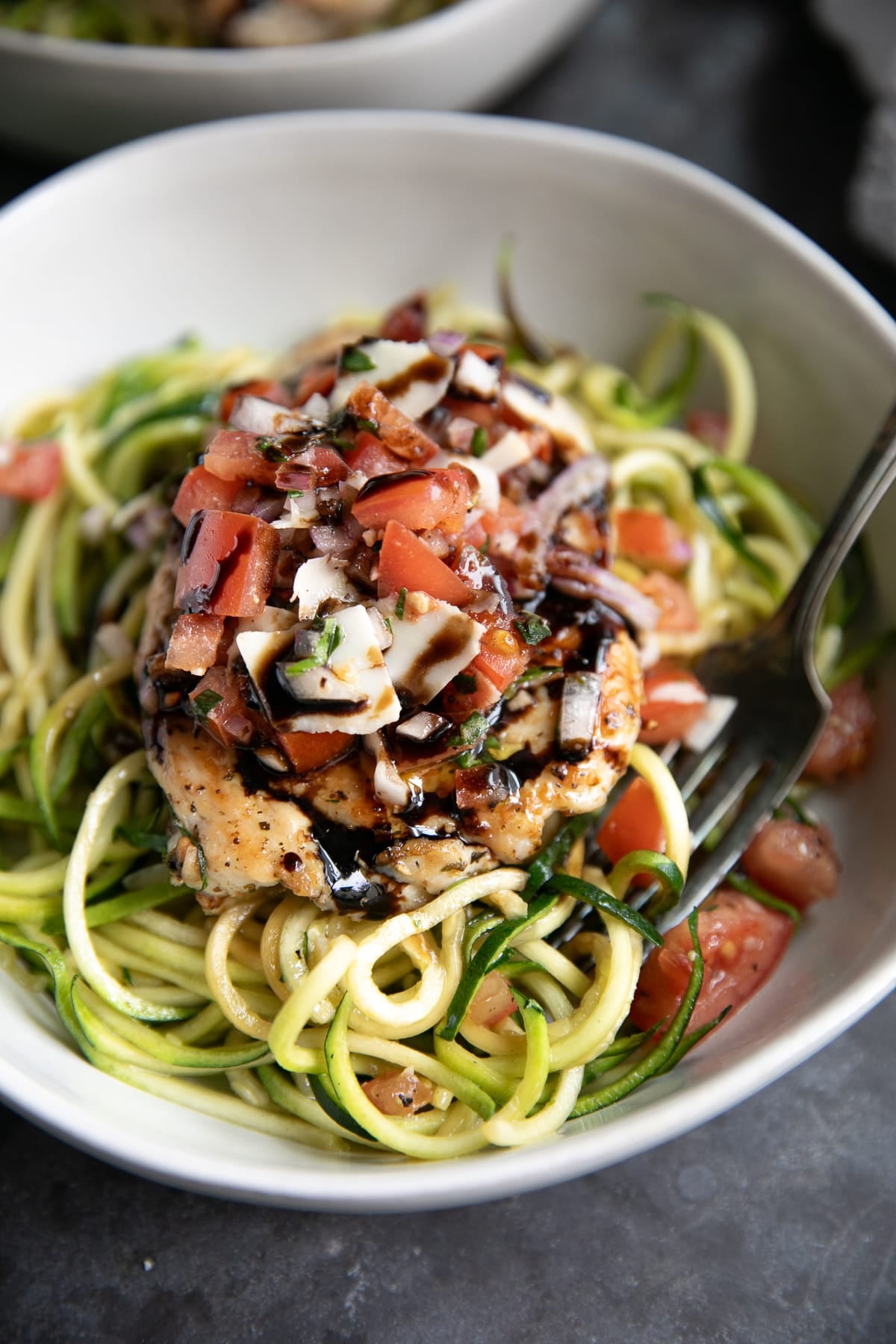
Zucchini noodles have a mild flavor, which makes them incredibly easy to pair with just about anything. I especially love serving them with chicken, steak, shrimp, or salmon, either as a simple side dish or as the base of a complete meal. Here are some examples:
- Baked Pork Chops
- Mahi Mahi Recipe
- Oven-Roasted Pork Loin
- Air Fryer Chicken Legs
- Chicken Florentine
- Grilled Shrimp Skewers
For the best texture, add your protein and sauce just before serving rather than letting the zucchini noodles sit and simmer in the sauce.
Storage and Make-Ahead Tips
Zucchini noodles are best served shortly after cooking, but you can easily spiralize them ahead of time.
- To store uncooked zucchini noodles, place them in an airtight container lined with a paper towel to absorb excess moisture. Refrigerate for up to 2-3 days, replacing the paper towel if it becomes very damp. For the best texture, wait to salt the zoodles until you’re ready to prepare them.
- To store cooked zucchini noodles, let them cool completely, then transfer them to an airtight container and refrigerate for up to 2 days. Keep any sauce separate whenever possible, since storing the noodles in sauce can make them softer and more watery.
To reheat, warm the zoodles briefly in a hot skillet or microwave just until heated through. Avoid cooking them for too long, since reheating will continue to soften the zucchini.
Can You Freeze Zucchini Noodles?
Technically, yes, but I don’t recommend it. Zucchini contains a lot of water, and frozen zoodles tend to become soft, mushy, and more watery once cooked.
If you have extra zucchini noodles, I recommend storing them uncooked in the refrigerator and using them within a few days instead.
More Zucchini Recipes
- Double Chocolate Zucchini Muffins
- Sauteed Zucchini
- Zucchini Casserole
- Roasted Zucchini with Parmesan
- Cheesy Zucchini Bread (Quick Bread)
- Zucchini Fritters
- Easy Zucchini Muffin Recipe
Have more zucchini to use up? Check out all of my zucchini recipes for even more delicious ways to put it to good use.
These Garlic Parmesan Zucchini Noodles are a simple, flavorful way to turn fresh zucchini into a quick and delicious side dish. If you give them a try, don’t forget to leave a rating and review! Your feedback helps other readers discover and enjoy this recipe too. Thank you so much! 💛
Garlic Parmesan Zucchini Noodles (Zoodles)

Ingredients
- 4 medium zucchini
- 1 teaspoon kosher salt, optional, for draining the zucchini noodles
- 1 tablespoon olive oil
- 1 tablespoon butter
- 3 cloves garlic, minced
- 2 tablespoons chopped fresh parsley
- ½ cup freshly grated Parmesan cheese
- ½ teaspoon freshly ground black pepper
- ½ lemon, juiced
- Additional salt, to taste
Instructions
- Spiralize the zucchini. Wash and dry the zucchini, trim off both ends, and spiralize using your preferred blade. Cut any especially long strands into shorter, easier-to-eat noodles.
- Drain the zoodles, if desired. Spread the zucchini noodles over several layers of paper towels on a large baking sheet. Sprinkle with 1 teaspoon kosher salt and toss gently to distribute. Let sit for 20-30 minutes, then transfer the noodles to a clean kitchen towel and gently blot or squeeze away excess moisture. Do not wring them tightly.
- Prepare the garlic butter. Heat the olive oil and butter in a large skillet over medium-high heat. Once the butter has melted, reduce the heat to medium. Add the minced garlic and parsley and cook for 30-60 seconds, stirring continuously, until fragrant.
- Saute the zucchini noodles. Add the prepared zoodles to the skillet and gently toss to coat them in the garlic butter. Cook for 2-3 minutes, tossing frequently, until the noodles are just tender-crisp. Avoid cooking them until completely soft.
- Add the Parmesan. Sprinkle the Parmesan and black pepper over the zucchini noodles and toss briefly to combine. Remove the skillet from the heat immediately.
- Finish and serve. Add fresh lemon juice and taste before adding any additional salt. Serve immediately for the best texture.
Notes
- Cooking time may vary depending on which part of the zucchini the noodles come from. Zoodles made from the softer, seedier center tend to cook faster and can become mushy more easily. If those strands start looking very soft, remove the skillet from the heat right away to prevent overcooking.
- Storage: Store leftover cooked zucchini noodles in an airtight container in the refrigerator for up to 2 days. For make-ahead prep, uncooked spiralized zucchini can be refrigerated for 2-3 days with a paper towel in the container to absorb moisture. Reheat cooked zoodles very briefly in a hot skillet or microwave.
Explore More with AI
Nutrition
Nutrition information is automatically calculated, so should only be used as an approximation.








I would like the noodles without any green skin on them. Is that possible?
You can try peeling them first, but they will probably be super mushy.
I had tried the salt technique to de water but it just made it worse. So I put them in the center of a dish towel and folded both sides over the noodles and let it sit maybe an hour or so. Then moved them to a bowl and put the towel over the bowl. After a while, maybe a couple hours, the noodles were dry.
Great simple recipe with good tips in the instructions to be successful the first time. Didn’t have time for the cookie sheet de watering so just sautés lots of garlic, red chili flakes, then 4 min with the zoodles, add pesto, parm and serve immediately, delish! Thanks. Stole the thunder from the main dish, and not a zoodle left!
Thanks for the kind feedback JB 🙂