
This post may contain affiliate links. See my disclosure policy.

These juicy oven baked chicken breasts are seasoned with olive oil, Cajun seasoning, and paprika, then baked at 425°F until tender and flavorful. No pounding, brining, or marinating required! Easy enough for a weeknight dinner and just as useful for meal prep.
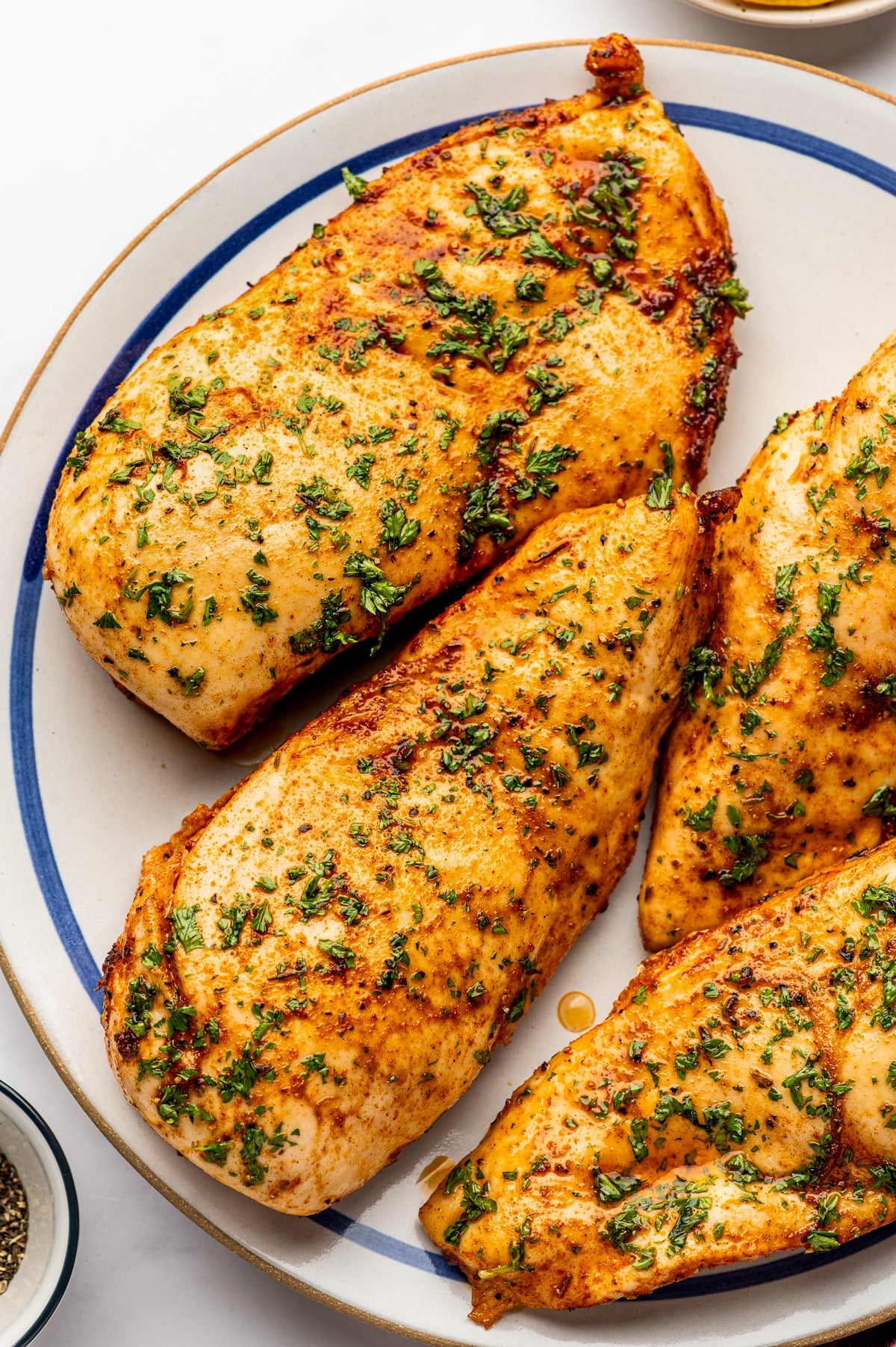
Over the years I’ve cooked A LOT of chicken breasts. This lean, high-protein staple is my meal prep bestie and one of my go-to ingredients for easy weeknight dinners. Unfortunately, compared to cooking higher-fat dark meat like baked chicken thighs or baked chicken legs, oven-baked chicken breasts can also be frustratingly easy to overcook.
Because of this, I decided to run a fun little kitchen experiment comparing the cooking time and tenderness of pounded chicken breasts versus chicken breasts left completely intact. I used 3 pounds of chicken, divided into two equal batches of four 6-ounce breasts. Both were seasoned the same way and baked at 425°F until they reached an internal temperature of 165°F. The pounded chicken was ready in just 18 minutes, while the non-pounded chicken took 23 minutes. Both turned out juicy and delicious, but the surprising part? I actually preferred the softer, more tender texture of the chicken I didn’t pound. Less prep, less cleanup, and better texture? I’ll take it.
Quick Look: Oven Baked Chicken Breasts
- Cooking method: Bake boneless, skinless chicken breasts uncovered at 425°F (220°C) until the thickest part reaches 165°F (74°C).
- Cooking time: My 6-ounce, non-pounded chicken breasts took 23 minutes, while the pounded breasts took just 18 minutes. Cooking times will vary depending on the size and thickness of your chicken.
- Flavor: Savory and lightly smoky, with sweet paprika and a little kick from Cajun seasoning.
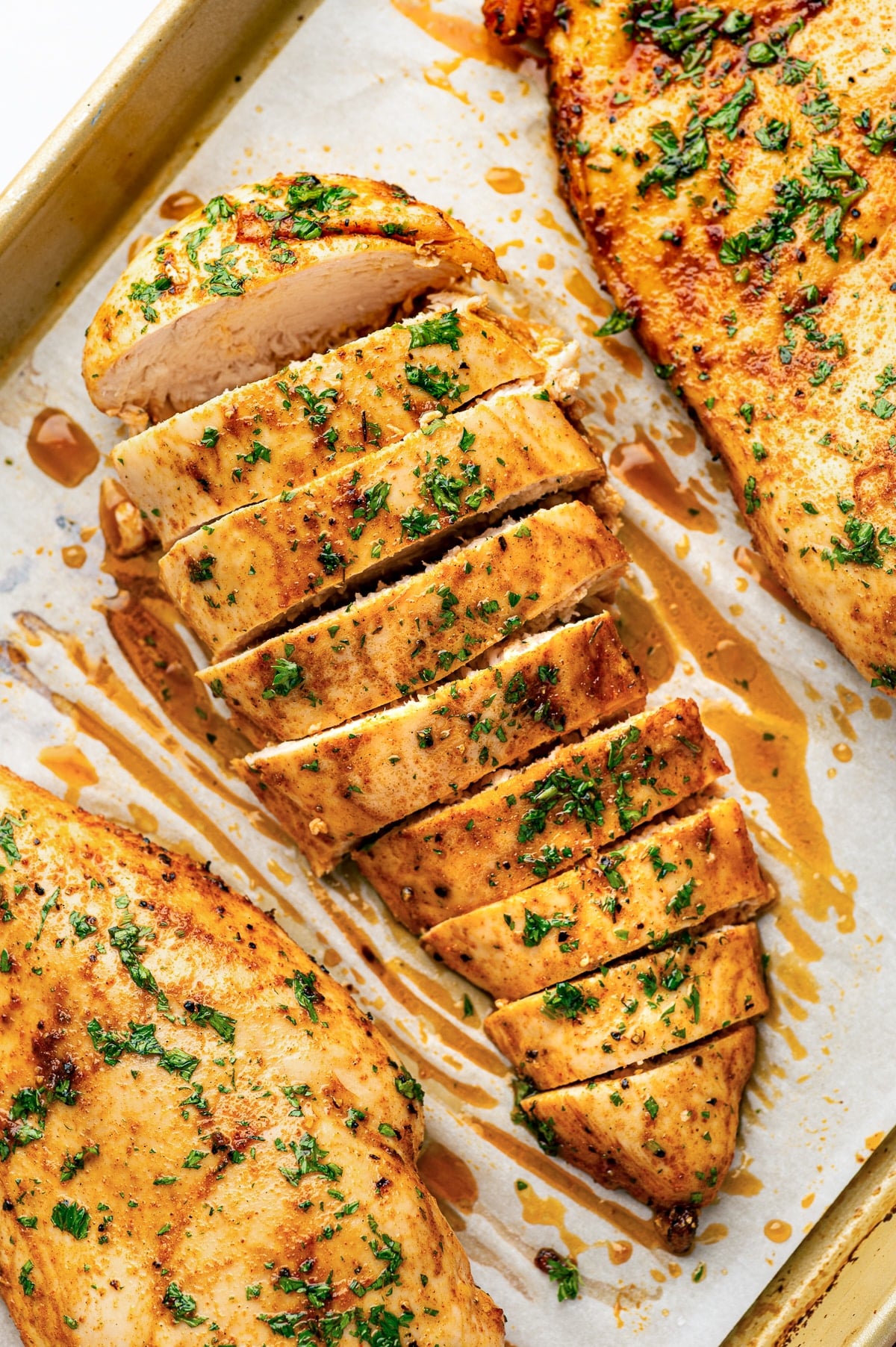
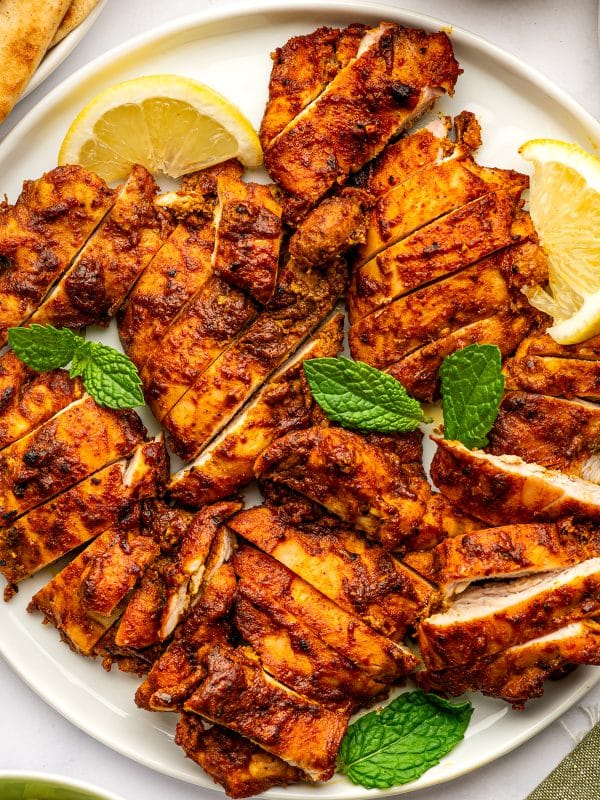
- Texture: Tender, juicy chicken with a flavorful, lightly seasoned exterior. In my side-by-side test, the non-pounded chicken was softer, more tender, and easier to slice.
- Total time: Approximately 38 minutes, including 10 minutes of prep, 23 minutes of baking, and a 5-minute rest after cooking, plus oven preheating.
- Good to know: There’s no need to pound, brine, or bring the chicken to room temperature before baking. For the best results, use an instant-read thermometer to check for doneness rather than relying on cooking time alone.
Table of Contents
Ingredients and Substitutions
You only need chicken, olive oil, a few pantry seasonings, and some optional fresh parsley. Find the complete ingredient list with measurements in the recipe card below.
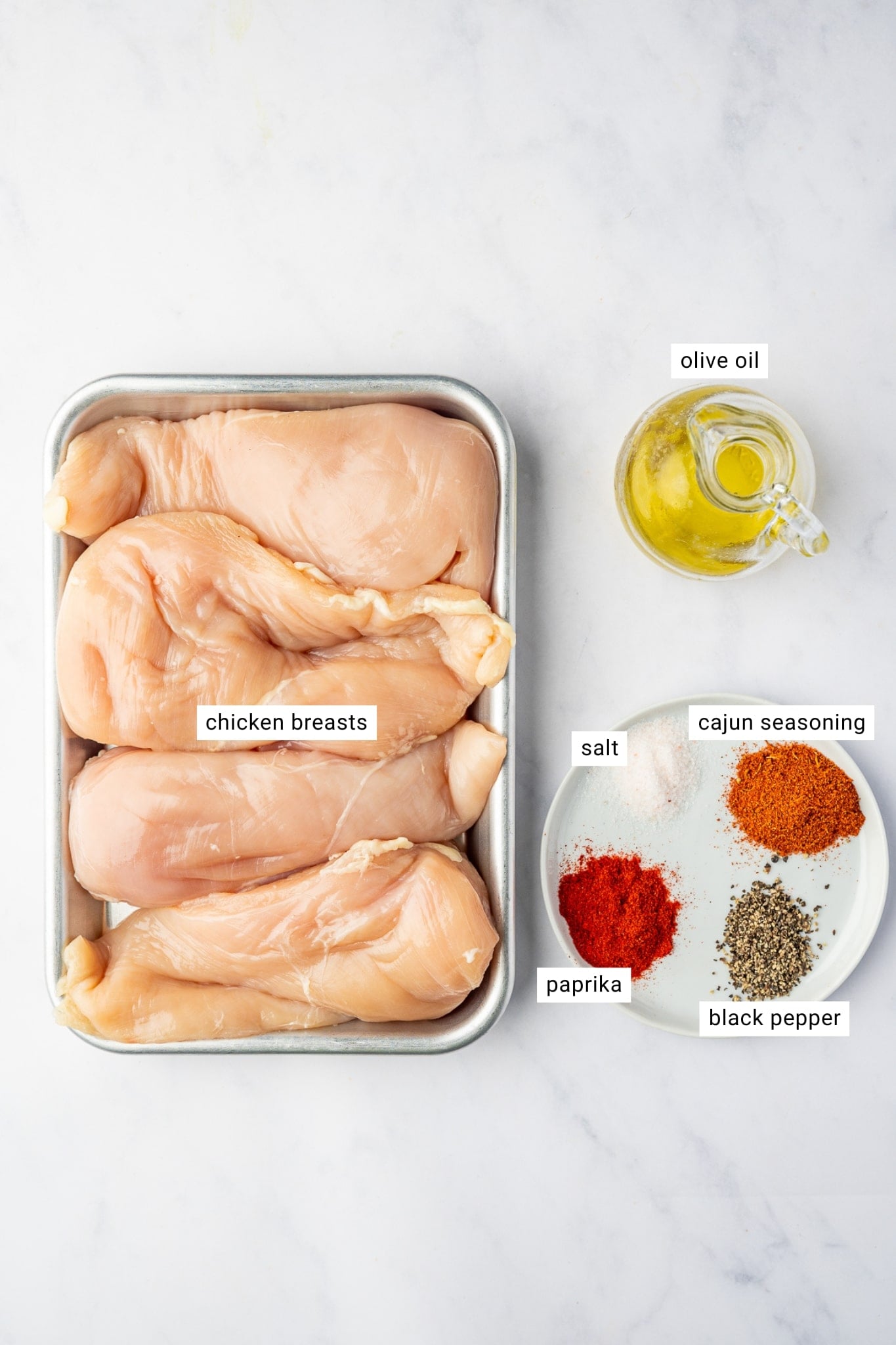
- Boneless, skinless chicken breasts: I recommend choosing chicken breasts that are reasonably similar in size so they’ll finish cooking around the same time. This recipe was tested using four 6-ounce chicken breasts, approximately 1 1/2 pounds total. There’s no need to pound them or slice them into cutlets. Larger or thicker chicken breasts may need additional baking time.
- Olive oil: A little olive oil helps the spices coat the chicken evenly and adds flavor. Avocado oil is another good option.
- Cajun seasoning: I use my homemade Cajun seasoning, which adds garlic, herbs, smoky flavor, and a little heat. Store-bought Cajun seasoning works too, but check the salt content before adding the extra salt listed in the recipe.
- Sweet paprika: Adds color and a mild, slightly sweet pepper flavor. Smoked paprika is a good substitute if you prefer a more pronounced smoky flavor.
- Salt and black pepper: Simple but important for bringing everything together. Adjust the salt if your Cajun blend is already heavily seasoned.
- Fresh parsley: Optional, but I like adding it to the finished chicken with a little olive oil. A squeeze of fresh lemon juice is also delicious just before serving.
Want a milder seasoning? Skip the Cajun seasoning and use the seasoning blend I use in my air fryer chicken breasts: garlic powder, onion powder, paprika, salt, and black pepper. It’s an easy change that makes the chicken more versatile for salads, sandwiches, and other recipes without the added heat.
How to Bake Chicken Breasts in the Oven
I prefer baking chicken breasts whole, without pounding them first. In my side-by-side test, the non-pounded chicken was noticeably softer, more tender, and easier to slice, even though it took a bit longer to cook. Skipping the pounding also means less preparation and cleanup, which makes it ideal for busy weeknight dinners.
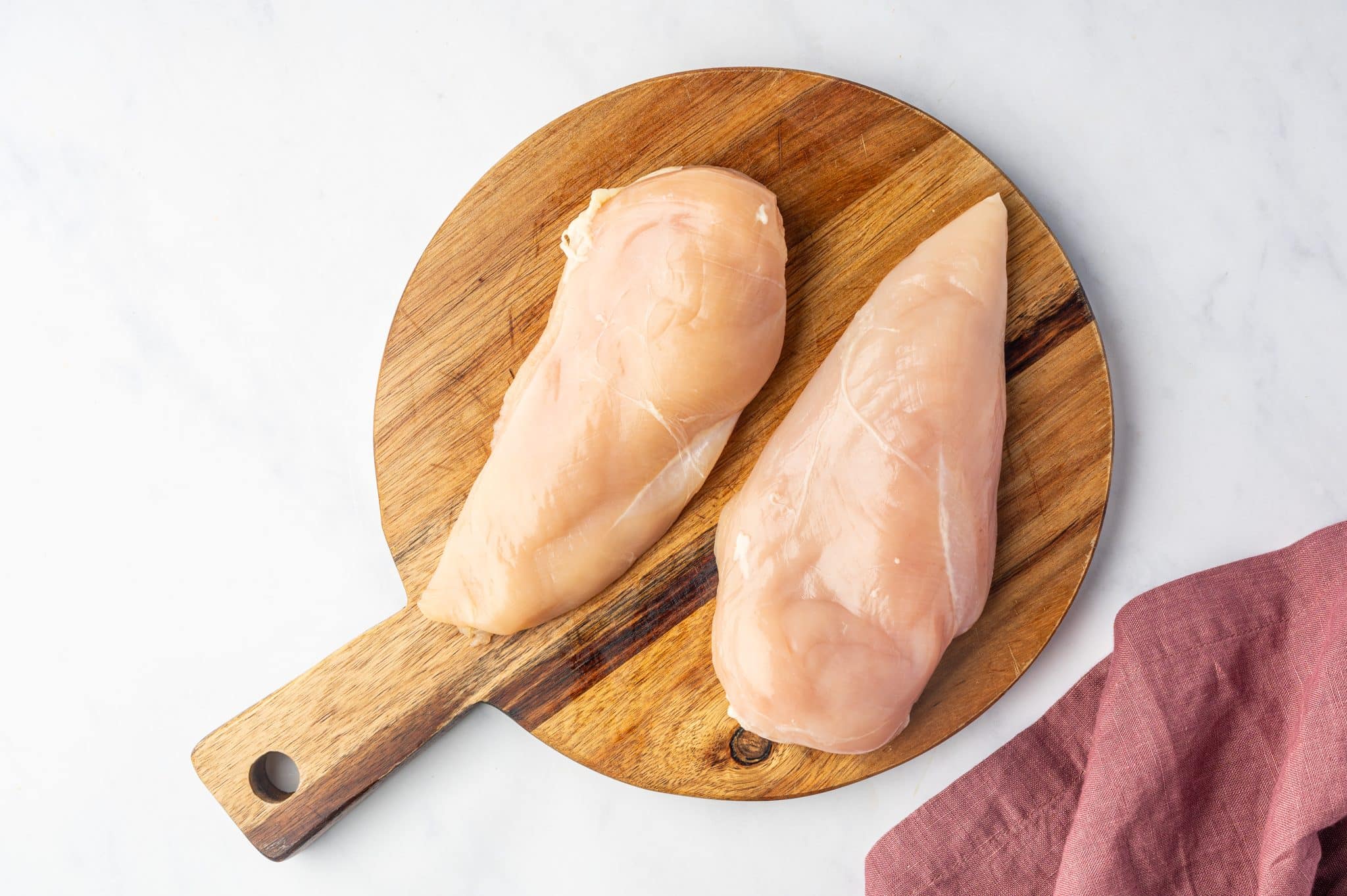
- Preheat the oven and prepare the chicken. Preheat your oven to 425°F (220°C) and line a large rimmed baking sheet with parchment paper or aluminum foil. Pat the chicken breasts dry with paper towels and transfer them to a large mixing bowl. There’s no need to rinse the chicken.
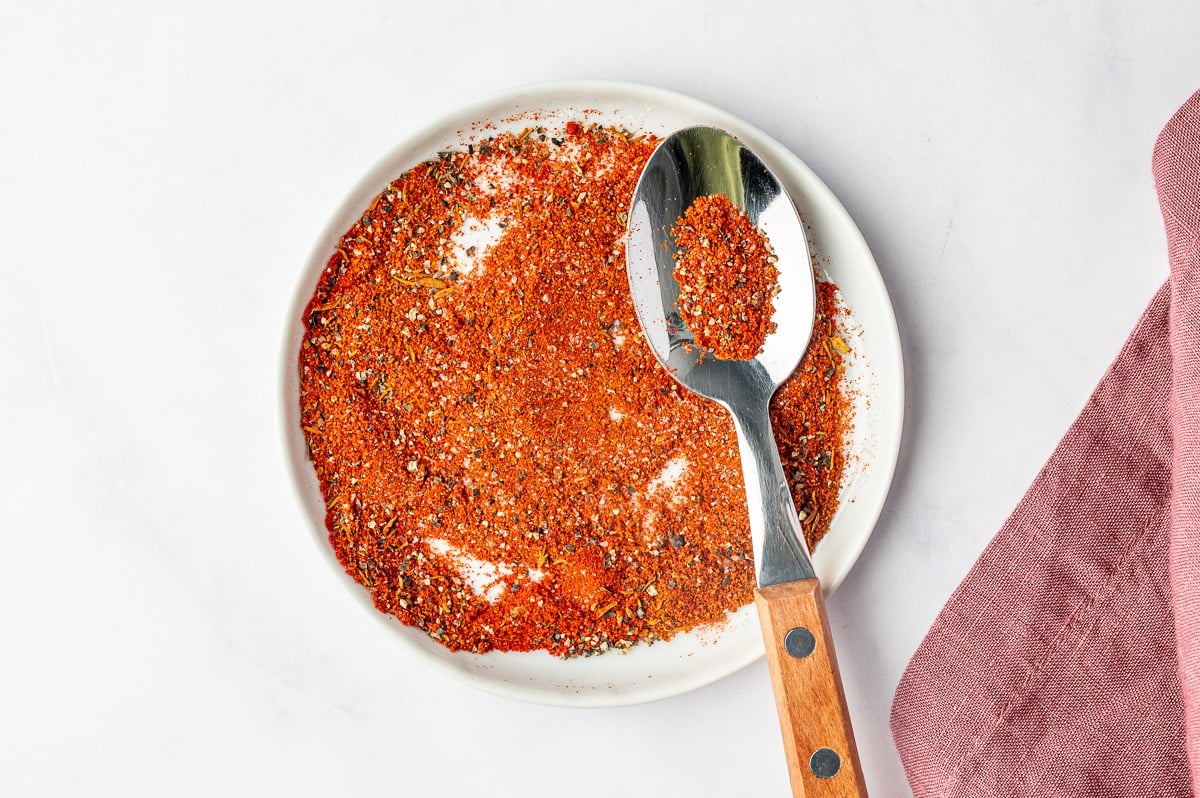
- Combine the seasonings. In a small bowl, mix together the Cajun seasoning, sweet paprika, salt, and black pepper until evenly combined.
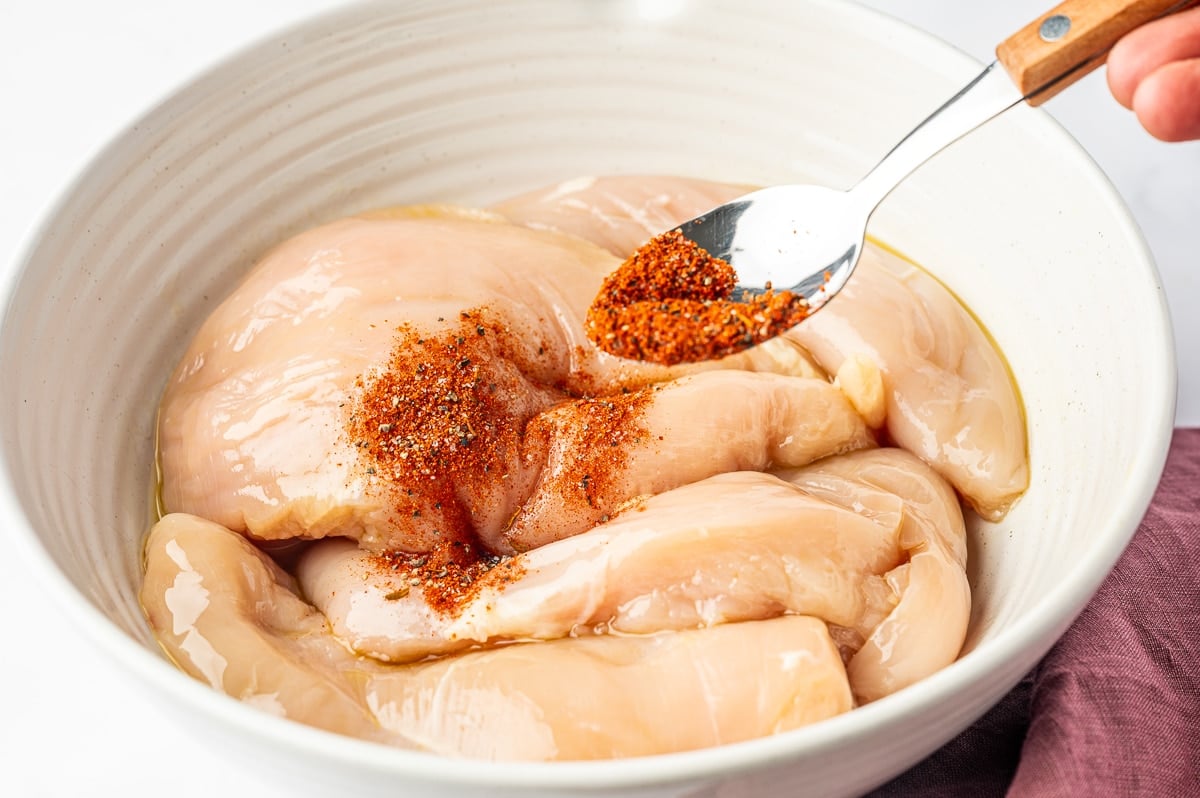
- Coat the chicken with oil and seasoning. Drizzle the chicken breasts with 1 tablespoon of olive oil, turning to coat all sides. Sprinkle the seasoning mixture over the chicken, then gently rub it in until each breast is evenly coated, including the sides and thicker sections.
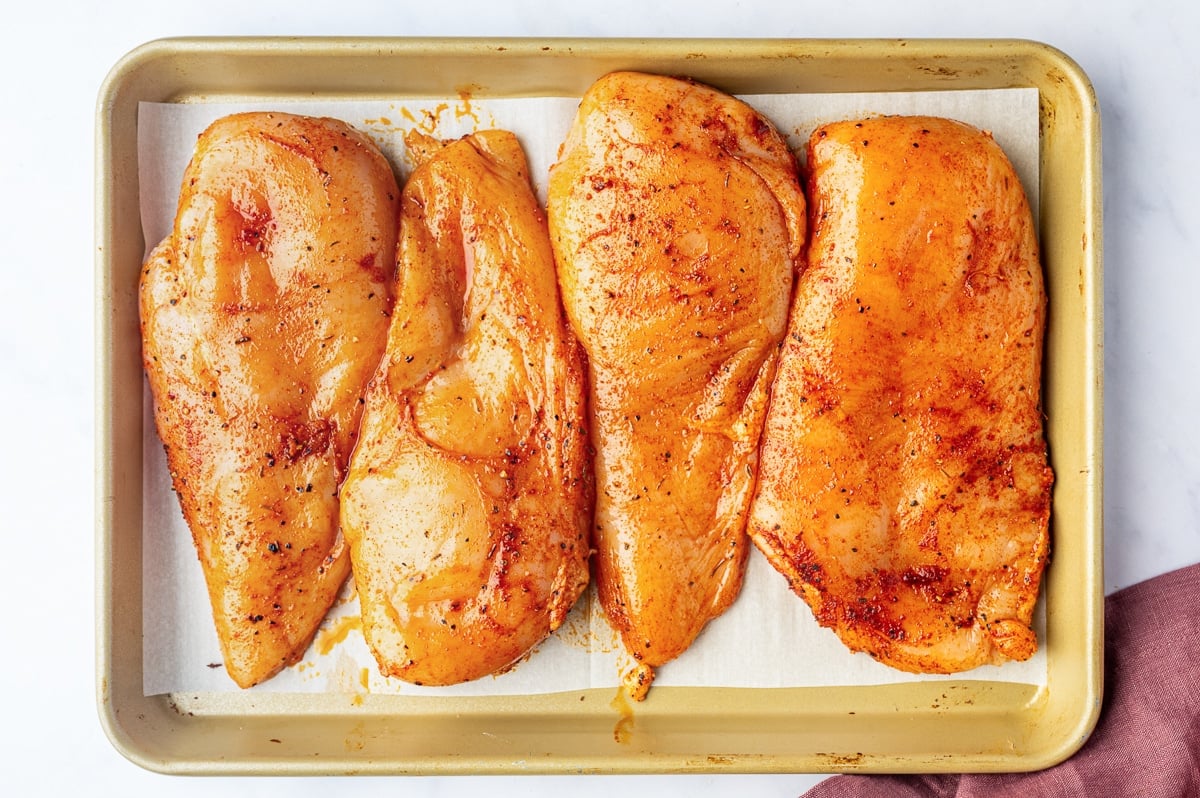
- Arrange on the baking sheet. Transfer the seasoned chicken breasts to the prepared baking sheet. Arrange them in a single layer with a little space between each one. Avoid crowding the pan or overlapping the chicken.
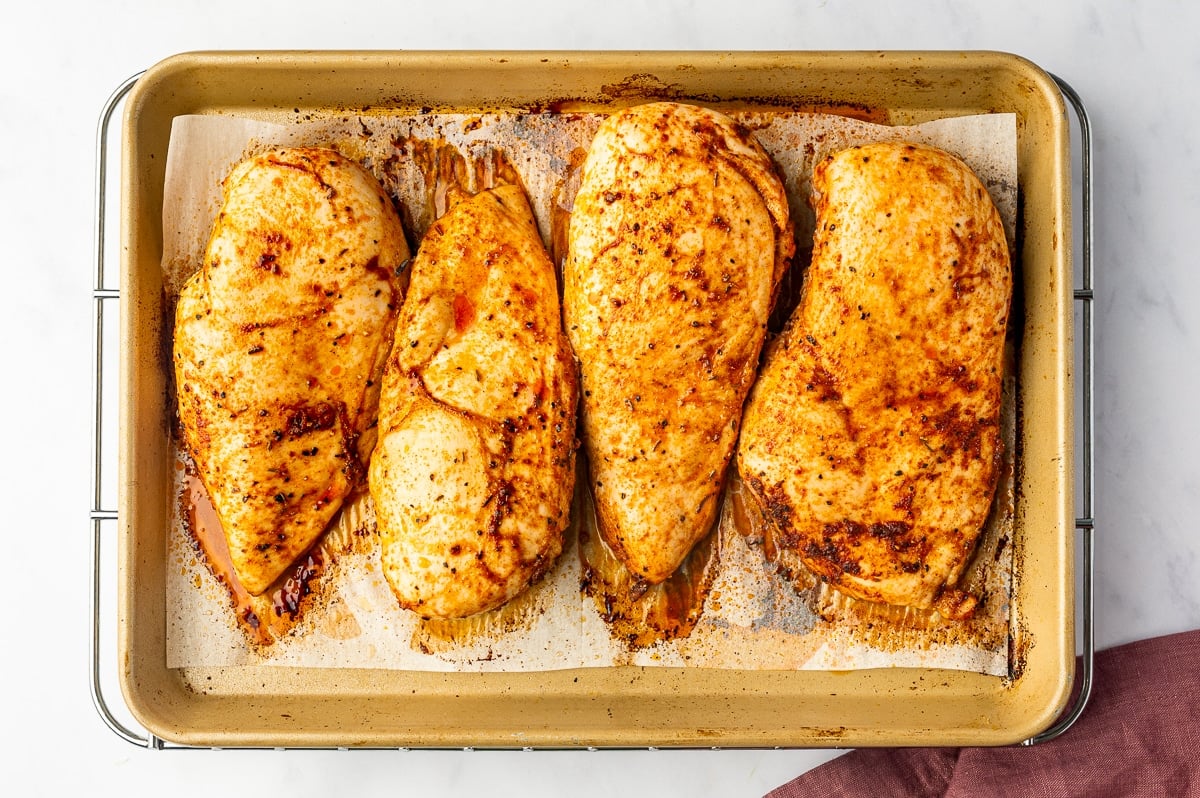
- Bake until the chicken reaches 165°F. Bake the chicken, uncovered, for approximately 23 minutes, or until an instant-read thermometer inserted into the thickest part of the largest breast registers 165°F (74°C).
- Rest and serve. Remove the chicken from the oven and let it rest for about 5 minutes before slicing. Resting helps the juices settle so they’re less likely to run out when you cut into the meat.
Jessica’s Tips
Watch the cooking time. Chicken breasts vary in size and thickness, so start checking the internal temperature a few minutes early. If some breasts reach 165°F before others, remove them from the oven and let them rest while the larger pieces finish cooking. This prevents the smaller breasts from drying out.
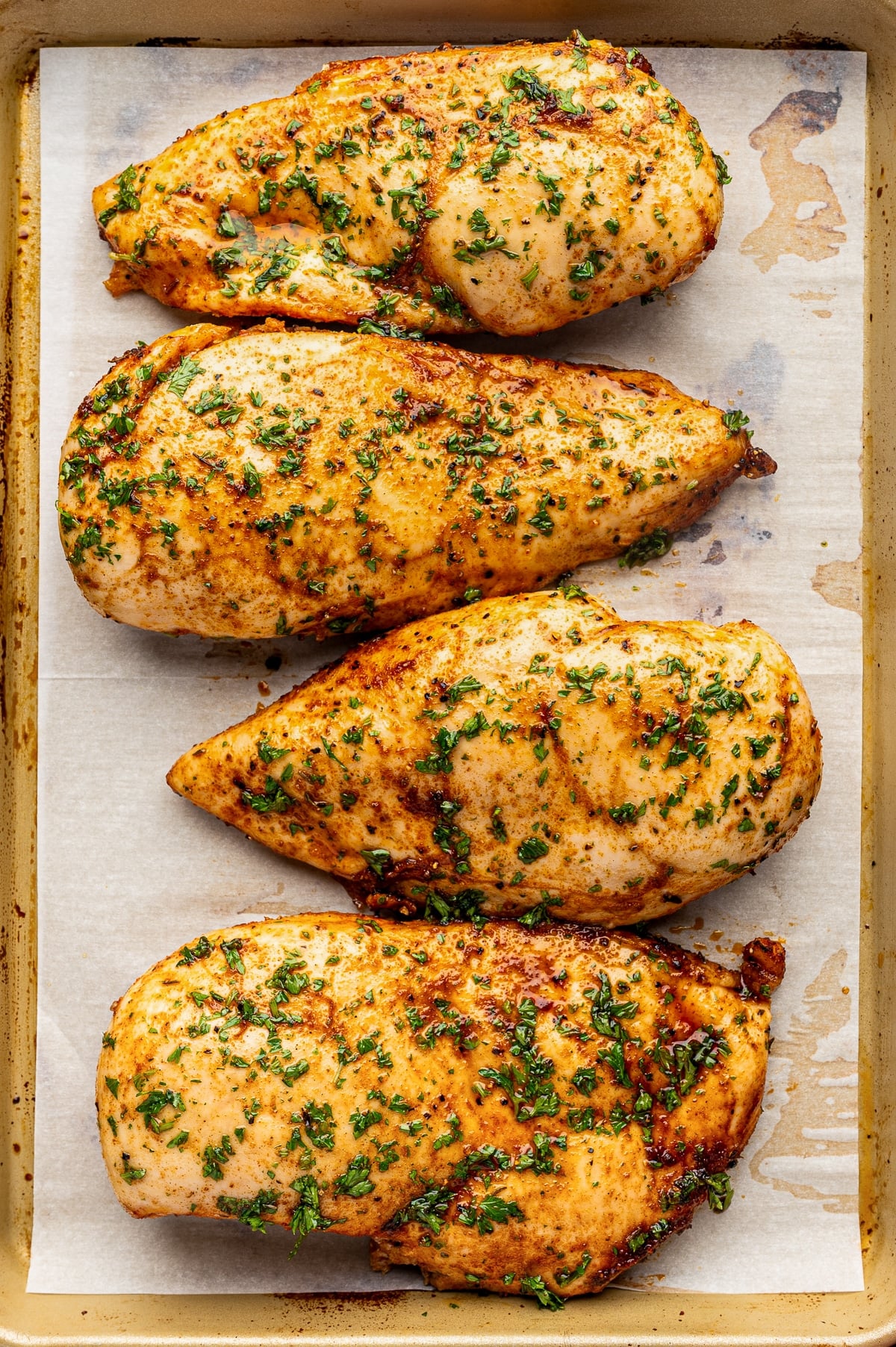
Finish with olive oil and fresh herbs (optional). One of my favorite tricks for adding extra flavor is mixing a little olive oil, finely chopped fresh parsley, and a pinch of salt, then brushing it over the chicken after baking. You can use basil, thyme, oregano, or rosemary instead. Think of it as my lazy version of homemade chimichurri sauce 🙂
Pounded vs. Non-Pounded Chicken Breasts: My Kitchen Test
A lot of baked chicken breast recipes recommend pounding the chicken before cooking it. The idea is that making the breast thinner and more even helps it cook quickly and consistently.
That makes sense, but I’ve never loved adding an extra preparation step unless it actually improves the finished dish. So I decided to compare the two methods and see whether pounding made enough of a difference to be worthwhile.
For this test, I used 3 pounds of boneless, skinless chicken breasts, divided into two equal batches. Each batch contained four chicken breasts weighing approximately 6 ounces each, for a total of 1 1/2 pounds per batch.
I pounded the chicken breasts in the first batch and left the remaining four completely intact. Both batches were seasoned with the same Cajun seasoning and paprika mixture and baked at 425°F.
Here’s what I found:
| Pounded Chicken | Non-Pounded Chicken | |
|---|---|---|
| Chicken quantity | 4 breasts (1 1/2 pounds total) | 4 breasts (1 1/2 pounds total) |
| Weight per breast | 6 ounces | 6 ounces |
| Oven temperature | 425°F | 425°F |
| Baking time | 18 minutes | 23 minutes |
| Final internal temperature | 165°F | 165°F |
| Juiciness | Juicy | Juicy |
| Texture | Firmer and denser | Softer, more tender, easier to slice |
| Flavor | Delicious | Equally delicious |
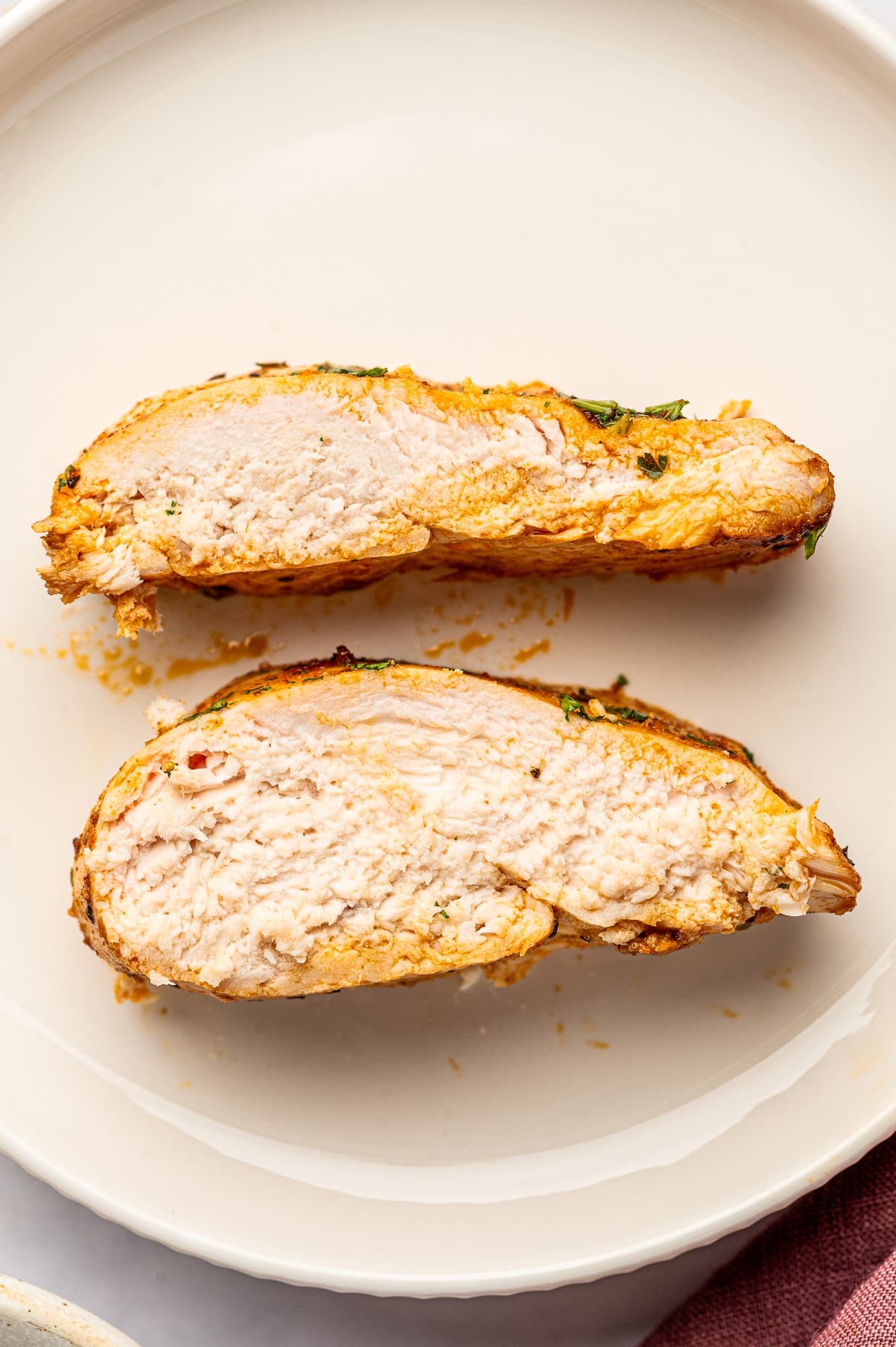
My takeaway: I prefer baking chicken breasts without pounding them. The extra five minutes in the oven are worth it to me, especially because I can use that time to prepare other parts of the meal AND skip the additional preparation and cleanup. However, pounding is still a perfectly good option when I want to shorten the cooking time.
Note: These are the results for the batches I tested, not a guarantee that every unpounded chicken breast will be more tender. Even breasts of the same weight can vary in thickness and natural texture, which can affect the finished result.
Serving Ideas
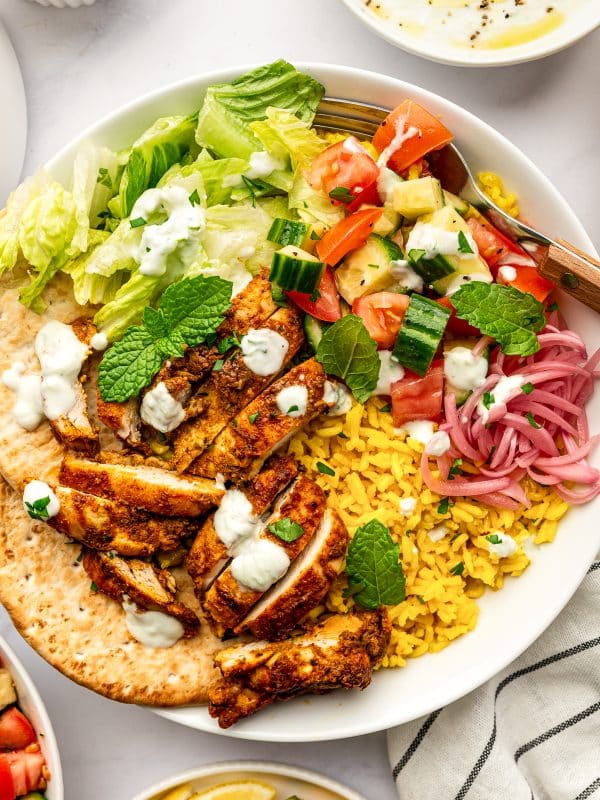
One of the reasons I make baked chicken breasts so often is that they go with just about anything. For an easy weeknight dinner, I often serve them alongside roasted zucchini, roasted potatoes and carrots, or a simple green salad. Add some fragrant jasmine rice, baked sweet potatoes, or mashed potatoes, and dinner is done!
I also love making extra chicken for the week ahead. It’s perfect sliced over salads, tucked into wraps and sandwiches, chopped into chicken soup and casseroles, or added anywhere you’d use shredded rotisserie chicken.
Baked Chicken Breasts FAQs
The best temperature to bake boneless, skinless chicken breasts is at 425°F (220°C). This higher temperature cooks the chicken relatively quickly while developing a flavorful, lightly browned exterior. Just remember that cooking times vary depending on thickness, so use an instant-read thermometer to make sure the chicken reaches 165°F (74°C) without overcooking.
Not for this recipe. Brining can help chicken retain moisture, but I don’t find it necessary here. I prefer keeping things simple with olive oil, a flavorful seasoning mixture, and a instant-read thermometer to make sure the chicken doesn’t overcook. Both batches in my kitchen test turned out juicy without brining.
So, there’s this thing called “woody breast syndrome” that affects commercially raised broiler chickens, especially those bred for rapid growth and large breast size. Basically, the breast muscle develops excess connective tissue, making the meat unusually hard, rubbery, or stringy, especially in the thickest part. It’s safe to eat when properly handled and cooked, but not-so-pleasant to eat, and more common than you might expect (source).
What can you do? I recommend looking for small to medium-sized chicken breasts and, when possible, chicken from slower-growing breeds. If you end up with woody chicken breasts, marinating or brining may help a little, and pounding them to an even thickness can make cooking easier (yes, this is the one exception to my “easy, not messy” rule). Unfortunately, none of these methods can completely fix the tough texture, especially in more severe cases. When that happens, chopping or shredding the chicken and mixing it into a saucy dish may be your best option. Hope this helps!
I bake these chicken breasts uncovered. Covering them with foil traps steam and creates a different cooking environment. Baking uncovered allows the seasoned exterior to develop while the chicken cooks. Just be careful not to overcook it.
Storage, Freezing, and Reheating Tips
Once you bake your chicken breasts, you have about 3-4 days to serve, eat, or repurpose them, as long as they’re stored properly in the refrigerator. For best results, I recommend waiting to chop, slice, or shred leftover chicken until you know how you plan to use it.
Storage: As a general rule, I never chop or slice leftover cooked chicken until I’m ready to reheat and serve it. This helps prevent the chicken from drying out. Shredding chicken ahead of time is my one exception, since I typically freeze it right away or use it in creamy baked casseroles, soups, or recipes with plenty of sauce.
Reheating: I almost exclusively reheat my chicken in the microwave 🙂 The key is to slice the chicken breast into thick pieces right before microwaving. In my experience, microwaving a whole chicken breast results in a dry, chewy exterior and a barely warm center, but slicing it first allows the chicken to reheat more evenly. Add a splash of water or broth, cover loosely, and microwave until heated through to 165°F.
Freezing: You can freeze whole, chopped, sliced, or shredded baked chicken breasts, but sliced or shredded chicken thaws faster and reheats more evenly. Let the chicken cool briefly, then refrigerate promptly. Once chilled, transfer it to airtight freezer-safe containers or zip-top bags, removing as much air as possible to help prevent freezer burn. Freeze for up to 2-3 months for the best quality.
For best results, thaw frozen baked chicken overnight in the refrigerator, unless you plan on adding it directly to soup. I’ve added both fully thawed and completely frozen shredded chicken to soup and honestly noticed no difference.
More Chicken Breast Recipes

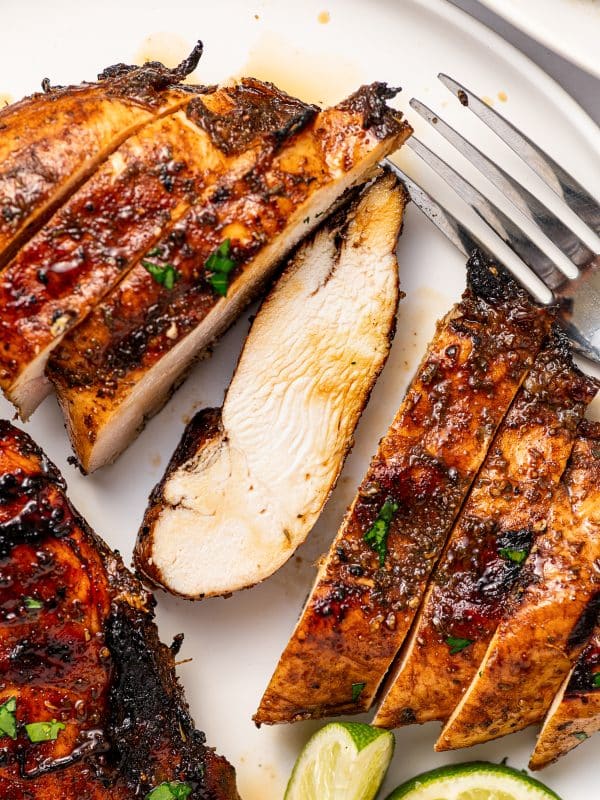
These oven baked chicken breasts are simple, flavorful, and super easy to make. If you give them a try, I’d love to hear how they turned out! Did you leave your chicken breasts whole or pound them first? Let me know in the comments, and don’t forget to leave a rating and review. Thank you so much!
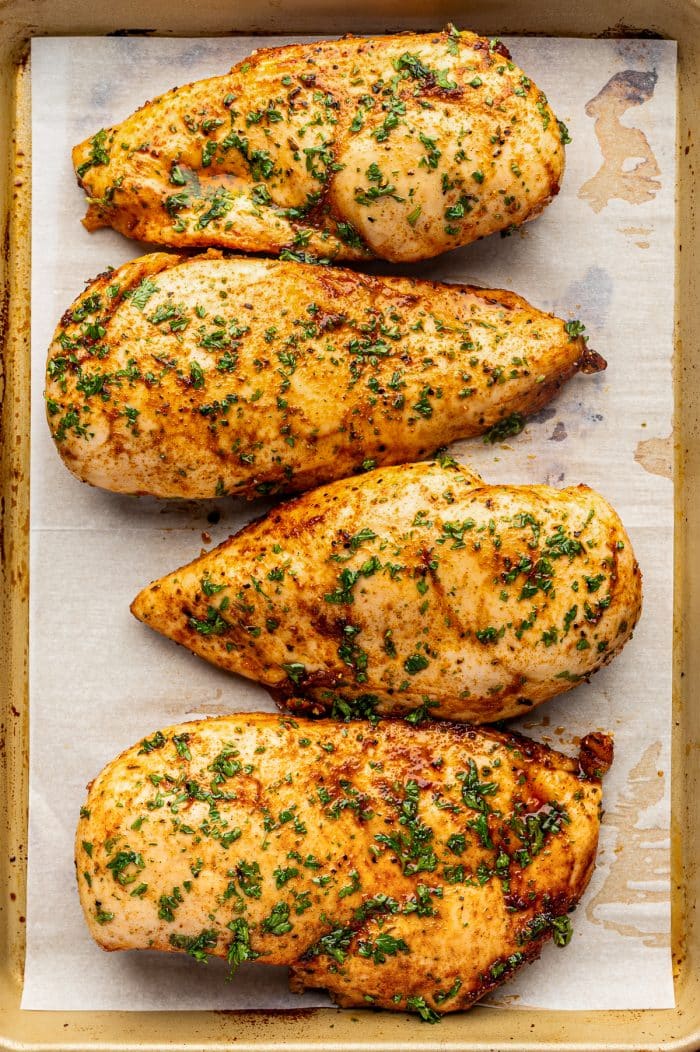
Oven-Baked Chicken Breast Recipe

Ingredients
- 4 boneless skinless chicken breasts, (6 ounces each, approximately 1½ pounds total)
- 1 tablespoon olive oil, plus more for finishing (optional)
- 2 teaspoons Cajun seasoning
- 2 teaspoons sweet paprika
- ½ teaspoon salt, plus more to taste
- ½ teaspoon freshly ground black pepper
- 2 tablespoons finely chopped fresh parsley , (optional)
Instructions
- Set the oven to 425°F (220°C). Cover a large rimmed baking sheet with aluminum foil or parchment paper rated for this temperature. Use paper towels to pat the chicken breasts dry, then place them in a large bowl. Leave the breasts whole without pounding.
- Add the Cajun seasoning, sweet paprika, salt, and black pepper to a small bowl. Stir until the spices are thoroughly mixed.
- Pour 1 tablespoon of olive oil over the chicken breasts and turn them to coat. Add the seasoning mixture and use your hands to distribute it evenly over the entire surface of each breast, including the sides.
- Transfer the seasoned chicken breasts to the prepared baking sheet in a single layer. Leave a little space between the pieces so they are not touching or overlapping.
- Place the baking sheet in the preheated oven and bake, uncovered, for approximately 20-25 minutes, or until the thickest part of each chicken breast registers 165°F (74°C) on an instant-read thermometer. Begin checking around 18-20 minutes. If some breasts finish before others, remove them individually and allow the remaining chicken to continue cooking.
- Transfer the chicken from the oven and allow it to rest for 5 minutes before cutting. If desired, combine the chopped parsley with a little additional olive oil and a pinch of salt, then brush over the chicken. Serve whole or sliced.
Notes
- Pounded vs. non-pounded chicken: I tested both methods using 6-ounce chicken breasts baked at 425°F. The pounded chicken reached 165°F after 18 minutes, while the non-pounded chicken took 23 minutes. Both were juicy and flavorful, but I preferred the softer, more tender texture of the non-pounded chicken.
- Cooking times will vary. These times are based on my 6-ounce chicken breasts. Smaller or thinner breasts may finish sooner, while larger or thicker ones may take longer. Always use a meat thermometer and remove each breast when it reaches 165°F.
- Seasoning: Cajun seasoning blends vary in salt content and spiciness. Adjust the additional salt accordingly. For a milder flavor, substitute garlic powder, onion powder, and paprika for the Cajun seasoning.
- Optional herb oil: For extra flavor, mix a little olive oil with finely chopped fresh parsley and a pinch of salt. Brush it over the chicken after baking. Basil, thyme, oregano, or rosemary are delicious alternatives.
- Storage and reheating: Refrigerate leftover chicken in an airtight container for 3-4 days or freeze for 2-3 months for best quality. I recommend keeping leftover chicken breasts whole until you’re ready to serve them. When reheating, slice into thick pieces, add a splash of water or broth, cover loosely, and microwave until heated through to 165°F.
Explore More with AI
Nutrition
Nutrition information is automatically calculated, so should only be used as an approximation.








So delicious and easy!!
Thank you so much, Corrie! I am so glad you enjoyed it and found it easy to make. 🙂
Can you use boneless pork chops in the same manner
Hi Michael, this is an excellent question as I have not tried it with boneless pork chops. Pork chops are on my list of proteins to experiment with so I’ll have to get back to you, but I don’t see why not. Just be sure to check the internal temperature with a thermometer instead of cutting through with a knife. Thanks for the question!