
This post may contain affiliate links. See my disclosure policy.

This homemade chicken soup recipe is cozy, flavorful, and made completely from scratch with tender shredded chicken, a light homemade broth, and plenty of vegetables in every spoonful. With a nearly 5-star rating from more than 2,100 readers, this classic chicken soup remains a tried-and-trusted favorite. Best of all, it’s super easy to make and freezes perfectly.

Quick Look: Chicken Soup
- What makes it special: Every bowl is packed with tender chicken and vegetables in a golden, savory, made-from-scratch broth. It’s like sunshine in a bowl, and tastes like it simmered all day. Spoiler alert: it didn’t.
- What makes it different: The chicken simmers in water to create the homemade broth while the vegetables cook separately until softened. The broth is then strained into the vegetables, and the shredded chicken is added back just before serving for a light, flavorful broth without overcooking the chicken.
- Top tip: Keep the chicken at a gentle simmer and cook it only until it reaches an internal temperature of 165°F so it stays tender and juicy instead of overcooked and stringy.
- Total time: Less than two hours, with most of the time being hands-off.
- Leftovers: Yes! In fact, I actually think it tastes even more phenomenal the day after it’s made. You can refrigerate it for up to 4 days or freeze for up to 3 months.
I’ve been making this exact chicken soup for well over a decade, and it is still my all-time favorite soup recipe. It’s my go-to for chilly nights and sore throats, or anytime I’m craving something warm, brothy, and nutritious. And while chicken soup may feel like the ultimate cold-weather meal, I make this one year-round — yes, even in the heat of summer — because it’s so easy to make and my family loves it so much. And unlike chicken noodle soup, this recipe doesn’t need pasta to feel satisfying.
The secret to making chicken soup extra delicious is less about adding a long list of herbs or extra ingredients, and more about how it’s made. It literally boils down to the broth — completely homemade, seasoned just right, and strained until clear and golden. Pair it with some crusty, buttery bread and dinner’s done! Craving a different kind of chicken soup? Try my bold and spicy buffalo chicken soup, or my deliciously tangy caldo de pollo recipe (Mexican chicken soup).
Table of Contents
What Readers Are Saying
This chicken soup has become a longtime reader favorite. Here is what a couple of readers had to say:
“This is honestly the best recipe. Making your own broth is so key. I have become the chicken soup whisperer around these parts. So good…” – Jim
“I usually do a whole chicken for chicken soup, but I needed a recipe that was quicker. This was incredible! It came out perfect.” – Jennifer
Ingredients and Substitutions
For the complete list of ingredients + measurements, please see the recipe card at the bottom of this post.
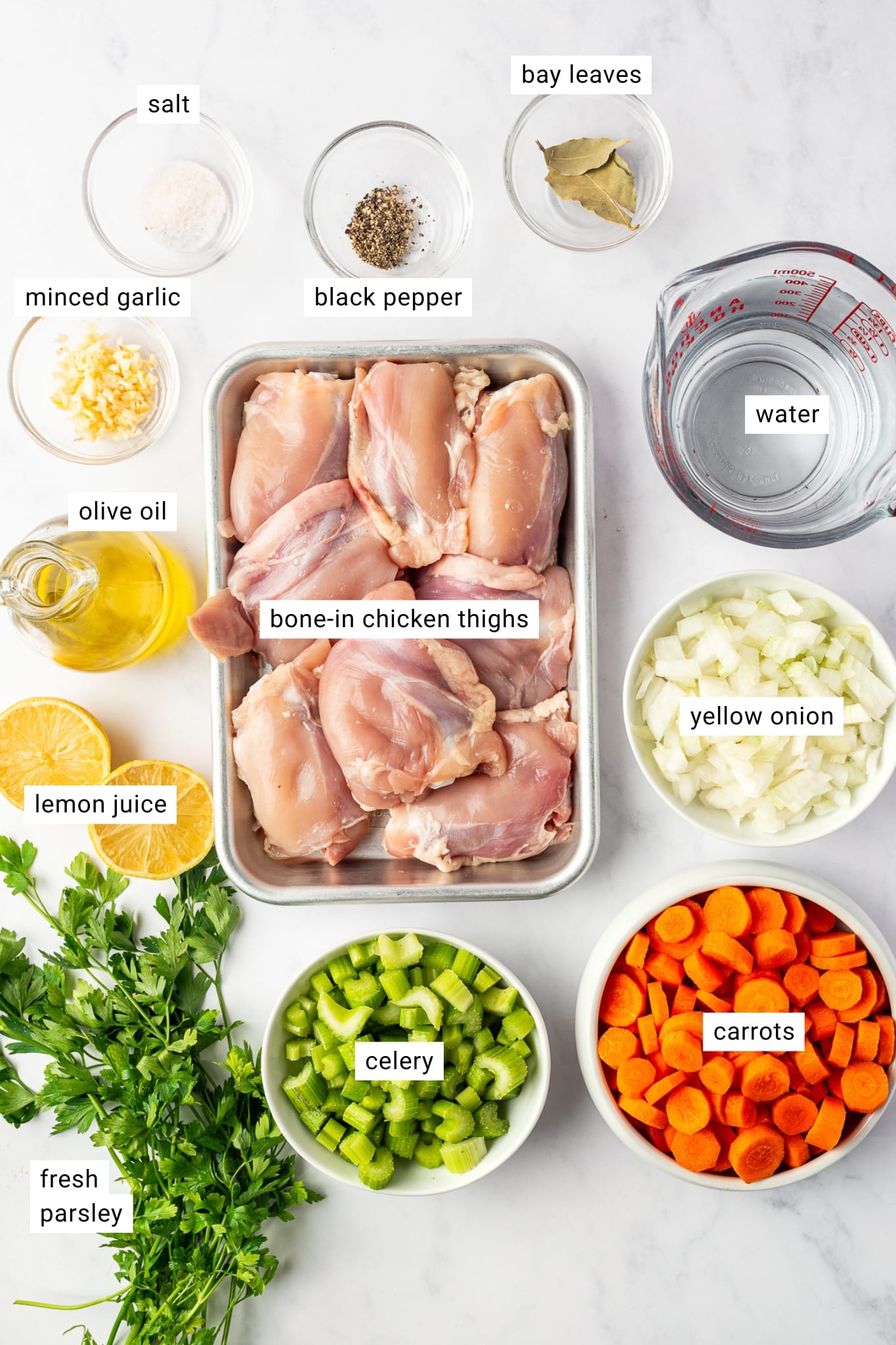
- Chicken: I’ve prepared this chicken soup recipe with chicken breasts, skin-on thighs, boneless thighs, a combination of each, and every other combination you can imagine. There really isn’t a “wrong” choice, but for this recipe, I strongly prefer bone-in, skinless chicken thighs. They give the homemade broth plenty of flavor without making it overly fatty, and the dark meat stays tender and juicy as it simmers. Chicken breasts work, but they are much easier to overcook and dry out. If you’re looking for a longer-cooked, more concentrated broth, try my homemade chicken stock or bone broth instead.
- Water/Broth: Water is intentional here. The chicken thighs simmer directly in the water, creating a light homemade broth as they cook. If you’d rather skip this step, you can use your favorite low-sodium chicken broth or stock, but the flavor and method will be a little different.
- Vegetables: Onion, carrots, and celery make up the classic mirepoix that forms the vegetable base of this soup. I keep the combination simple here, but you could add vegetables such as leeks or parsnips if you like. Just keep in mind that additional vegetables will change the flavor of the broth.
- Garlic and Bay Leaves: I keep the aromatics simple with fresh garlic and bay leaves. They add savory depth without overpowering the homemade broth. If you want more herbal flavor, fresh or dried thyme is a natural addition, but I would avoid adding too many herbs at once.
- Lemon Juice: A small amount of fresh lemon juice is added at the end of cooking. It’s not enough to make this taste like lemony chicken soup. For that, you’ll want to check out my lemon chicken soup recipe or this lemon chicken and orzo soup. Instead, it simply brightens the broth and helps balance the rich chicken flavor. You can reduce or omit it if you prefer.
- Fresh Parsley: Fresh parsley adds a little color and freshness just before serving. Flat-leaf parsley is my preference, but curly parsley works too. You can also leave it off entirely.
How to Make Chicken Soup
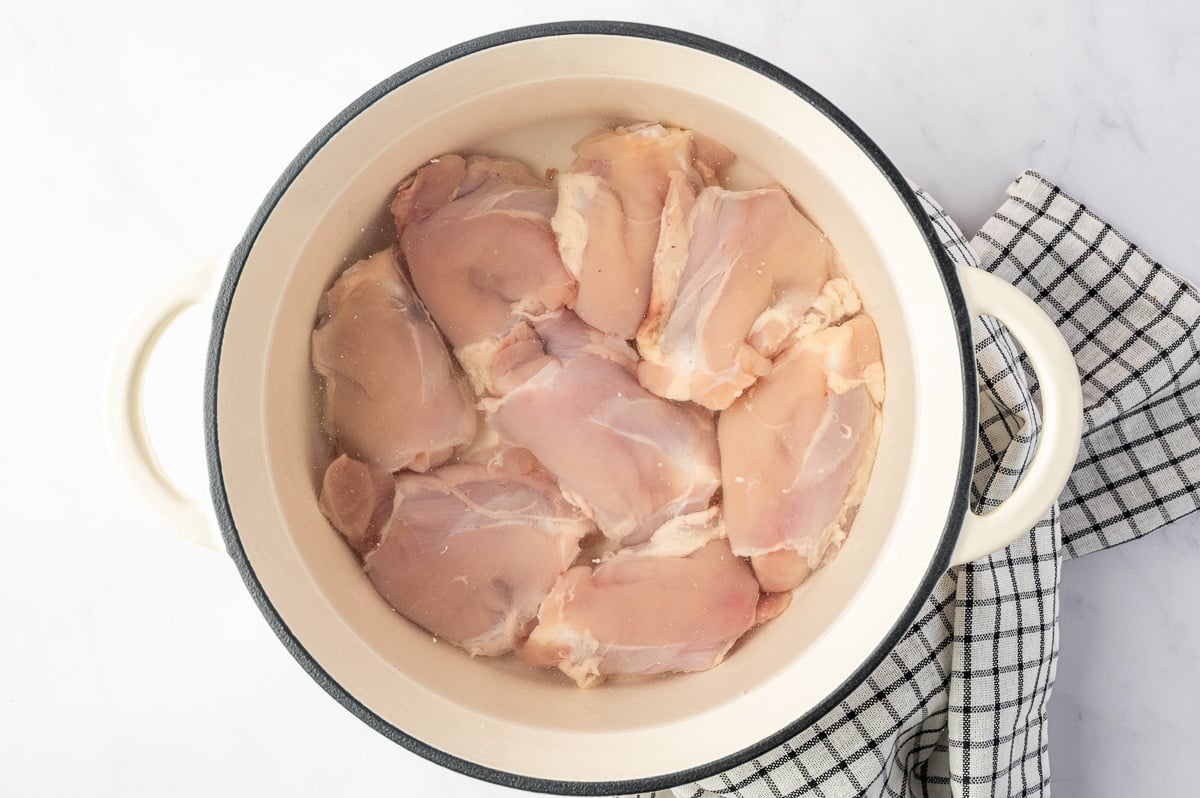
- Make the homemade chicken broth. Add the chicken thighs to a large Dutch oven and cover with cold water. Bring to a boil, then reduce the heat to a gentle simmer and cook the thighs until the thickest portion reaches at least 165°F. The chicken flavors the water and creates the light homemade broth that forms the base of the soup.
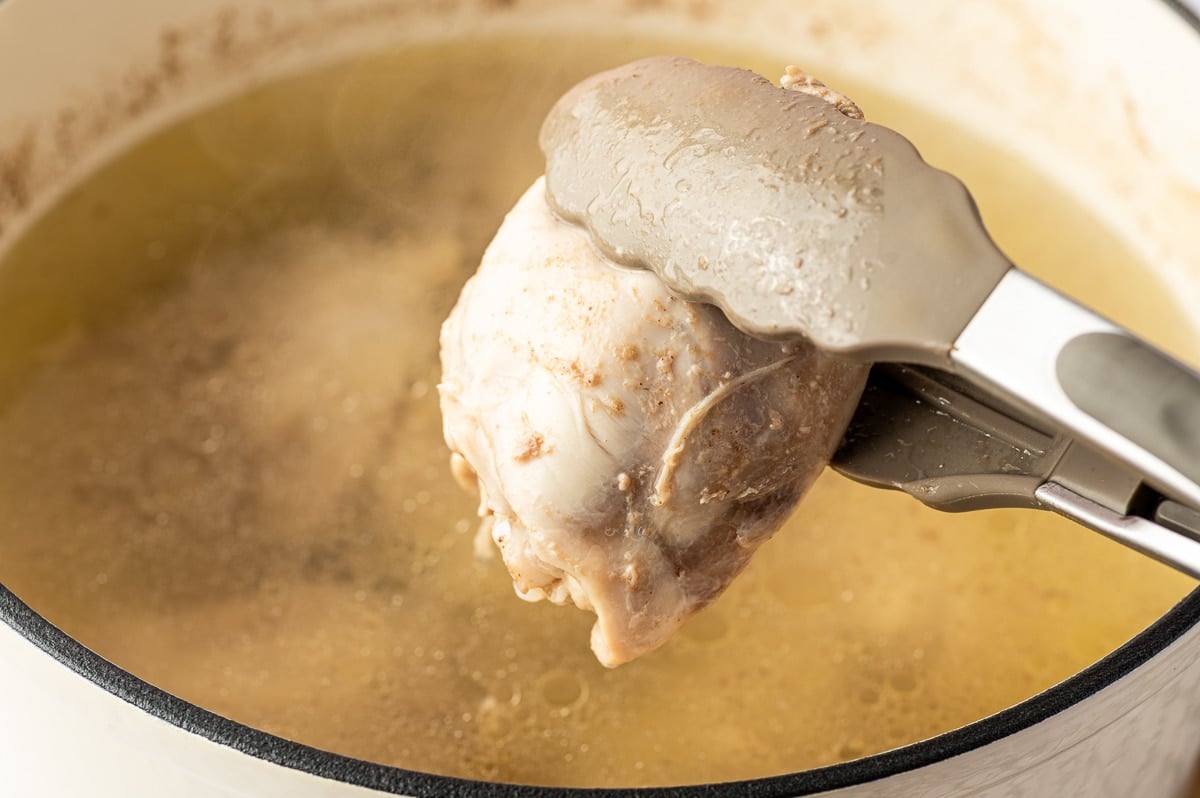
- Remove the chicken. Use tongs to transfer the cooked chicken thighs from the pot to a clean cutting board or plate. Set them aside until they are cool enough to handle. Keep all of that broth in the pot because you will be using it for the soup.
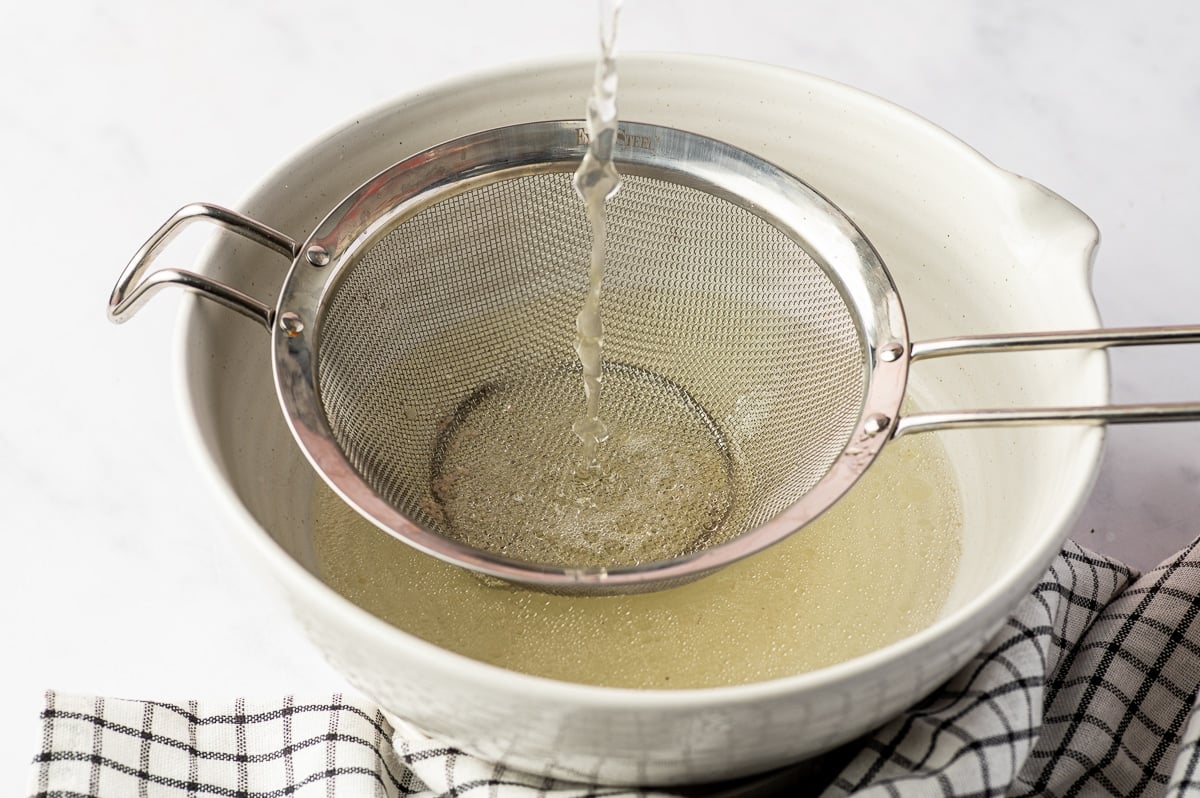
- Strain the broth. Pour the broth through a fine-mesh strainer into a large bowl or clean pot. I always take the extra minute to do this because it removes any small bits left behind and gives the finished soup a clean, clear broth. Set the strained broth aside for now.
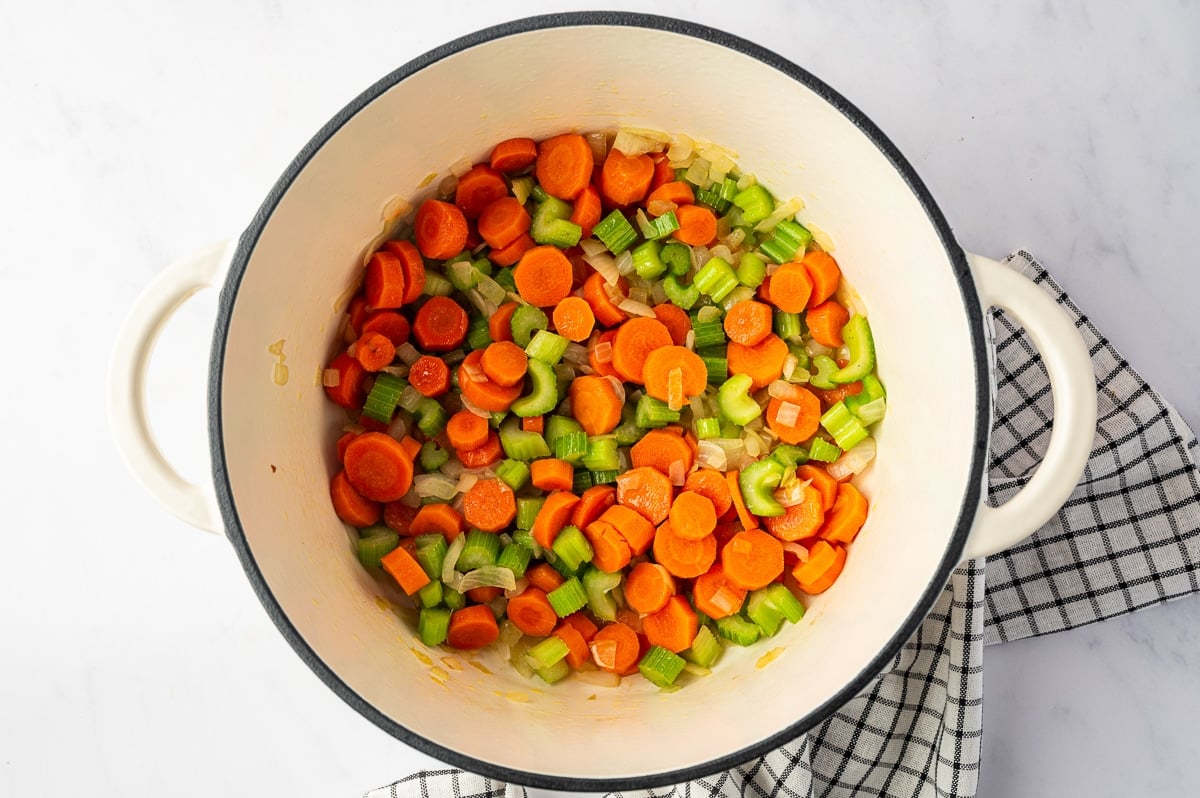
- Saute the vegetables. Return the Dutch oven to the stove and heat the olive oil. Add the onion, carrots, and celery (the mirepoix) and cook, stirring occasionally, until the vegetables begin to soften. Cooking them separately gives them a chance to soften and develop flavor before the broth goes back in.
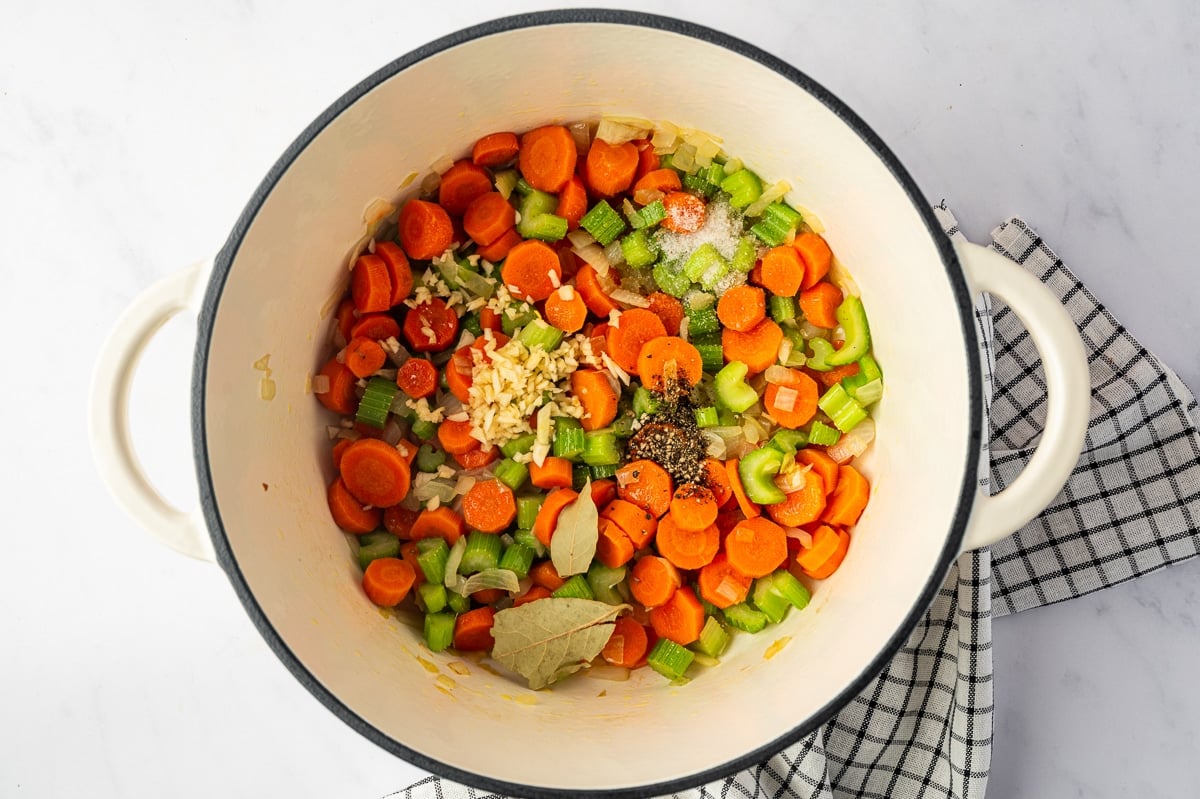
- Add the garlic and seasonings. Stir in the minced garlic, salt, black pepper, and bay leaves. Cook briefly, just until the garlic becomes fragrant. You do not need a long list of herbs here. The homemade broth and vegetables are doing most of the work.
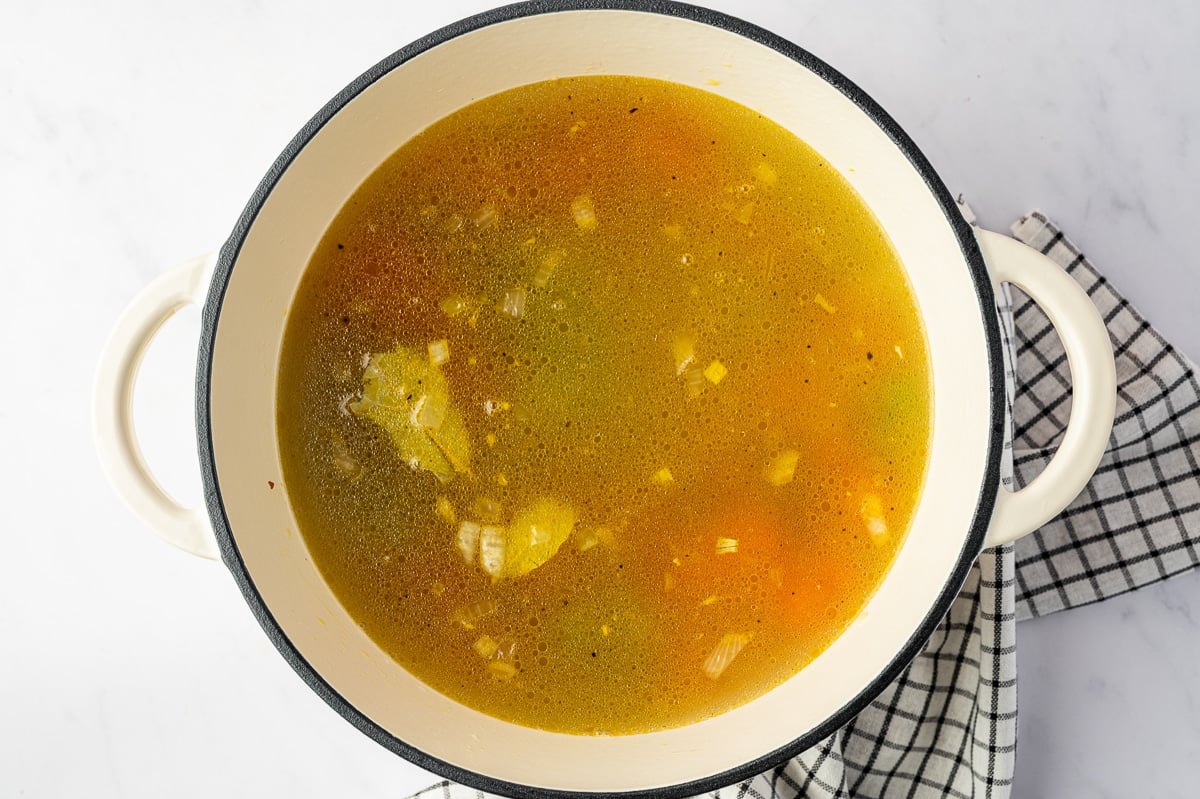
- Add the strained broth. Pour the homemade chicken broth back into the Dutch oven with the vegetables. Stir everything together and bring the soup back to a gentle simmer. At this point, the broth will pick up even more flavor from the softened onion, carrots, celery, garlic, and bay leaves.
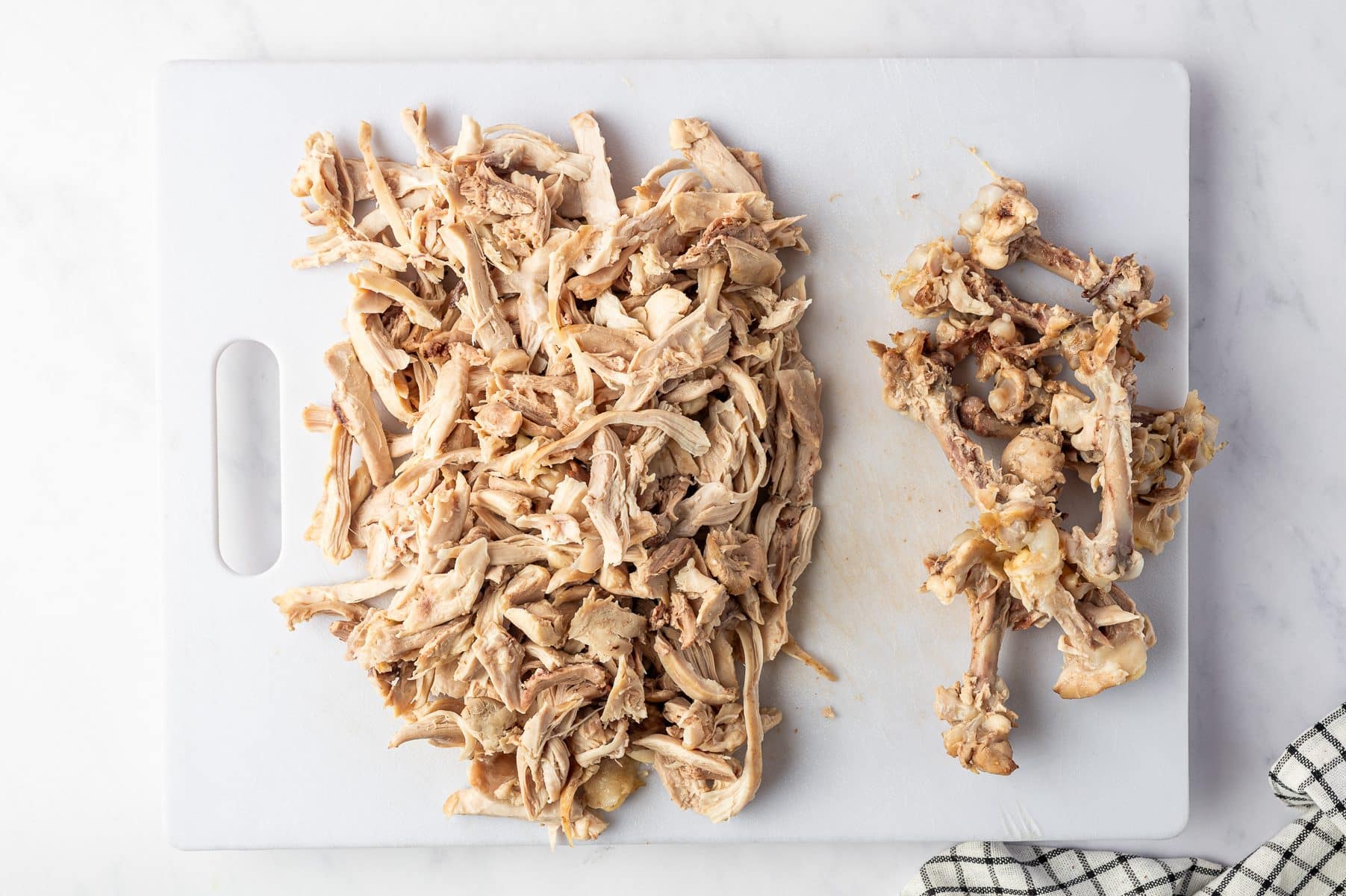
- Shred the chicken. While the soup simmers, remove the chicken meat from the bones and shred or chop it into bite-size pieces. Discard the bones. I like a mix of smaller shreds and larger pieces so there is plenty of chicken in every spoonful.
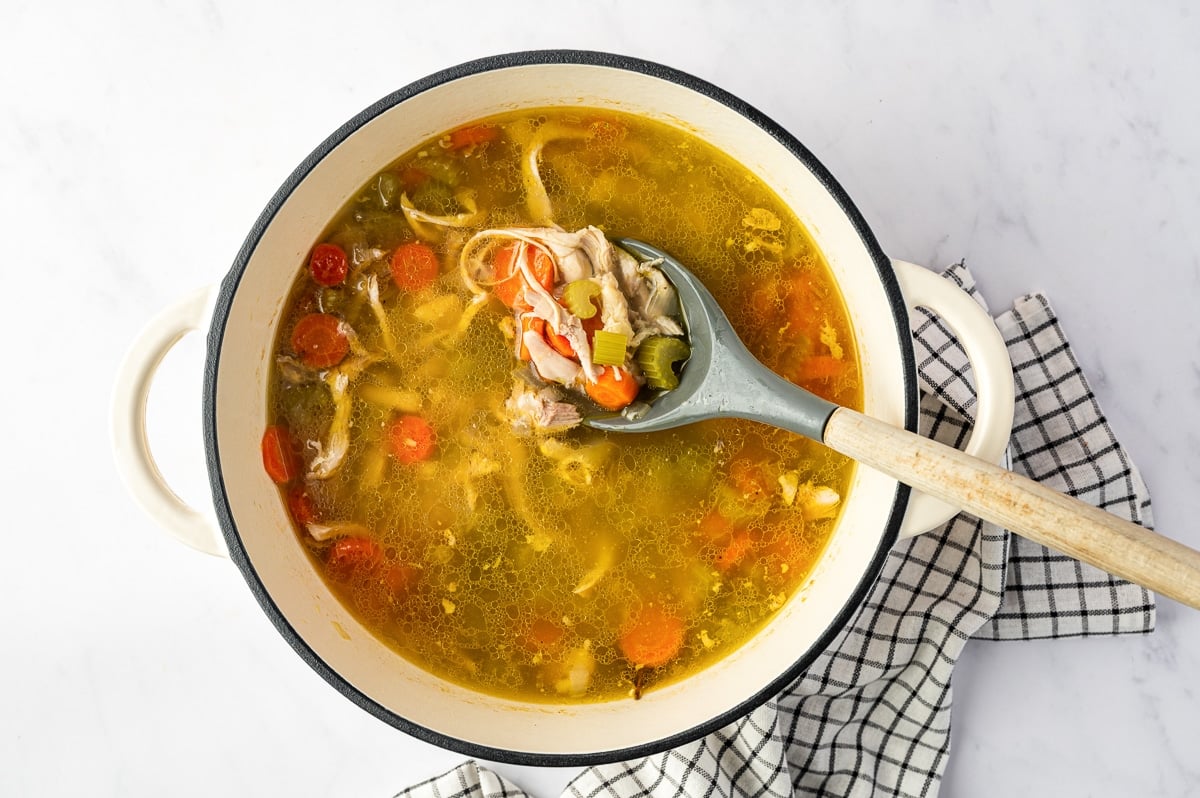
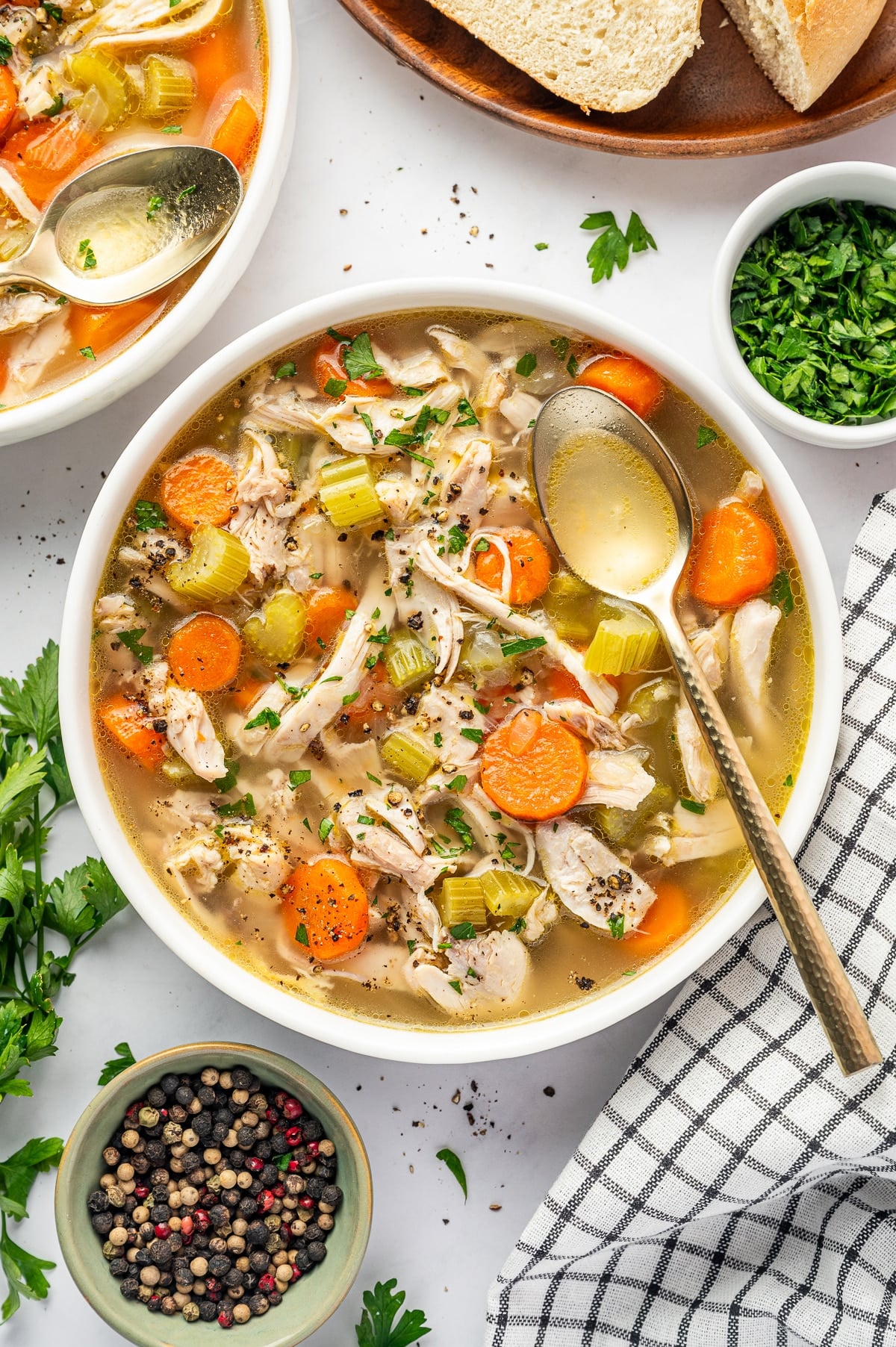
- Finish the soup. Return the shredded chicken to the pot and let it warm through with the broth and vegetables. Remove the bay leaves, then stir in the fresh lemon juice and season to taste with salt and pepper. Finish with chopped fresh parsley and serve while hot.
Chicken Soup FAQs
The most common mistakes are using too much water, boiling the chicken too aggressively, under-seasoning the broth, and overcooking the chicken. Keep the chicken-to-water ratio as written and let the broth simmer gently rather than maintaining a rapid boil. Once everything comes together, always taste the broth and add more salt and pepper if needed. Finally, wait until near the end to return the shredded chicken to the pot so it stays tender and juicy.
For this recipe, the broth does most of the heavy lifting. Bone-in chicken thighs create a much more flavorful broth than chicken breasts, while cooking the onion, carrots, and celery separately gives the vegetables time to soften and develop their own flavor. Just as important is seasoning the finished broth properly. Even a good homemade broth can taste flat if it needs more salt.
One of the things I love about this recipe is how easy it is to customize. Try adding potatoes, parsnips, leeks, kale, cabbage, spinach, fresh thyme, rosemary, or dill. Readers have also added egg noodles, rice, matzo balls, and cauliflower rice, with great results.
If you’d rather start with a chicken soup recipe that’s already built around some of these additions, try my hearty chicken and wild rice soup, my veggie-packed chicken vegetable soup, or my creamy chicken pot pie soup.
Yes. If you’re starting with cooked or rotisserie chicken, skip the homemade broth step and use a good-quality, low-sodium chicken broth or stock instead. Cook the vegetables until tender, then add the broth. Bring to a simmer before adding the shredded cooked chicken during the last 5-10 minutes, just long enough to heat it through. Taste and adjust the seasoning before serving.
Absolutely. I’ve made chicken soup with just about every cut of chicken, but bone-in, skinless thighs remain my favorite for this recipe because they make a flavorful broth and stay juicy as they cook. Chicken breasts, leg quarters, or a small whole chicken will also work. Just keep in mind that cooking times will vary depending on the size and type of chicken you’re using, and breasts are more likely to dry out if overcooked.
Storage and Reheating Tips
- To store: I love having leftover chicken soup in the refrigerator because it makes such an easy lunch the next day. Let the soup cool, then transfer it to an airtight container and refrigerate for up to 4 days. I usually store the broth, chicken, and vegetables together so all I have to do is reheat and eat.
- To freeze for later: This is one of my favorite soups to freeze because there are no noodles or rice to worry about getting soft or mushy. Let the soup cool completely, then divide it into freezer-safe containers or individual portions and freeze for up to 3 months. Thaw overnight in the refrigerator before reheating.
- For reheating: For one bowl, I usually just use the microwave. For several servings, I prefer reheating the soup gently on the stovetop until everything is hot. If it looks like some of the broth disappeared while it was stored, just add a splash of water or chicken broth as it warms.
More Chicken Soup Recipes




This chicken soup has been a favorite on The Forked Spoon for years, and it is still one of the recipes I make most often at home. If you make it, I’d love to hear how it turned out. Please leave a comment and rating below and tell me if you kept it classic or added your own twist. Thank you so much! 💛

Homemade Chicken Soup Recipe

Ingredients
- 10-12 bone-in, skinless chicken thighs, (about 3 pounds)
- 12 cups cold water
- 1 tablespoon olive oil
- 2 medium yellow onions, diced
- 8 large carrots, peeled and sliced
- 6 stalks celery, chopped
- 5 cloves garlic, minced
- 2 teaspoons salt, plus more to taste
- 1 teaspoon freshly ground black pepper, plus more to taste
- 2 small bay leaves
- 2-3 tablespoons fresh lemon juice
- chopped fresh parsley, for serving
Instructions
- Make the chicken broth. Add the chicken thighs and cold water to a large pot or Dutch oven. Bring to a boil, then cover and reduce the heat to a gentle simmer. Cook for about 30-40 minutes, or until the chicken is cooked through and reaches an internal temperature of 165°F.10-12 bone-in, skinless chicken thighs, 12 cups cold water
- Remove the chicken. Using tongs, transfer the cooked chicken to a clean cutting board or large plate. Set aside until cool enough to handle.
- Strain the broth. Carefully pour the broth through a fine-mesh strainer into a large bowl or clean pot. Set the strained broth aside. Wipe out the Dutch oven if needed.
- Cook the vegetables. Return the Dutch oven to the stove and heat the olive oil in a large pot or Dutch oven over medium heat. Add the onion and cook for 4-5 minutes, stirring occasionally. Add the carrots and celery and continue cooking for 10-15 minutes, or until the vegetables have softened. Reduce the heat if they begin to brown.1 tablespoon olive oil, 2 medium yellow onions, 8 large carrots, 6 stalks celery
- Add the aromatics. Stir in the garlic, salt, black pepper, and bay leaves. Cook for 1-2 minutes, just until the garlic is fragrant.5 cloves garlic, 2 teaspoons salt, 1 teaspoon freshly ground black pepper, 2 small bay leaves
- Add the broth and simmer. Pour the strained chicken broth back into the Dutch oven with the vegetables. Bring to a gentle simmer, cover, and cook for about 30 minutes, or until the carrots and celery are tender.
- Shred the chicken. While the soup simmers, remove the chicken meat from the bones and shred or chop it into bite-size pieces. Discard the bones.
- Finish the soup. Return the shredded chicken to the pot during the last 5-10 minutes of cooking, just long enough to heat it through. Remove the bay leaves and stir in the lemon juice. Taste and add additional salt and black pepper as needed.2-3 tablespoons fresh lemon juice
- Serve. Ladle into bowls and garnish with chopped fresh parsley.chopped fresh parsley
Video
Notes
- NOTE: TWO-POT METHOD. If you’d like to save a little time, you can prepare the chicken and vegetables at the same time using two pots. Simmer the chicken and water in one pot while the onion, carrots, and celery cook in a second large pot or Dutch oven. Once the chicken is cooked, strain the broth directly into the pot with the vegetables and continue with the recipe as written.
- Chicken: Bone-in, skinless chicken thighs are my favorite for this recipe because they make a flavorful broth while staying tender and juicy. Chicken breasts, leg quarters, or a whole chicken can also be used, but cooking times will vary.
- Shortcut: If you’re starting with cooked or rotisserie chicken, skip the homemade broth step and use 12 cups of low-sodium chicken broth or stock. Cook the vegetables until tender, then add the shredded chicken during the last 5-10 minutes.
- Vegetables: Feel free to add other vegetables such as parsnips, leeks, potatoes, kale, or cabbage.
- Storage: Refrigerate leftovers in an airtight container for up to 4 days or freeze for up to 3 months.
Explore More with AI
Nutrition
Nutrition information is automatically calculated, so should only be used as an approximation.
Recipe Update: I retested and updated this recipe in September 2026 with more precise ingredient measurements and new step-by-step photos. The simple ingredients and homemade broth method that made the original recipe so popular remain the same.










Can you Can this?
Certainly, canning chicken soup is a great way to preserve it for long-term storage. However, when canning low-acid foods like chicken soup, you’ll need to use a pressure canner, not a water bath canner, to ensure food safety.
This is also my first time making home made chicken soup. This soup was delicious and perfectly seasoned. My mother used to make chicken soup and dumplings for our family as I was growing up. I got her dumpling recipe before she passed away, so that was what I added to the soup. It brought back great memories. This recipe is definitely a keeper!
If I were to add egg noodles, when would I put them and for how long?
Please see my chicken noodle soup recipe for the egg noodle version 🙂
So delicious. Just made it and it’s now my very favorite. Thank you so much.
If adding kale to the recipe, when would you add it?
When adding kale to a chicken soup recipe, the timing depends on how tender you want the kale to be:
1. For Tender Kale: Add the kale during the last 15-20 minutes of the soup’s cooking time. This will ensure the kale is fully cooked but retains some of its bright green color and a slight bite.
2. For Softer Kale: If you prefer your kale softer and more integrated into the soup, you can add it about 30-40 minutes before the soup is finished cooking.
Always remember to wash the kale thoroughly, remove the tough stems, and tear or chop the leaves into bite-sized pieces before adding them to the soup. If using baby kale, which is more tender, you can add it even later in the cooking process, around 5-10 minutes before the soup is done.
Can I use frozen chicken thighs?
Since you are boiling, yes 🙂
Best chicken soup ever, Jessica, you are the best.
Thanks for the best feedback, Greg 😀
This will forever be my go-to chicken soup recipe. It was perfect, thank you for sharing.
I appreciate the perfect feedback, Isadora 😀
TBH, I use whatever chicken I have. I fuss a lot by buying chicken wings and bone-in, skin-on breasts and roasting them for the nice browned flavor, plus keeping stripped chicken carcasses (adding the cooked meat last as I’ve overcooked the breast meat on more than one occasion until it dawned on me that I’d been a,bonehead because the meat got overcooked).
Neither my husband norw i care for the texture of cooked celery, so I’lljust add whole stalks then fish them out later. I’ll add ‘pulled chicken’ from the grocery store.
I also use chicken stock, preferably low-sodium, to cook the chicken in,
I use those little muslin bags to put my bay leaf/vessel in, as well as larger ones for the chicken wings to avoid having to search for the tiny bones. Better than having to play hide and seek for bay leaves and peppercorns!
After straining the stock, I add carrots to cook while I pick over the wings for meat (not much, but…), cut up the cooled white meat and add that as well as store-bought pulled chicken.
I freeze the carcasses of rotisserie chickens – again having stripped off and frozen separately any meat that we haven’t eaten) as the bones add to the flavor.
I have 32oz containers to portion and freeze for 2 portions (just the 2 of us). When thawed, I’ll add some water or a can of chicken broth or stock
I know I’m rambling, but I enjoy the fussing.
One thing is do NOT do is add any noodles I plan to use when freezing. I do that when I’m heating the soup to serve. My favorite is the tiny noodles reminiscent of the kind ny gramma made – they’re nearly shreds of noodles.
Can this be prepared in a crockpot?
I have never tried making this recipe in a crockpot. You might have to scale it down significantly, but it is possible 🙂
My 1st time making chicken soap at home. It was very good! I made homemade pasta and cut it to shape to make it a chicken noodle soap. Hits the spot. Thank you for the recipe!
I added organic chicken bouillon, egg noodles and boneless thighs (couldn’t find skinless bone-in) but this recipe was OUTSTANDING!! I have never made chicken noodle soup before but this will now be a stable dish for my family!! 10/10 recommend 😁
Thanks for the 10/10 review, Katelyn 🙂
I’d suggest getting bone-in, skin on – the bones add so much flavor – then removing the skin at home.